


Hydrogen Gas and Battery Ventilation on Boats
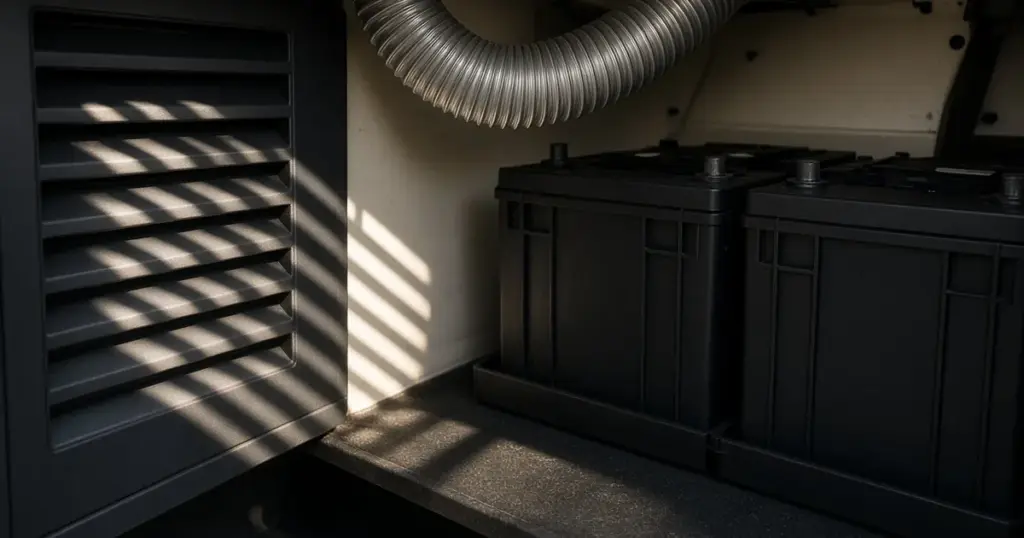
Every flooded lead-acid battery gives off gas while it charges. On a boat, where batteries often sit in enclosed lockers, that gas needs somewhere to go. This guide explains where battery hydrogen comes from, when it becomes a hazard and how to ventilate a battery compartment properly.
Where battery hydrogen comes from
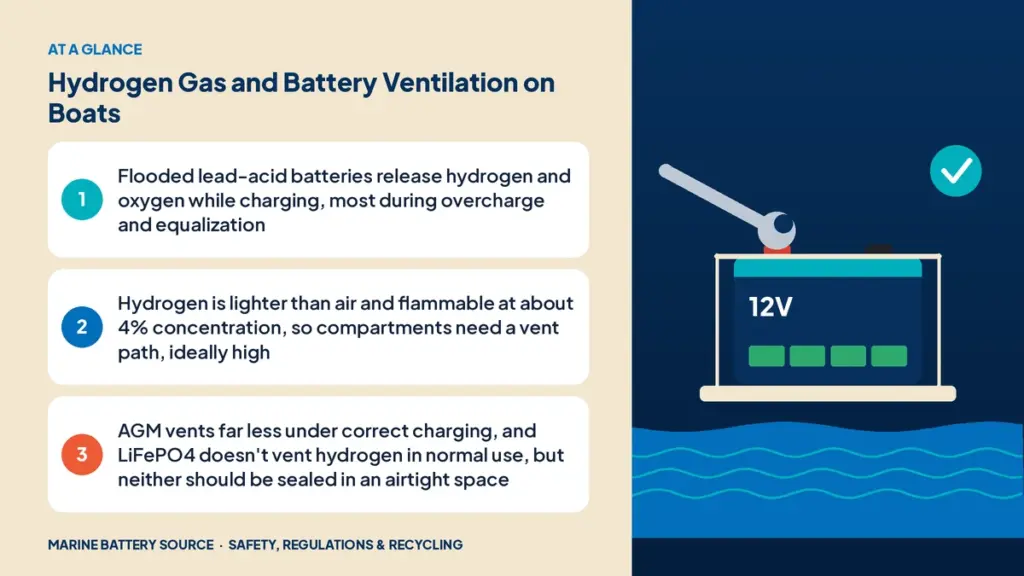
In a flooded lead-acid battery, charging drives an electrochemical reaction. Near the end of charging, and especially during overcharge, some of the charging current splits water in the electrolyte into hydrogen and oxygen. Those gases bubble out through the battery’s vents. That’s also why flooded batteries need watering: the water lost as gas has to be replaced.
Why hydrogen is dangerous
Hydrogen is colorless and odorless, and it’s flammable in air at concentrations from about 4% upward. A spark from a terminal connection, a switch or a dropped tool can ignite it. In a confined battery box, ignition can crack or blow apart the battery case, spraying acid and fragments. Because hydrogen is much lighter than air, it rises and collects at the top of enclosed spaces.
When the risk is highest
- During charging, especially the final stages.
- During overcharging, from a faulty charger, a wrong charger setting or a failed alternator regulator. See overcharging a boat battery.
- During equalization, a deliberate controlled overcharge used on some flooded batteries.
- Right after charging, as gas is still escaping.
- With a failing battery, such as one with a shorted cell, which can overheat and gas heavily.
AGM and lithium batteries
AGM batteries are valve-regulated. Under correct charging, they recombine most of the gas internally and vent very little. If overcharged, their valves can release hydrogen. So AGM batteries need less ventilation than flooded ones, but they shouldn’t be sealed in an airtight space.
LiFePO4 batteries don’t produce hydrogen in normal use. Their main hazards are electrical, such as short circuits and overcurrent, and they rely on the BMS to prevent overcharge. Lithium batteries still need airflow to stay cool. See lithium battery fire safety on boats.
What the rules say
U.S. Coast Guard rules for many gasoline-powered boats require a vent system or other means to let hydrogen discharge from the boat. ABYC’s E-10 standard also covers battery ventilation. See Coast Guard battery requirements and the ABYC battery standards overview.
How to ventilate a battery compartment
- Use a vented battery box. Most marine battery boxes have vent openings in the lid or sides. Keep them clear.
- Give the compartment a vent path. Hydrogen rises, so an opening or vent near the top of the compartment lets it escape. A second opening lower down allows fresh air in.
- Don’t block vents with gear, cushions or covers.
- Keep batteries out of sealed spaces like airtight lockers or sealed consoles.
- Consider the cabin. Batteries inside living spaces need especially good venting to the outside, and flooded batteries shouldn’t vent into sleeping areas.
Avoiding ignition
- Make and break connections with chargers off and loads switched off.
- Don’t connect or disconnect battery cables while charging.
- Keep switches, relays and other spark sources out of the battery box where possible, or use ignition-protected components in gasoline engine spaces.
- Don’t smoke or use open flames near batteries.
- Let freshly charged flooded batteries vent for a while before working on them.
Signs of excessive gassing
- Strong sulfur or “rotten egg” smell, which can mean severe overcharging or a failing battery.
- Electrolyte spray or wet tops on flooded batteries.
- Rapid water loss requiring frequent topping up.
- Hot batteries after charging.
- Swollen AGM cases.
If you notice these, turn off the charger, ventilate the area, keep sparks away and have the charging system checked.
Maintenance tips for flooded batteries
- Check electrolyte levels regularly and use distilled water.
- Keep vent caps clean and in place.
- Don’t overfill; acid can spill out when gassing.
- Clean acid residue from battery tops with a baking soda solution. See battery acid spill cleanup.
Battery switches and ventilation
A battery switch lets you disconnect batteries before working on them, removing the risk of sparks at the terminals. Turn the switch off before working near batteries, and make sure the switch itself is mounted where hydrogen won’t collect. See marine battery switch basics.
Charging location matters
If you charge batteries off the boat, such as in a garage, the same rules apply. Charge in a ventilated space, away from water heaters, furnaces, grinders or anything else that sparks. Don’t charge flooded batteries in a closed car trunk or sealed room.
When to switch chemistry
If your battery compartment is hard to ventilate or sits inside the cabin, consider AGM or lithium. Both largely eliminate hydrogen venting under normal charging. Lithium also removes watering and acid handling entirely.
Hydrogen detectors
Some boats with large flooded battery banks in enclosed spaces install a hydrogen detector or a combined gas detector rated for hydrogen. Standard propane and carbon monoxide detectors don’t reliably detect hydrogen, so check the detector’s specifications. A detector is a backup, not a substitute for ventilation and correct charging.
Quick checklist
- ☐ Battery box vents clear
- ☐ Compartment has a high vent path to outside air
- ☐ Charger set to the correct profile
- ☐ No spark sources inside the battery box
- ☐ Switch off before working on batteries
- ☐ No strong sulfur smell or hot batteries after charging
More reading
The marine battery safety guide covers all the basics. When batteries reach end of life, recycle them; see marine battery recycling.
Products mentioned
- EPOCH 12V 15A lithium charger
- Interstate 27M-AGM (sealed AGM)
- EPOCH 12V 105Ah lithium
- Browse marine chargers.
Frequently asked questions
Do boat batteries give off hydrogen?
Flooded lead-acid batteries do while charging, especially near full charge and when overcharged.
At what concentration is hydrogen dangerous?
It’s flammable in air from about 4%.
Do AGM batteries need ventilation?
They vent very little under correct charging but can vent if overcharged. Don’t seal them airtight.
Do lithium batteries produce hydrogen?
LiFePO4 batteries don’t in normal use, but they still need airflow to stay cool.
Where should a battery compartment vent?
Near the top, because hydrogen rises, with fresh air entering lower down.