


Marine Battery Disposal and Recycling Guide
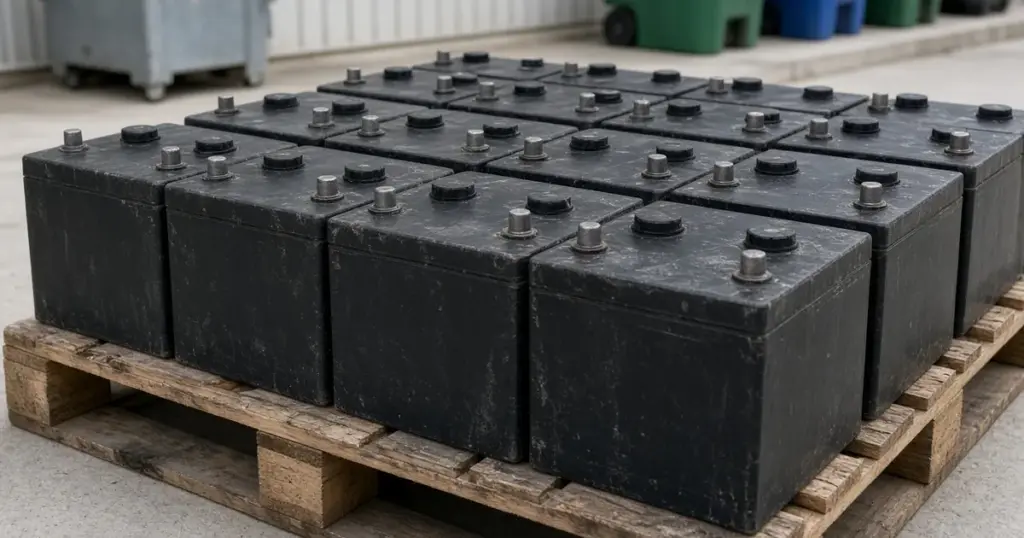
Every boat battery eventually reaches the end of its life, and how you dispose of it matters. Batteries contain lead, acid, lithium compounds and other materials that are hazardous in landfills but valuable when recycled. This guide is the hub for our recycling articles: how each chemistry is recycled, where to take old batteries and what rules apply, especially in Florida.
Why recycle?
- Environmental protection: lead and sulfuric acid contaminate soil and water if dumped.
- Resource recovery: lead, plastic and other materials are reused in new batteries and products.
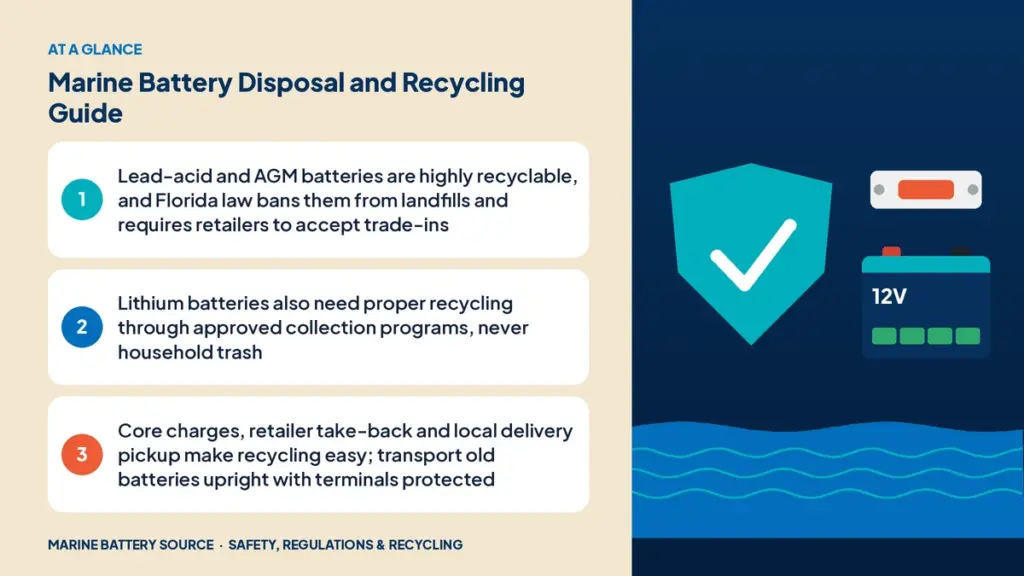
- It’s the law in many places: Florida, for example, bans lead-acid batteries from landfills and waste-to-energy facilities.
- Safety: damaged lithium batteries in trash trucks and landfills can start fires.
Lead-acid and AGM batteries
Lead-acid batteries, including flooded and AGM types, are among the most recycled consumer products in the U.S. At a recycling facility, they’re broken apart; the lead is smelted and refined, the plastic cases are recycled, and the acid is neutralized or processed. Much of a new lead-acid battery’s content can come from recycled material.
Where to take them:
- The retailer you buy a new battery from. In Florida, retailers that sell lead-acid batteries must accept used ones as trade-ins for new ones.
- Auto parts stores and battery retailers, many of which accept used batteries.
- Scrap metal recyclers.
- County household hazardous waste or recycling centers.
See how to dispose of a boat battery and Florida battery disposal rules.
Core charges
Many sellers add a core charge to lead-acid and AGM batteries, refunded or waived when you return the old battery. It’s an incentive to keep batteries in the recycling stream. When you book our installation, we take your old battery away and waive the $18 core charge. See battery core charges explained.
Lithium batteries
Lithium batteries, including LiFePO4 marine batteries, should go to recycling programs that accept them. Recycling recovers lithium, iron, phosphate, copper, aluminum and other materials. Because lithium batteries can short and catch fire if damaged, they must never go in household trash or curbside recycling bins.
Where to take them:
- Battery makers and sellers with take-back programs.
- Retail battery collection points that accept large lithium batteries.
- County household hazardous waste facilities.
- Specialized battery recyclers.
Call ahead, because not every drop-off accepts large lithium batteries. See lithium battery recycling and shipping lithium batteries if you need to send one back.
When is a battery at end of life?
Signs include failure to hold a charge, much shorter runtime, failed load tests, swelling, leaks and heavy corrosion. See battery end-of-life signs before you replace a battery that might just need charging.
Transporting old batteries
- Keep lead-acid batteries upright.
- Put them in a leak-proof plastic tub or box.
- Protect terminals with caps or tape to prevent shorts.
- Secure them so they can’t tip or slide.
- Keep damaged lithium batteries away from flammables and in a non-combustible container if possible.
See how to transport a marine battery safely.
Storing old batteries until you recycle them
Don’t let old batteries pile up in the garage. If you must store one briefly, keep it upright, off bare concrete if leaking, in a ventilated area away from heat, children and pets. See storing spare batteries at home.
Environmental comparison
Lead-acid batteries are highly recycled but contain toxic lead. Lithium batteries last longer and contain no lead, but their recycling infrastructure is still growing. See lithium vs lead-acid environmental impact.
What happens to a recycled lead-acid battery
- Collection: retailers, parts stores and recycling centers gather used batteries and send them to a recycler.
- Breaking: the batteries are crushed or broken apart in a controlled facility.
- Separation: lead components, plastic and electrolyte are separated.
- Lead recovery: lead is smelted, refined and cast for use in new batteries and other products.
- Plastic recovery: the polypropylene cases are cleaned, pelletized and made into new cases and other parts.
- Acid handling: sulfuric acid is neutralized and treated, or processed into other products.
What happens to a recycled lithium battery
Lithium battery recycling is newer but growing quickly. Batteries are first discharged and dismantled. Then the cells are processed mechanically, chemically or with heat to recover metals and other materials, which can be used in new batteries and products. Because LiFePO4 batteries contain no cobalt or nickel, their recovered materials are different from those of phone and EV batteries, and recyclers may handle them separately.
Recycling on the water: marinas and boatyards
Many marinas and boatyards collect used batteries from customers, especially during haul-out and spring commissioning. Ask your marina office. If your boatyard replaces your batteries, ask what they do with the old ones; a reputable yard sends them to a recycler.
Quick guide
| Battery | Trash? | Where to recycle |
|---|---|---|
| Flooded lead-acid | No | Retailer trade-in, parts store, scrap recycler, county site |
| AGM | No | Same as flooded |
| LiFePO4 lithium | No | Maker or seller take-back, battery recycler, county hazardous waste site |
| Small household batteries | Check local rules | Retail collection points, county sites |
Safety first
Old and damaged batteries can leak acid or overheat. Wear eye protection and gloves when handling them, and follow the marine battery safety guide.
Replacing your battery
When it’s time for a new battery, browse our trolling motor batteries, starting batteries and lithium batteries. Local customers can book installation with old-battery pickup; see our local installation page.
Frequently asked questions
Can I throw a boat battery in the trash?
No. Lead-acid batteries are banned from landfills in Florida and many other states, and lithium batteries are a fire hazard in trash.
Where can I recycle a lead-acid boat battery?
At battery retailers, auto parts stores, scrap recyclers and county recycling centers.
Are lithium boat batteries recyclable?
Yes, through take-back programs, battery recyclers and many county hazardous waste sites.
What is a core charge?
A deposit on lead-acid batteries, refunded or waived when you return the old battery.
Do you take old batteries?
When you book our installation, we take your old battery and waive the core charge.