


Shipping and Traveling with Lithium Batteries
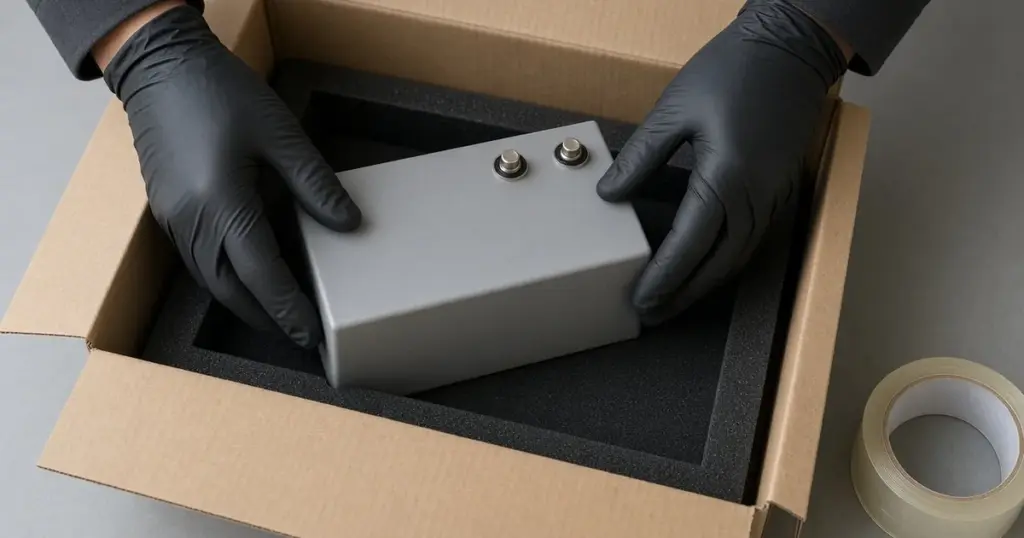
Ordering a lithium marine battery online is easy. Behind the scenes, shipping it is anything but casual: lithium batteries are regulated as hazardous materials. This guide explains what that means for you as a buyer, and what to do if you ever need to send a lithium battery back for warranty or recycling. It’s general information, not compliance advice; shippers must follow current carrier and government rules.
Why lithium batteries are regulated
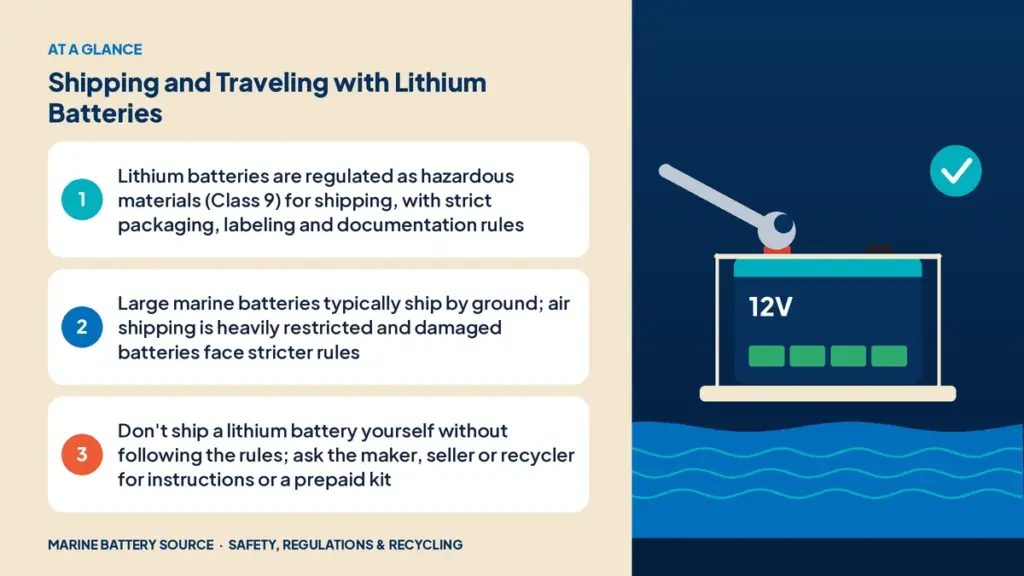
Lithium batteries store a lot of energy. If damaged, short-circuited or poorly packed, they can overheat and, in rare cases, catch fire. In transport, that risk is managed through rules for packaging, labeling, documentation and the state of charge. In the U.S., the Department of Transportation’s hazardous materials regulations and carrier rules apply; for air, international aviation rules also apply.
Lithium-ion batteries shipped on their own are classified as Class 9 miscellaneous hazardous materials. Marine batteries are well above the small-battery thresholds that allow simplified shipping, so they’re generally fully regulated.
How sellers ship lithium marine batteries
- Ground service: large lithium batteries usually ship by ground. Air shipping of large lithium batteries is heavily restricted.
- Trained shippers: people who prepare regulated hazmat shipments must be trained.
- Approved packaging: strong outer packaging, protection against short circuits and movement, and often the original maker’s packaging.
- Labels and documents: Class 9 hazard labels, UN identification numbers and shipping papers as required.
- State of charge: batteries are often shipped partly charged; for some transport modes, rules limit the state of charge.
What to expect as a buyer
- Ground transit times, so allow extra time, especially before a trip or tournament.
- Possible destination limits: some remote areas or expedited services may not be available.
- Hazard labels on the box. That’s normal.
- A partly charged battery. Fully charge it with a LiFePO4 charger before first use.
Check our shipping page for current details. If you’re between Venice and Gainesville, FL, we can install your battery; see our local installation page.
Inspecting the delivery
- Check the box for crush damage, punctures or burn marks before accepting it, if possible.
- If the box is damaged, note it with the carrier and photograph it.
- Inspect the battery for cracks, swelling or damaged terminals.
- Don’t install or charge a battery that looks damaged; contact the seller.
Sending a lithium battery back
For warranty claims, returns or recycling, don’t just repack the battery and drop it at a shipping counter. Instead:
- Contact the seller or maker first. They’ll tell you how to return it and may provide a prepaid kit or label.
- Follow their instructions on packaging, terminals and state of charge.
- Protect the terminals with caps or tape.
- Use the original packaging if you still have it.
- Declare it properly. Undeclared hazmat shipments can lead to penalties.
Damaged batteries
A battery that’s swollen, cracked, leaking or has overheated is subject to stricter transport rules and may not be shippable by normal services. Keep it isolated, away from flammables, and contact the maker or a recycler for instructions. See lithium battery recycling.
Driving batteries yourself
Transporting your own battery in your vehicle for personal use is different from commercial shipping. Still, follow safe practices: terminals protected, battery secured, away from heat and fuel cans. See storing spare batteries at home for safe storage between uses.
Taking lithium batteries on planes
If you travel with lithium batteries for electronics, airline rules apply. Large marine batteries can’t go in checked or carry-on luggage. Small power banks and spare device batteries have their own limits; check your airline’s current rules.
Ordering ahead of the season
Because ground shipping takes longer, plan lithium purchases ahead of key dates: the start of tournament season, spring commissioning, holiday weekends and long trips. Order early enough that the battery arrives, gets a full first charge and goes out on a short local test run before you depend on it. If you’re also changing chargers or adding a DC-DC charger, order them together so the whole system arrives at once.
Storing a new battery before installation
If the battery arrives before you’re ready to install it, store it indoors in a cool, dry place, in its box, with terminals covered. Check its state of charge every month or two and top it up with a LiFePO4 charger if needed. Don’t leave it in a hot truck or a closed shed in a Florida summer.
Keep your paperwork
Keep your order confirmation, the battery’s serial number and the maker’s documentation. They make warranty claims and returns much easier. A photo of the label and serial number, stored on your phone, is a handy backup.
Lead-acid shipping
Lead-acid batteries also have shipping rules, mainly because of their acid and weight. Non-spillable AGM batteries often have simpler requirements than flooded batteries. Either way, heavy batteries usually ship by ground or freight. Returning a used lead-acid battery is easiest in person, often for a core charge refund; see battery core charges explained.
Disposal and Florida rules
If you’re in Florida and disposing of batteries rather than shipping them, see Florida battery disposal. The marine battery recycling guide covers all battery types.
Safety first
The rules exist for good reason. The marine battery safety guide covers safe handling at home and on the boat.
Shop lithium batteries
Browse our lithium batteries or shop by brand: EPOCH, Battle Born and Dakota Lithium.
Frequently asked questions
Why do lithium batteries need special shipping?
They’re regulated as Class 9 hazardous materials because damaged or shorted batteries can overheat.
Can lithium marine batteries ship by air?
Air shipping of large lithium batteries is heavily restricted. They usually ship by ground.
Can I mail a lithium battery back myself?
Only by following hazmat rules. Contact the seller or maker for instructions or a prepaid kit.
Why did my lithium battery arrive partly charged?
That’s normal for shipping. Fully charge it with a LiFePO4 charger before use.
What if my lithium battery arrives damaged?
Don’t install or charge it. Photograph it and contact the seller.