


Lithium Battery Fire Safety on Boats
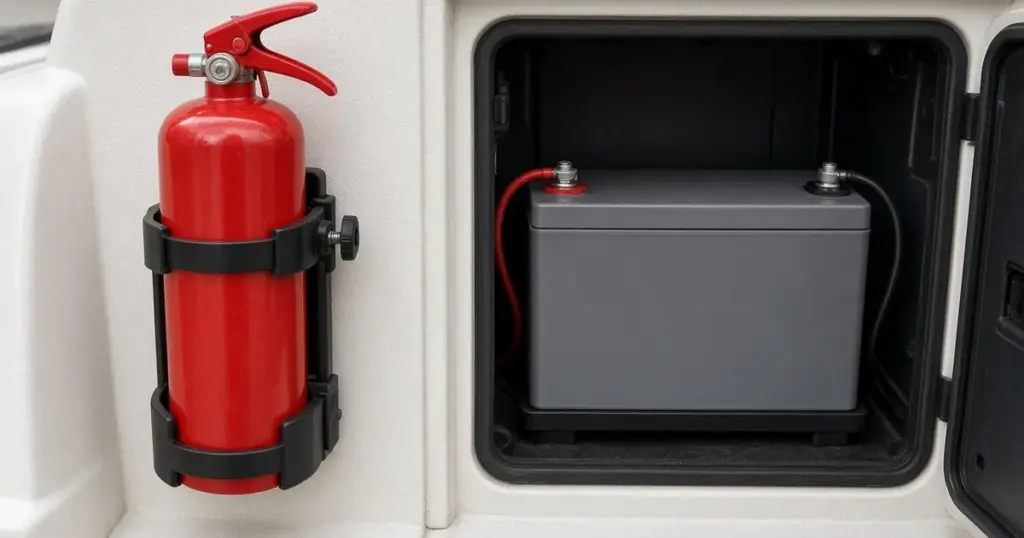
News stories about e-bike and phone battery fires make many boaters nervous about lithium. It’s a fair concern, but most marine lithium batteries use lithium iron phosphate (LiFePO4), a chemistry that behaves very differently from the lithium cobalt and nickel-based cells in many consumer devices. This guide explains the real risks, how to install lithium safely and what to do if something goes wrong.
Why LiFePO4 is different
Lithium-ion is a family of chemistries. The cells in phones, laptops and many e-bikes use cobalt or nickel-rich cathodes, which pack in a lot of energy but can enter thermal runaway, a self-heating chain reaction, at lower temperatures and release oxygen that feeds a fire. LiFePO4 cathodes hold onto their oxygen much more tightly and are far more resistant to thermal runaway. That’s why LiFePO4 is the standard chemistry for marine, RV and home batteries. Every lithium battery in our store uses LiFePO4.
That doesn’t make LiFePO4 risk-free. Any battery that stores a lot of energy can cause a fire if it’s shorted, crushed or badly abused.
Where the real risks come from
Short circuits. Lithium batteries can deliver very high current into a short. Without a fuse close to the battery, a chafed cable can overheat and ignite insulation.
Poor connections. Loose or corroded terminals create resistance and heat, especially at high current.
Undersized cables. Cables that are too small for the load can overheat.
Wrong chargers. A charger that pushes the wrong voltage can stress cells if the BMS fails. Use a LiFePO4 profile.
Physical damage. Crushing, puncture or a heavy impact can damage cells.
Water intrusion. Saltwater inside a battery case can cause internal shorts and corrosion.
Cheap batteries. Unbranded batteries may skimp on cell quality or BMS protection.
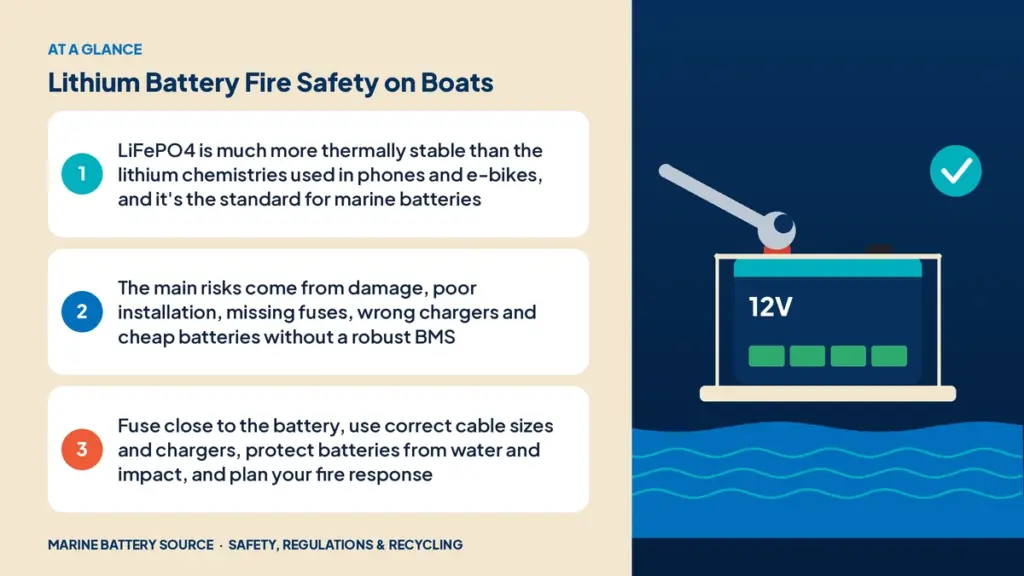
The role of the BMS
Every LiFePO4 marine battery has a battery management system that monitors cell voltages, current and temperature. It disconnects the battery to prevent overcharge, overdischarge, overcurrent and charging at unsafe temperatures. The BMS is the battery’s first line of defense, but it isn’t a substitute for proper fusing. A fuse protects the wiring; the BMS protects the cells.
Safe installation
- Buy from reputable brands with clear specs, BMS protections and warranties.
- Fuse close to the battery. Use a fuse rated for lithium’s high fault current, such as a marine-rated terminal fuse or Class T fuse, sized for your cable and load.
- Size cables correctly for current and run length.
- Tighten terminals to the maker’s torque spec and recheck after the first few trips.
- Secure the battery so it can’t shift or be struck by gear.
- Protect it from water. Choose a suitable IP rating and keep the battery out of bilge water. IP67 batteries are the most forgiving.
- Use correct chargers with LiFePO4 profiles, and consider a DC-DC charger for alternator charging.
- Follow parallel and series limits in the listing.
- Leave airflow around the battery.
- Consider professional installation for large banks or inverter systems. ABYC’s E-13 standard covers lithium-ion installations; see the Coast Guard battery requirements article for federal rules.
Warning signs
Stop using the battery and investigate if you notice:
- A swollen or deformed case.
- Unusual heat during charging or normal use.
- A burning, sweet or chemical smell.
- Hissing, popping or smoke.
- The BMS repeatedly shutting off under normal loads.
- Visible damage after an impact.
If a lithium battery overheats or catches fire
- Get people away from the battery and, if needed, off the boat.
- Disconnect charging sources and loads only if you can do so safely, usually from a switch away from the battery.
- Call for help: VHF channel 16 on the water, or 911 at the dock.
- Fight a small fire only if it’s safe. Use your boat’s fire extinguisher on burning materials around the battery. Lithium battery fires are hard to put out, and cells can reignite. Large amounts of water are often recommended by fire services for cooling lithium-ion batteries, but on a boat, follow your emergency plan and leave firefighting to professionals.
- Don’t touch or move a hot, swollen or venting battery.
- Ventilate the area; smoke from battery fires is toxic.
Lithium vs lead-acid fire risks
Lead-acid batteries have their own hazards: explosive hydrogen gas during charging and corrosive acid. See battery hydrogen gas and ventilation and battery acid spill cleanup. Both chemistries can cause electrical fires through shorts and poor connections. Good installation matters for both.
Storing and transporting lithium
- Store lithium batteries partly charged, in a cool, dry place, away from flammables.
- Protect terminals from shorting during transport with caps or tape.
- Don’t store damaged batteries indoors.
Handling damaged lithium batteries
A damaged lithium battery should not be charged or used. Contact the maker or seller for guidance, and recycle it through an approved program. Don’t throw it in household trash. See marine battery recycling.
After a hard impact or grounding
If your boat takes a hard hit, check the battery compartment before continuing. Look for a shifted battery, cracked case, damaged terminals or pinched cables. If the battery was struck or crushed, don’t charge it until it’s been inspected.
Safety gear
Keep safety glasses, gloves and a fire extinguisher accessible. See battery handling safety gear.
More reading
The marine battery safety guide covers installation and handling safety for every battery type.
Products that help
- Battle Born marine-rated MRBF fuse
- Battle Born MRBF fuse block
- EPOCH 12V 300Ah Pro (IP67)
- Browse LiFePO4 lithium batteries.
Frequently asked questions
Are lithium batteries safe on boats?
LiFePO4 batteries from reputable brands, installed with proper fusing, cables and chargers, are widely used safely on boats.
Is LiFePO4 safer than other lithium batteries?
Yes. It’s much more resistant to thermal runaway than the cobalt and nickel-based cells used in many consumer devices.
Do I need a fuse with a lithium battery?
Yes. Install a fuse rated for lithium’s high fault current close to the battery.
What should I do if a lithium battery swells?
Stop using it, disconnect it safely and contact the maker or seller. Don’t charge it.
How do you put out a lithium battery fire?
Get people away and call for help. Lithium fires are hard to extinguish and can reignite.