


Handling Batteries Safely: Lifting, PPE and Tools
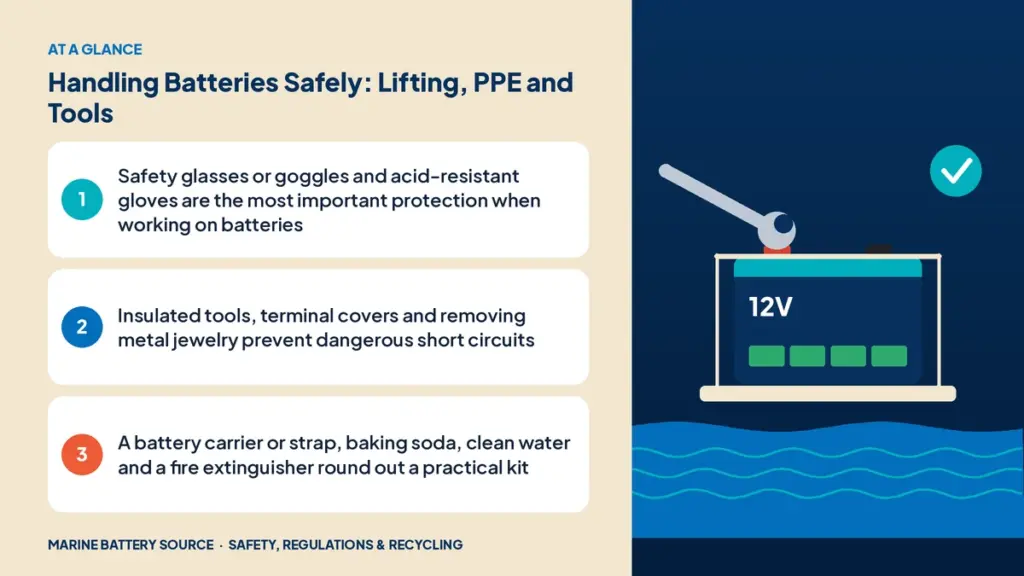
Working on boat batteries is mostly routine: checking terminals, swapping a battery, topping up water, cleaning corrosion. But batteries combine weight, corrosive acid, explosive gas and high current in one box. A small kit of safety gear makes routine work much safer. This guide covers what to have and why.
Eye protection
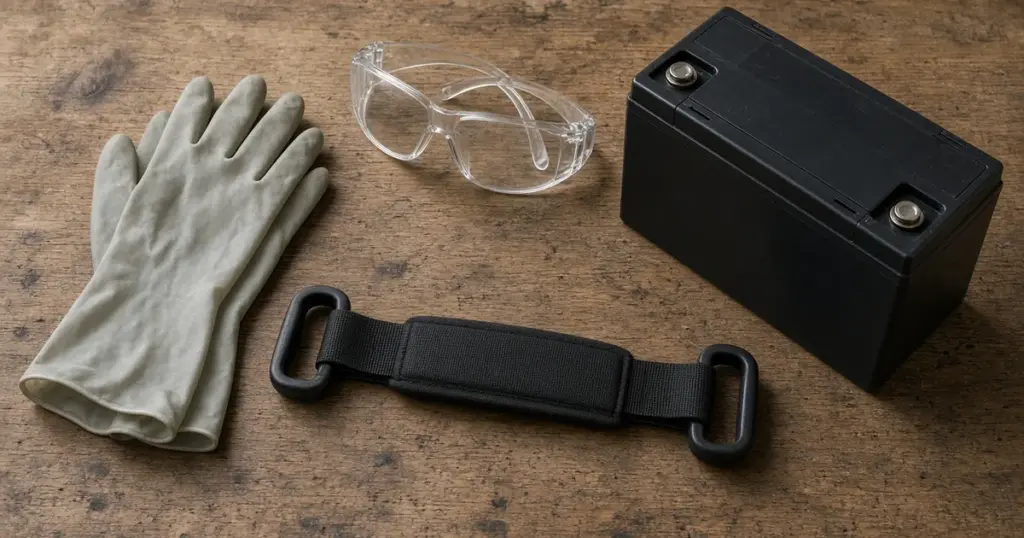
Why: acid splashes, flying corrosion and sparks can all injure eyes, and a battery explosion can throw fragments. What: safety glasses with side shields for routine work; splash goggles for watering flooded batteries or cleaning acid spills.
Gloves
Why: sulfuric acid burns skin, and lead compounds on battery cases and terminals shouldn’t be handled with bare hands. What: acid-resistant gloves such as nitrile or neoprene. Heavy work gloves help when lifting but don’t protect against acid; you can wear nitrile under them.
Remove metal jewelry
Why: a ring or watch band that bridges a terminal and ground can heat red-hot in seconds, causing severe burns. What: take off rings, watches, bracelets and necklaces before working near batteries.
Insulated tools
Why: a wrench that touches the positive terminal and a grounded metal part creates a dead short. With a large battery, that can weld the wrench, spray molten metal and damage the battery. What: insulated or partly insulated wrenches and sockets, or wrap the handle of your wrench with electrical tape. Use the right size wrench so it doesn’t slip.
Terminal covers and boots
Why: covering the positive terminal prevents accidental shorts and is called for by Coast Guard rules for many boats and ABYC standards. What: rubber or plastic terminal boots, or a covered battery box. Keep spare boots in your kit.
Battery carrier or lifting strap
Why: lead-acid batteries weigh 45 to 70 pounds or more, and an 8D can top 160 pounds. Dropping one can break a foot, crack the case and spill acid. What: a battery carrier strap or clamp-style carrier, or use the battery’s built-in handles. Never lift by the terminals or cables. Get help for heavy batteries, and lift with your legs.
Baking soda and water
Why: baking soda neutralizes battery acid on surfaces and terminals. What: a box of baking soda and a jug of fresh water. See battery acid spill cleanup.
Eyewash
Why: if acid reaches your eyes, flushing immediately for at least 15 minutes matters more than anything else. What: an eyewash bottle or a clean water bottle with a squeeze top. Keep it where you service batteries.
Fire extinguisher
Why: electrical shorts, overheated cables and charging faults can start fires. What: a marine-rated fire extinguisher accessible near the helm or entrance, not inside the battery compartment where you’d have to reach past a fire. See boat electrical fire prevention and lithium battery fire safety.
Multimeter
Why: measuring voltage tells you whether a circuit is live, whether a battery is charged and whether a charger is overcharging. See overcharging a boat battery. What: a basic digital multimeter. A clamp meter adds current measurement without disconnecting wires.
Terminal brush and protectant spray
Why: clean, tight connections prevent heat and voltage drop. What: a terminal cleaning brush and a battery terminal protectant spray, especially on saltwater boats.
Flashlight or headlamp
Why: battery compartments are dark, and you need both hands free. What: a headlamp. Don’t use a lighter or match near batteries.
Plastic tub or battery box
Why: a cracked or leaking battery needs a leak-proof container for transport to recycling. What: a sturdy plastic tub or spare battery box. See marine battery recycling.
Kit checklist
- ☐ Safety glasses and splash goggles
- ☐ Nitrile or neoprene gloves
- ☐ Insulated wrenches or taped handles
- ☐ Spare terminal boots
- ☐ Battery carrier strap
- ☐ Baking soda and fresh water
- ☐ Eyewash bottle
- ☐ Multimeter
- ☐ Terminal brush and protectant spray
- ☐ Headlamp
- ☐ Plastic tub for damaged batteries
- ☐ Fire extinguisher accessible on board
Good habits that go with the gear
- Turn off the battery switch and chargers first.
- Disconnect the negative cable first and reconnect it last.
- Work with good ventilation, especially near flooded batteries.
- Keep one hand’s tools away from the other terminal.
- Don’t lean over a battery while making or breaking connections.
- Clean up and wash your hands after handling batteries.
Lithium batteries
LiFePO4 batteries don’t contain acid or vent hydrogen in normal use, so you won’t need baking soda for them. But they can deliver very high short-circuit current, so insulated tools, terminal covers and removing jewelry matter just as much. They’re also much lighter, which makes lifting easier.
Common injuries and how the gear prevents them
| Injury | Cause | Prevention |
|---|---|---|
| Acid burns to eyes or skin | Splashes while watering or cleaning | Goggles, gloves, eyewash |
| Burns from shorts | Wrench or ring across terminals | Insulated tools, no jewelry, terminal covers |
| Back strain or crushed fingers | Lifting heavy batteries badly | Carrier strap, help, good lifting posture |
| Explosion injuries | Sparks near hydrogen | Ventilation, switch off before connecting |
Storing the kit
Keep the kit in a dry, labeled bag or box on the boat, or with your charging gear at home. Replace gloves and eyewash after use, and check the fire extinguisher’s gauge and date regularly. Before each season, open the kit and make sure everything is still there; gear borrowed for another job has a way of not coming back.
More reading
The marine battery safety guide covers safe installation and charging.
Products that help
- Battle Born marine-rated MRBF fuse
- EPOCH power distribution block
- Dakota Lithium 12V 10Ah mini (1.98 lb)
- Browse battery accessories.
Frequently asked questions
What PPE do I need to work on a boat battery?
Safety glasses or goggles and acid-resistant gloves, plus removing metal jewelry.
Why use insulated tools on batteries?
A wrench touching the positive terminal and ground causes a dangerous short circuit.
How should I carry a heavy battery?
Use the handles or a carrier strap, keep it upright and get help with heavy batteries.
Where should I keep a fire extinguisher?
Near the helm or entrance, not inside the battery compartment.
Do lithium batteries need the same safety gear?
They don’t need acid gear, but insulated tools, terminal covers and eye protection still matter.