


Battery Acid Spills: Cleanup and First Aid Basics
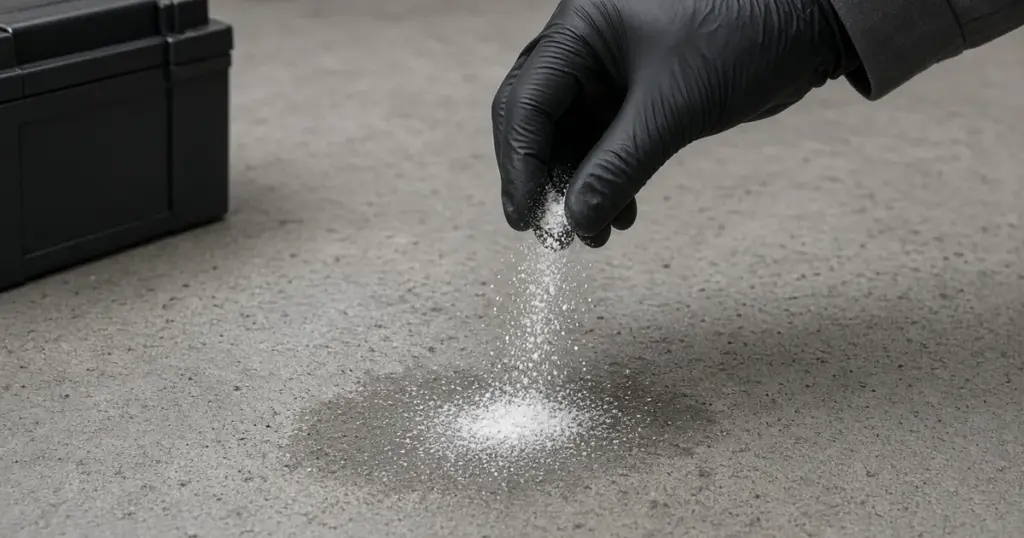
A cracked case, an overfilled flooded battery or a tipped-over battery can leave sulfuric acid in your battery box, bilge or truck bed. Battery acid is corrosive to skin, eyes, metal, fabric and fiberglass gelcoat, so it’s worth cleaning up quickly and correctly. This guide covers safe cleanup on a boat and at home.
What battery acid is
The electrolyte in flooded lead-acid batteries is a mixture of sulfuric acid and water. AGM batteries hold their electrolyte in glass mats, so they rarely spill, but a cracked or overheated AGM can still leak. LiFePO4 lithium batteries don’t contain liquid acid. If a lithium battery is leaking, swelling or smells unusual, treat it as a damaged battery and follow lithium battery fire safety guidance instead.
Before you start: protect yourself
- Eye protection: safety glasses or, better, splash goggles.
- Gloves: acid-resistant gloves such as nitrile or neoprene.
- Clothing: long sleeves and old clothes; acid eats through fabric.
- Ventilation: open hatches and work with good airflow.
- No sparks: turn off chargers and the battery switch. A leaking flooded battery may also be venting hydrogen. See battery hydrogen gas and ventilation.
See battery handling safety gear for a full kit list.
What you’ll need
- Baking soda (sodium bicarbonate), several cups for a large spill
- A bucket of fresh water
- A plastic scoop or dustpan
- Absorbent material: rags, paper towels or absorbent pads
- Heavy plastic bags for waste
- A soft brush
- pH test strips (optional)
Step-by-step cleanup
- Make the area safe. Turn off the battery switch and chargers. If the battery is cracked, disconnect it, negative cable first, and carefully remove it into a plastic tub or acid-resistant container, keeping it upright.
- Contain the spill. Keep acid from running into the bilge if you can. Block drains with rags.
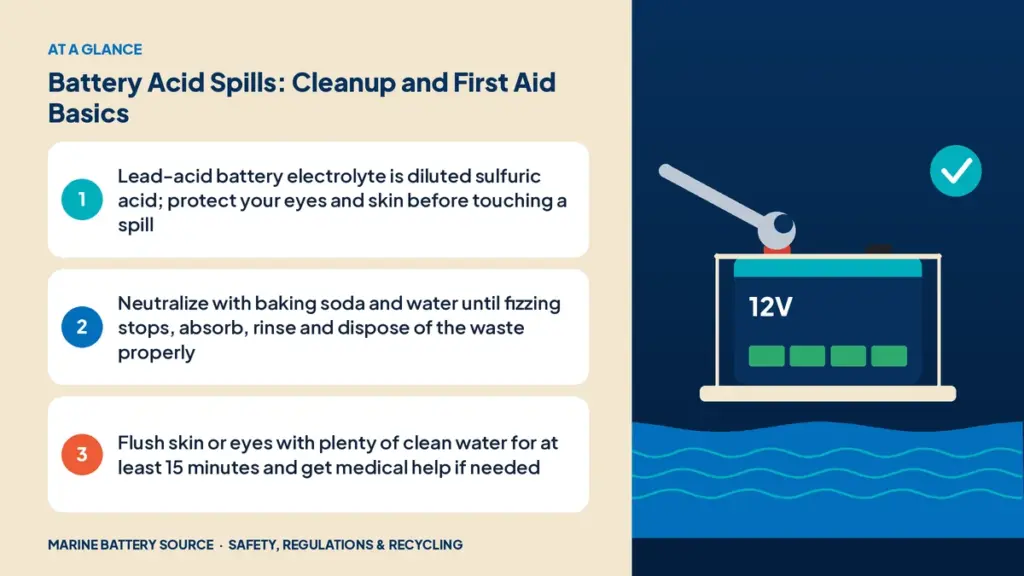
- Neutralize. Sprinkle baking soda generously over the spill. It will fizz as it neutralizes the acid. Add more until fizzing stops. For acid on vertical surfaces, mix baking soda with water to make a paste or solution and apply it with a brush.
- Check. If you have pH strips, test the residue; it should be close to neutral.
- Absorb and collect. Scoop up the neutralized slurry and wipe up the remainder with rags or pads. Bag it all.
- Rinse. Wipe or rinse the area with fresh water. On a boat, avoid flushing large amounts of residue into the bilge.
- Dry and inspect. Look for damage to wires, terminals, metal fittings and the battery box.
Acid in the bilge
If acid reaches the bilge, don’t run the bilge pump until it’s neutralized; pumping acid overboard harms the water and can be a discharge violation. Neutralize it with baking soda, absorb what you can, and collect the waste. For a large spill, contact your marina or a professional cleanup service.
Cleaning terminal corrosion
White, green or blue crust on terminals is usually lead sulfate or copper corrosion from acid vapors.
- Turn off the switch and disconnect the cables, negative first.
- Brush on a baking soda and water solution; let it fizz.
- Scrub with a terminal brush or old toothbrush.
- Rinse with a damp cloth and dry.
- Reconnect, positive first, and coat terminals with a protectant spray.
Badly corroded cable ends should be replaced. Corrosion that wicks up under the insulation means the cable is compromised.
First aid
- Skin: remove contaminated clothing and flush with plenty of clean water for at least 15 minutes.
- Eyes: flush immediately with clean water for at least 15 minutes, holding eyelids open, and get medical help.
- Swallowed: don’t induce vomiting; get emergency medical help.
Keep an eyewash bottle or a jug of clean water near where you service batteries.
Disposing of the waste and the battery
Neutralized waste and contaminated rags should be bagged and disposed of according to local rules; many counties accept them at household hazardous waste sites. A cracked or leaking battery must be recycled, not thrown away. Put it in a leak-proof plastic container and take it to a battery retailer or recycling center. See marine battery recycling.
Preventing spills
- Don’t overfill flooded batteries; fill to the level the maker specifies, after charging.
- Secure batteries so they can’t tip or shift.
- Use a battery box that can contain leaks.
- Replace batteries with cracked or bulging cases.
- Carry batteries upright, in a carrier or by the handles.
- Avoid overcharging, which can push electrolyte out of the vents.
- Consider AGM or lithium for compartments where a spill would be hard to clean.
Damage to watch for afterward
Acid keeps working on metal and wiring if any residue remains. Over the next few weeks, check for new corrosion on nearby wires, fuse holders and fittings. Discolored or brittle wire insulation should be replaced. Corrosion on electrical parts can cause resistance and heat, a fire risk; see boat electrical fire prevention.
Spills in a truck bed or garage
Batteries often tip over in transit. On concrete or a truck bed liner, the same steps apply: neutralize with baking soda, scoop up the slurry, rinse and dry. Acid can etch concrete and stain paint, so work quickly. Next time, transport batteries upright in a tub or box and strap them down.
Battery switches make cleanup safer
Being able to turn off all battery power quickly makes cleanup and cable removal safer. See marine battery switch basics.
More reading
The marine battery safety guide covers safe handling, installation and charging.
Products that help
- Dakota Lithium group 24 battery tray
- Interstate 31M-AGM (sealed, spill-proof)
- EPOCH 12V 105Ah lithium (no liquid acid)
- Browse battery accessories.
Frequently asked questions
How do I neutralize battery acid?
Sprinkle baking soda on it, or apply a baking soda and water solution, until fizzing stops.
Can I pump battery acid out of the bilge?
No. Neutralize and collect it first. Pumping acid overboard harms the water.
What should I do if battery acid gets in my eyes?
Flush with clean water for at least 15 minutes and get medical help.
Do AGM batteries leak acid?
Rarely. Their electrolyte is held in glass mats, but a cracked or overheated AGM can leak.
Do lithium batteries contain acid?
No. LiFePO4 batteries contain no liquid acid.