


Trailered Boats: Battery Care Between Trips
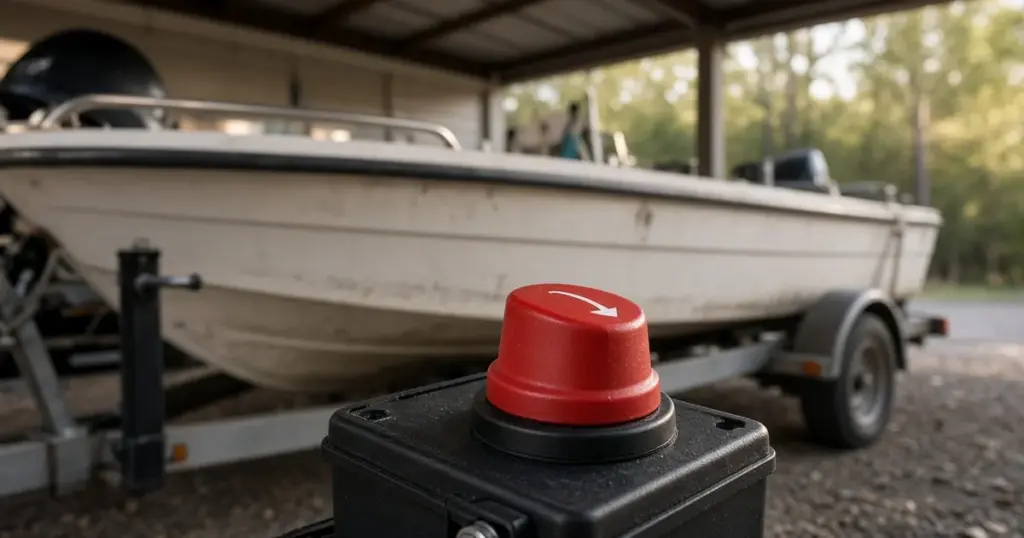
Trailered boats have an advantage: they come home with you. That makes battery care easier than for a boat on a mooring, but only if you take advantage of it. Between trips and through the off-season, a few simple habits keep your batteries charged and healthy. This guide covers trailer boat battery storage.
Between trips
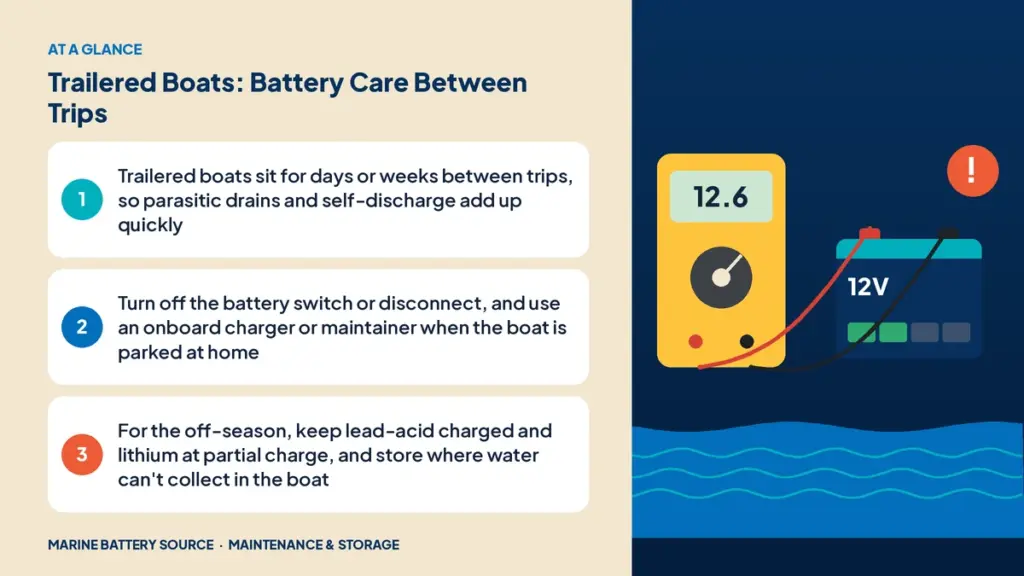
Turn off the battery switch
The simplest habit is to turn off the battery switch when you pull the boat out. This stops parasitic drains from electronics, stereos and monitors. If your bilge pump float switch is wired directly to the battery, it will still work.
Plug in the charger
If your boat has an onboard charger, plug it in as soon as you get home. A smart charger will bring the batteries to full and switch to maintenance mode. Multi-bank chargers like the EPOCH 4-bank charger handle starting and trolling batteries at once.
If you don’t have an onboard charger, use a portable smart charger or maintainer on each battery.
Don’t wait
Lead-acid batteries begin to sulfate as soon as they’re partly discharged. Charge after every trip, even short ones.
Off-season storage
Option 1: Leave batteries in the boat
Works well if:
- The boat is in a garage or covered space with power
- You connect an onboard charger or maintainer
- Freezing isn’t a risk, or batteries stay fully charged
Option 2: Remove the batteries
Best if:
- The boat is stored outside without power
- Temperatures drop well below freezing
- You want to check batteries easily
See removing a boat battery for winter.
Lead-acid
Keep fully charged with a maintainer, or recharge every four to six weeks. See storing lead-acid batteries off-season.
Lithium
Charge to the maker’s storage level, often 50% to 80%, and disconnect. Don’t charge below freezing unless the battery is heated. See how to winterize a lithium battery.
Cold weather risk
A discharged lead-acid battery can freeze and crack. A fully charged one is very resistant to freezing. See can a marine battery freeze?.
Covering the boat
A good cover keeps rain out of the boat, which protects the batteries and electronics and keeps the bilge pump from running constantly. Make sure the cover sheds water and doesn’t pool. Tilt the trailer slightly so water drains from the stern if the boat has an open drain plug.
Drain plug and bilge
Many trailer boat owners remove the drain plug during storage so rainwater drains out. If you do, the bilge pump won’t need to run. If you leave the plug in, the bilge pump must have a charged battery.
Theft protection
Batteries, especially lithium, are attractive to thieves. Options:
- Remove batteries when storing outside
- Use a locking battery box or removable-key switch
- Store the boat in a secure location
Trolling motor batteries
Disconnect trolling batteries from the motor and charge them fully. For series banks, keep each battery on its own charger bank. See storing trolling motor batteries.
Towing and batteries
- Turn off the battery switch while towing to prevent accidental operation of electronics or the trolling motor.
- Make sure batteries are secured; trailering on rough roads can loosen hold-downs.
- Check terminals after long trips.
Spring prep
Before the first trip, charge fully, test and inspect. See spring boat battery commissioning.
Battery choice for trailer boats
Lithium batteries make trailered boats lighter, which can improve towing and launching. They also have low self-discharge, so they hold charge between trips. A battery like the EPOCH 12V 105Ah LiFePO4 saves weight and maintenance. Browse our lithium marine batteries.
Rodents and storage
Mice and squirrels love sheltered boats in winter, and they chew wire insulation. Damaged insulation can short a battery cable or leave you chasing intermittent faults in spring. Keep food out of the boat, block easy entry points under the cover and check wiring before the first trip.
Common mistakes
- Leaving the battery switch on between trips
- Not charging after trips
- Storing outdoors with lead-acid batteries discharged
- Cover that pools water, keeping the bilge pump busy
- Charging lithium in freezing conditions
Using a disconnect switch
A disconnect switch makes isolating the battery fast. Removable-key switches add security. A marine-rated battery fuse on the battery positive should already be installed; check it during storage.
Garage charging safety
Charging in a garage is convenient, but follow a few rules:
- Keep the charger off the floor and away from gasoline, solvents and rags.
- Make sure the garage is ventilated when charging flooded batteries, which release hydrogen near the end of charge.
- Use an outdoor-rated extension cord of the right gauge, fully uncoiled.
- Don’t leave non-smart chargers connected for days.
- Keep the area around the battery clear so heat can dissipate.
A between-trips routine
- Pull the boat and drive home.
- Turn off the battery switch.
- Plug in the onboard charger.
- Check the charger indicators the next morning.
- Leave it in maintenance mode until the next trip.
- Unplug before towing.
This simple routine keeps batteries full and ready, and it’s the single biggest factor in getting long life from lead-acid batteries on trailered boats. Lithium owners can skip the maintenance mode but should still recharge after every trip.
Monthly checks in storage
Even with a maintainer connected, check monthly:
- Charger or maintainer indicator lights
- Battery voltage
- Water levels in flooded batteries
- Cover condition and water pooling
- Signs of rodents chewing wires, a common off-season problem
For more, see boat lift and slip battery care, winter storage for marine batteries, our marine battery maintenance guide and the seasonal boat battery calendar.
Frequently asked questions
Should I disconnect my boat battery when on the trailer?
Turn off the battery switch or disconnect the negative to stop parasitic drains, unless you’re using a charger that needs the connection.
Can I leave my onboard charger plugged in all the time?
Most smart chargers are designed for it. Check your charger’s instructions.
Should I remove my battery for winter if the boat is outside?
Usually yes in cold climates without power, so you can keep it charged and above freezing.
Do I need to charge my battery after every trip?
Yes. Lead-acid batteries should be recharged promptly to prevent sulfation.
How do I stop someone stealing my boat battery?
Remove it for storage, use a locking box or removable-key switch, or store the boat securely.