EPOCH
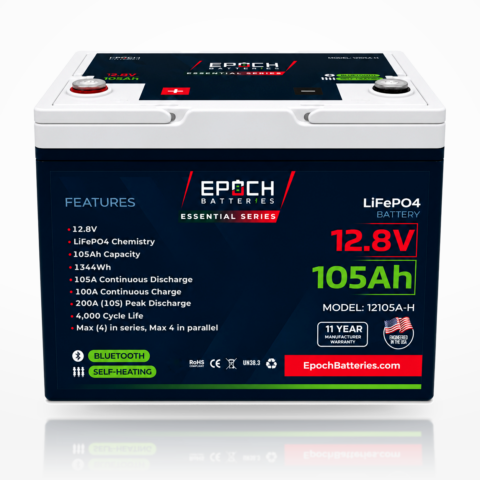
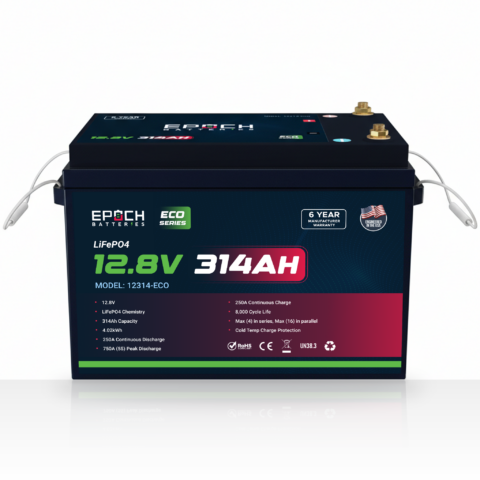
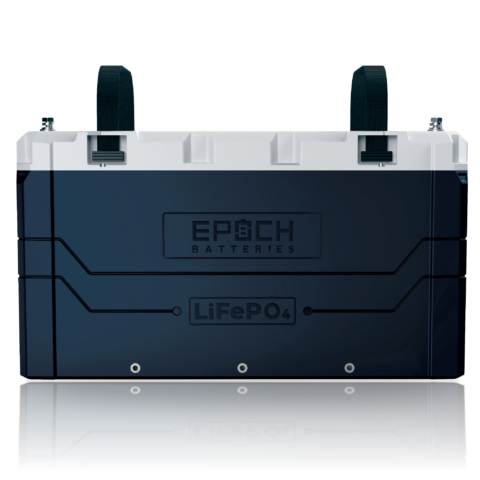
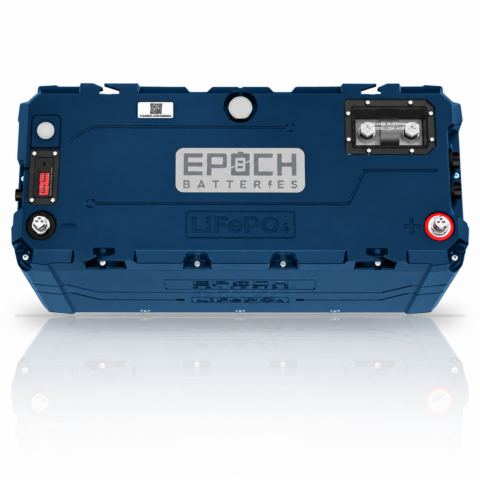
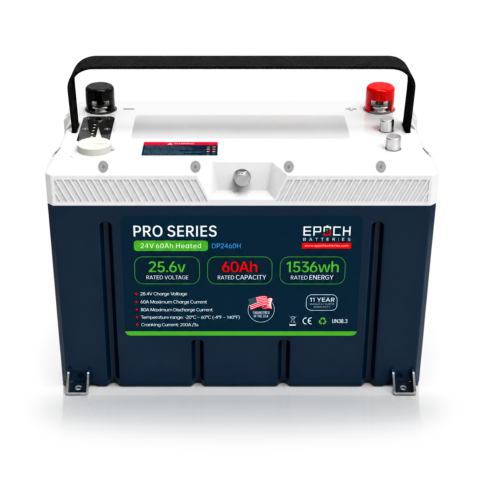
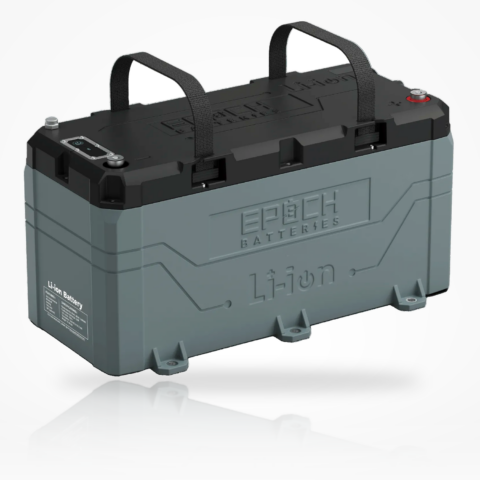
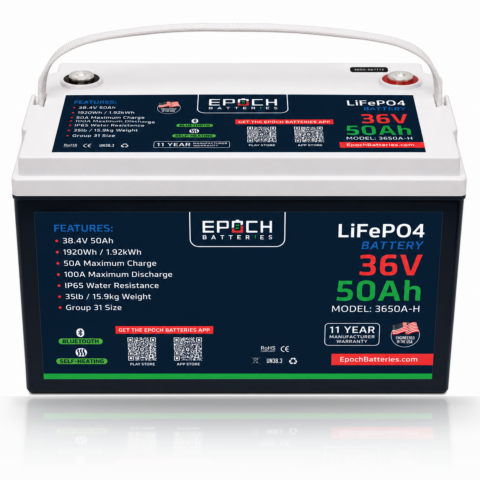
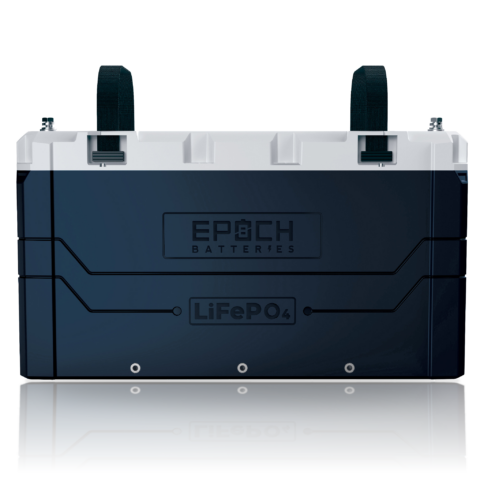
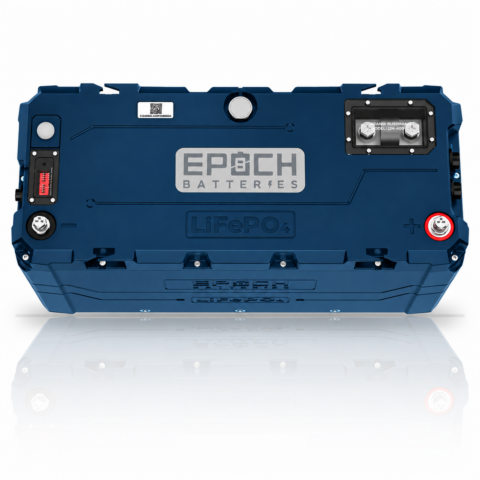
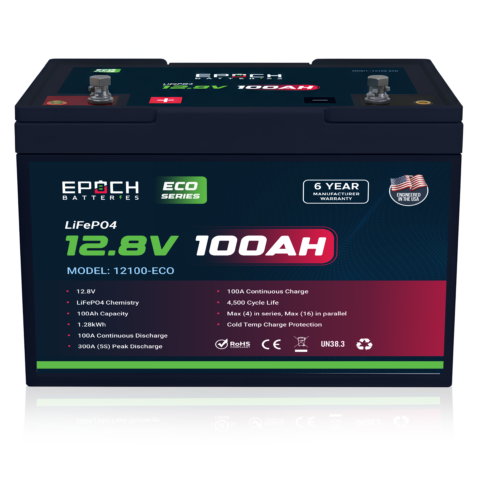
EPOCH 12V 100Ah Eco Series LiFePO4 Battery (1.28kWh)
$325.00
or 4 interest-free payments of $81.25
Ships nationwide · Flat-price installs from Venice to Gainesville, FL


Lithium iron phosphate (LiFePO4) batteries have changed what a boat’s electrical system can do. They weigh a fraction of what comparable lead-acid batteries weigh, hold a steady voltage almost all the way down, and can be cycled deeply day after day without the sulfation that slowly kills lead-acid. For anglers that means more time on the trolling motor; for cruisers it means a house bank that runs the fridge and electronics through the night with room to spare.
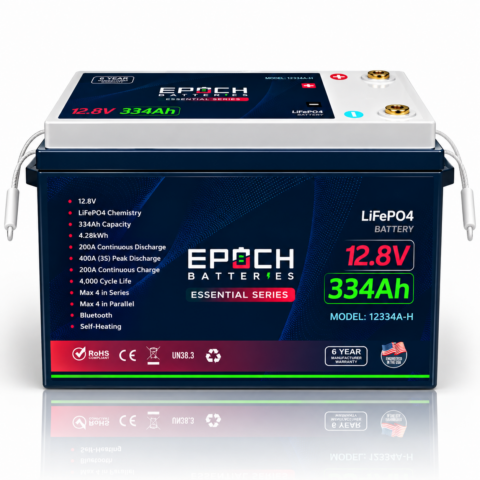
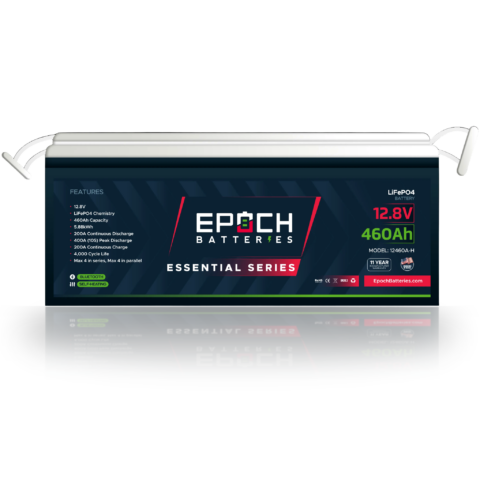
This collection brings together lithium marine batteries from Dakota Lithium, Battle Born, EPOCH, Interstate, Lithium Rhino and ECO Battery. You’ll find single 12V batteries, native 24V, 36V and 48V packs, multi-battery trolling motor sets, and dual-purpose models rated to crank an engine. Many include Bluetooth monitoring, and several offer internal heating for charging in cold weather.
Use the filters to narrow by voltage, capacity and use. Every product page lists the manufacturer’s specs, so you can check dimensions, weight and terminal layout before you order. We ship nationwide and install anywhere from Venice to Gainesville, FL.
or 4 interest-free payments of $81.25
or 4 interest-free payments of $137.25
or 4 interest-free payments of $224.75
or 4 interest-free payments of $399.75
or 4 interest-free payments of $312.25
or 4 interest-free payments of $212.25
or 4 interest-free payments of $324.75
or 4 interest-free payments of $399.75
or monthly financing with Klarna or Afterpay
or monthly financing with Klarna or Afterpay
or 4 interest-free payments of $74.75
or 4 interest-free payments of $399.75
or monthly financing with Klarna or Afterpay
or monthly financing with Klarna or Afterpay
or 4 interest-free payments of $174.75
or 4 interest-free payments of $474.75
or 4 interest-free payments of $187.25
or monthly financing with Klarna or Afterpay
or monthly financing with Klarna or Afterpay
Start with the job. A trolling motor needs deep, steady discharge at its system voltage. A house bank needs usable energy for lights, pumps, a fridge and electronics. A starting battery needs a short, high-current burst. Lithium can do all three, but not every lithium battery is built for every job, so check the “best for” line and the specs on each product page.
Match the battery to the system. A 12V trolling motor or house system takes 12V batteries. A 24V or 36V trolling motor can run on two or three 12V batteries wired in series, or on a single native 24V or 36V lithium battery, which saves space and wiring. If you go the series route, use identical batteries of the same model, capacity and age, and confirm that the manufacturer allows series connection. Our guide to wiring a 24V or 36V trolling motor walks through it.
Amp-hours (Ah) tell you how much charge a battery stores at its rated voltage. Multiply amp-hours by voltage to get watt-hours, which makes batteries of different voltages easy to compare. Because LiFePO4 can be discharged much deeper than lead-acid without harm, a lithium battery usually delivers more usable energy than a lead-acid battery with the same Ah rating. For trolling motors, see choosing a trolling motor battery by thrust and voltage; for cruising, see house bank sizing for overnights.
Measure the battery compartment and compare it against the listed dimensions. Many lithium batteries are built to familiar BCI group footprints, such as Group 24, 27 or 31, which makes swaps easier, but terminal type and position vary. Secure the battery with a tray or hold-down rated for it; you’ll find trays and hardware in Accessories.
Lithium needs a charger with a LiFePO4 or lithium profile, and engine alternators may need a DC-DC charger to charge lithium safely. Browse Chargers, and read charging lithium on a boat before you wire anything.
Most boats can convert, but it’s more than a battery swap. Charging sources, wire and fuse sizing, and battery switches all need a look. Our step-by-step guide to converting a boat to lithium covers the checklist. If you’re between Venice and Gainesville, FL, our local installation team can handle the work for you.
Yes, on separate banks. A lithium trolling motor bank and a lead-acid starting battery can coexist, as long as each bank has the right charging profile. Don’t mix chemistries within one series or parallel bank.
You need a charger with a LiFePO4 or lithium profile. Some existing chargers have a selectable lithium mode; check the manual. Chargers built only for lead-acid may not charge lithium fully, and some include modes that aren’t suitable for it.
Only if it’s built for it. Look for dual-purpose or cranking lithium models with a CCA or MCA rating, and compare that rating to your engine manufacturer’s requirement.
Follow the manufacturer’s storage guidance, which usually means a partial state of charge with all loads disconnected. See our winter storage guide.
Prices, stock and shipping options are confirmed in your cart and at checkout.
New arrivals, sale alerts and marine battery how-tos.