


Washdowns, Spray and Your Batteries: What to Avoid
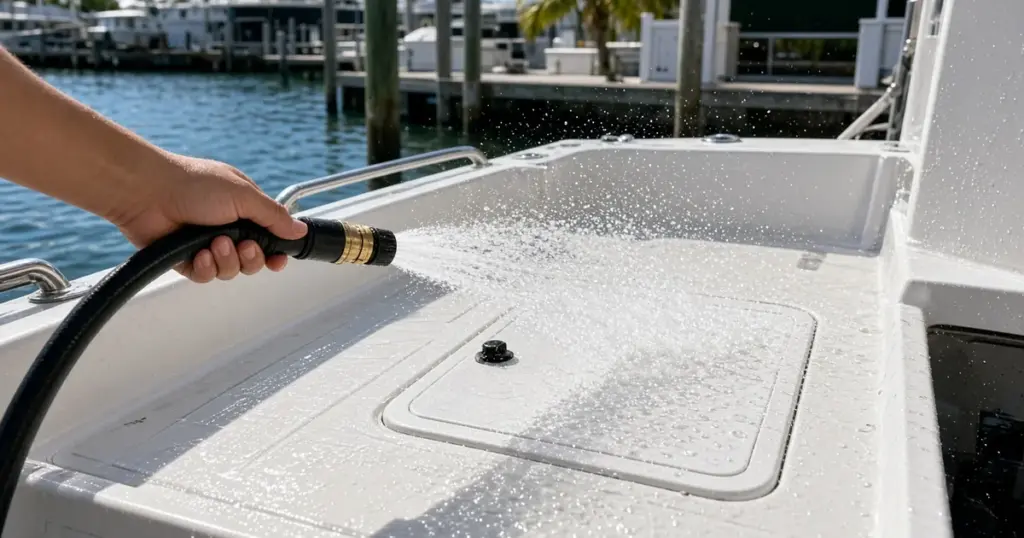
A freshwater rinse after every saltwater trip is one of the best things you can do for a boat. Salt left on gelcoat, hardware and wiring keeps pulling moisture out of the air and keeps corroding anything metal. The problem is that the same hose that saves your hardware can do real damage if it sends water into the battery compartment, the onboard charger or the switch panel. This guide covers how to wash a boat thoroughly while keeping the electrical system dry, and what to check afterward.
Why washdown water and batteries don’t mix
Batteries sit low in most boats, often in a console, a stern locker or a hatch in the cockpit sole. Washdown water runs downhill, and it finds every gap in a hatch gasket. Once inside, it causes problems in a few ways:
- Terminal corrosion. Water, especially water carrying dissolved salt from the deck, bridges terminals and lugs and starts the green and white crust that adds resistance.
- Surface leakage. A wet, dirty battery top can carry a small current between posts, slowly draining the battery even with everything switched off.
- Charger and electronics damage. Many onboard chargers are water resistant, not submersible. A direct blast at the cable glands or the AC inlet can push water where it shouldn’t be.
- Short circuits. A pressure washer can push water through a loose terminal boot and into a fuse holder or busbar.
- Trapped humidity. A closed, wet compartment stays humid for days in warm weather, and humidity is what keeps corrosion going.
If you’re fighting salt in general, start with saltwater corrosion prevention for marine batteries. This post focuses on the washdown itself.
Before you start washing
- Turn the battery switch off unless you need power for a washdown pump or bilge pump. If you do, leave on only what you need.
- Unplug shore power if the boat is at the dock and the charger is running. Washing near a live AC cord and inlet is never a good idea.
- Close and latch every hatch over batteries, chargers and electrical boxes. Check that the gaskets are seated.
- Cover the helm if your switch panel and breakers are exposed. A fitted helm cover or even a towel over the panel is enough.
- Check the scuppers and hatch gutters. Clear leaves and debris so water drains overboard instead of overflowing gutters into lockers.
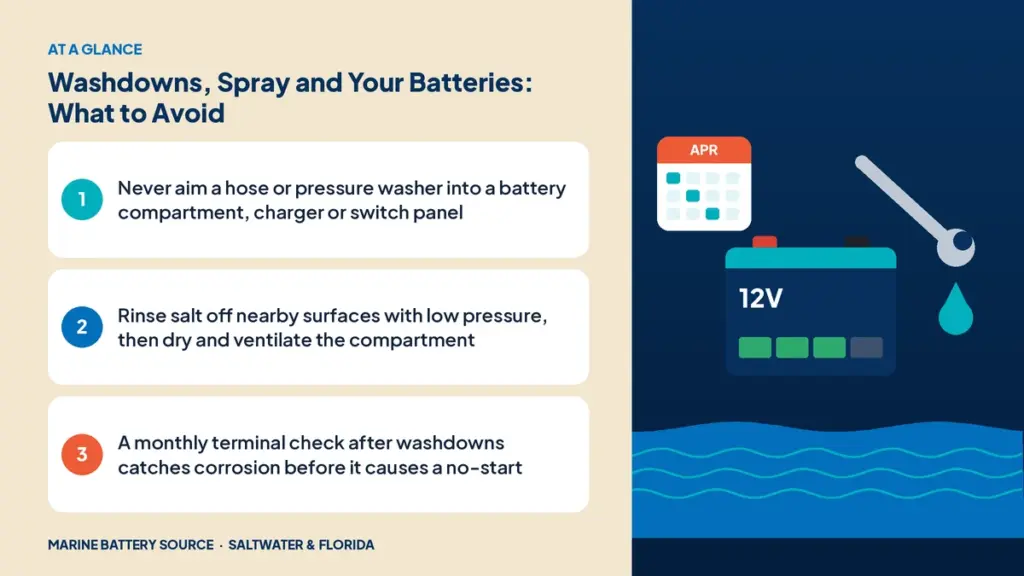
Washing technique around electrical areas
- Use low pressure near hatches. A garden hose with a shower or fan nozzle moves salt just as well as a jet stream, without forcing water past gaskets.
- Point the spray down and away from hatch seams, not across them.
- Skip the pressure washer near the console, the transom lockers and anywhere with wiring. Pressure washers are great for nonskid far from electrical gear, but they can drive water through seals and strip grease off connections.
- Rinse the console exterior gently. Water running down the console face can enter the switch panel from the top edge.
- Don’t flood the bilge. Let the bilge pump clear washdown water, then shut it off again.
- Wash the trolling motor plug area carefully. Bow receptacles are usually sealed when capped, so make sure the cap is on before you rinse.
Should you rinse the batteries themselves?
Not with a hose. If salt spray has reached the battery compartment, open the hatch and clean the battery top and terminals by hand:
- Turn everything off and disconnect the negative cable if you’ll be working near the terminals.
- Wipe the top of the battery with a damp cloth. For lead-acid batteries with crust on the terminals, a baking soda solution neutralizes acid residue. Keep it out of the vent caps on flooded batteries.
- Wipe again with a cloth dampened in fresh water, then dry thoroughly.
- Reconnect, tighten the terminals and protect them. See dielectric grease on battery terminals for how to use it without making a mess.
This takes ten minutes, and it does far more good than any amount of hosing.
After the wash: dry and ventilate
The most important part of a washdown happens after the hose is put away.
- Open the battery and electrical hatches once the deck is dry and let the compartments air out for an hour or two in the sun.
- Check for standing water in the battery box or tray. Sponge it out.
- Look at the hatch gasket. If water got in, the gasket or drain gutter is the likely culprit.
- Make sure vents aren’t blocked. Flooded batteries need ventilation for gas, and every compartment needs airflow to dry out. More on that in battery compartment ventilation.
- Run a quick voltage check if you’re about to store the boat. A battery that drops overnight after a wash may have a leakage path across a wet top.
Protecting the charger and its wiring
Onboard chargers are usually mounted in a console or a stern locker, close to the batteries. Most marine chargers carry a water-resistance rating, but the cable entry points and AC plug are the weak spots.
- Keep the AC inlet cap closed during washdowns.
- Route charger output cables with a drip loop so water runs off the low point instead of following the cable into the case.
- Never wash a charger that’s powered.
- If the charger shows a fault light after a wash, let it dry before you assume it’s failed.
If you’re choosing a charger for a wet location, a sealed multi-bank unit like the EPOCH 4-bank 12V marine charger is designed for marine installs, but even sealed units deserve a gentle rinse rather than a blast.
Lithium vs lead-acid after washdowns
Lithium batteries don’t vent acid or hydrogen in normal use, so they don’t develop the acid crust that flooded batteries do. That makes cleanup easier, but it doesn’t make them waterproof at the terminals. The posts, lugs, cable ends and any Bluetooth or communication ports still need to stay dry. For a deeper look, see lithium batteries on saltwater boats.
Flooded lead-acid batteries are the most vulnerable. Water forced through a vent cap dilutes electrolyte, and salt water inside a cell is a serious problem. If you suspect that’s happened, have the battery tested before you trust it offshore.
Signs the washdown routine is causing problems
- Green or white crust returning within weeks of cleaning
- A battery that loses charge with all loads off
- Water or rust stains in the battery tray
- Corrosion on the switch panel terminals behind the helm
- A charger that throws fault codes after washdowns
- Damp insulation or water inside connector boots
Any of these means water is reaching the electrical system. Track down the entry point, which is usually a hatch gasket, a clogged gutter or a spray pattern aimed at the wrong spot. A boat wiring corrosion inspection helps you find what the water has already touched.
Offshore and charter boats
Boats that run offshore or see daily use get washed more often, so small habits matter more. Assign one person to close electrical hatches before the hose comes out, and check terminals monthly. See offshore boat battery reliability for the rest of the routine.
Hot climates
In Florida and the Gulf, a closed compartment that got wet during the morning washdown can turn into a steam bath by afternoon. Heat plus moisture speeds corrosion and shortens battery life. Dry and air out compartments after washing, and read Florida heat and marine battery life for more on heat management.
A simple washdown checklist
- ☐ Battery switch off (or only washdown pump on)
- ☐ Shore power unplugged
- ☐ Electrical hatches latched and helm covered
- ☐ Scuppers and gutters clear
- ☐ Low-pressure rinse, spray aimed away from hatch seams
- ☐ No pressure washer near the console or lockers
- ☐ Hatches opened to air out after the deck dries
- ☐ Battery tops wiped and terminals checked monthly
Hardware that helps
- Battery boxes or trays with hold-downs keep batteries secure and slightly raised from any water in the bottom of the compartment. Our Dakota Lithium marine battery tray is one option for lithium installs.
- Terminal boots cover exposed posts.
- A fused distribution block in a dry spot keeps connections out of the splash zone. The EPOCH heavy-duty power distribution block is a clean way to consolidate cables.
Browse the rest of our marine battery accessories for trays, fuses and hardware. For the full maintenance routine, see the marine battery maintenance guide.
Frequently asked questions
Can I hose down my boat’s battery compartment?
No. Close the hatch and rinse around it with low pressure. If salt has reached the batteries, wipe them by hand with a damp cloth and dry them.
Is it safe to pressure wash a boat with batteries on board?
Yes, if you keep the pressure washer away from hatches, the console and any wiring, and turn the battery switch off first.
What should I do if water gets into the battery box?
Turn everything off, sponge out the water, wipe and dry the battery and terminals, and leave the hatch open to air out. Then find and fix how the water got in.
Do lithium batteries handle washdowns better?
They don’t vent acid, so they corrode less at the terminals, but the terminals, lugs and cables still need to stay dry.
How often should I check terminals on a saltwater boat?
Monthly is a good routine, plus any time you notice slow cranking, dim lights or a battery that loses charge overnight.