


Saltwater Wiring Inspection: Finding Corrosion Early
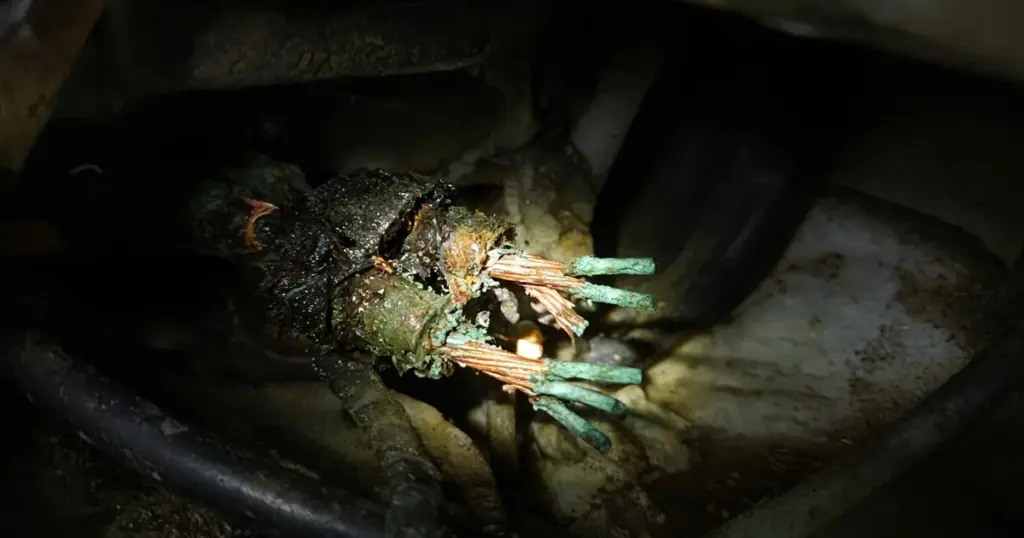
Corrosion is the main enemy of boat wiring. Salt air, spray, bilge water and humidity attack copper wire, terminals and connectors, increasing resistance until lights dim, pumps slow and electronics reset. Worse, corroded wiring in the bilge can leak current into the water and cause stray current corrosion. A regular wiring corrosion inspection catches problems early. This guide explains how to inspect boat wiring for corrosion and fix what you find.
Where corrosion hides
- Battery terminals and lugs
- Under cable insulation near lugs, where moisture wicks along the strands
- Butt splices and crimps in the bilge or under consoles
- Fuse blocks and busbars
- Switch panel terminals behind the helm
- Connectors at pumps, lights and electronics
- Trolling motor plugs and receptacles
- Wires passing through bulkheads where water collects
- Bilge pump wiring, often sitting in water
Signs of corrosion
- Green or white crust on copper terminals and wires
- Black, brittle strands inside insulation
- Swollen or stiff insulation near lugs
- Discolored or melted connectors from heat caused by resistance
- Intermittent operation of lights, pumps or electronics
- Dim lights or slow pumps
- Hot connections after running loads
Inspection tools
- Flashlight or headlamp
- Inspection mirror
- Multimeter
- Wire brush and cleaner
- Camera to photograph problem areas
See marine electrical tools for a full list.
Visual inspection
- Start at the batteries. Check terminals, lugs and the first few inches of each cable.
- Follow the main cables to the switch, fuses and busbars.
- Check the panel and fuse blocks behind the helm.
- Inspect the bilge, especially bilge pump wiring and float switches.
- Check each load’s connections at pumps, lights and electronics.
- Look at wires through bulkheads and grommets.
Bend wires gently near terminals. Corroded wire often feels stiff or crunchy.
Voltage-drop test
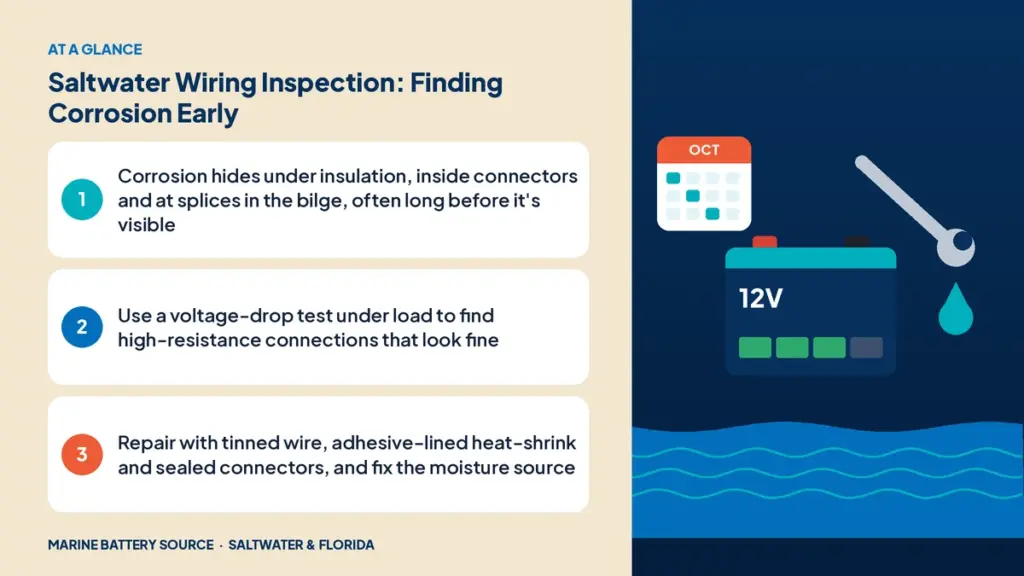
Corrosion that’s invisible can still add resistance. The voltage-drop test finds it:
- Turn on the load so current flows.
- Measure voltage from the battery positive to the load’s positive terminal.
- Measure from the load’s negative terminal to the battery negative.
- Each reading should be small, ideally under 3% of system voltage combined for critical loads.
- If one is high, move the probe along the circuit, connection by connection, until you find where the drop occurs.
Repairing corroded wiring
Light corrosion on terminals
Clean with a wire brush and baking soda solution, rinse, dry, reconnect and protect with dielectric grease or terminal spray. See dielectric grease on battery terminals.
Corroded wire ends
Cut back to bright copper, which may be several inches, and install a new terminal. If the wire is too short, splice in a new section with a sealed connector.
Corroded splices
Cut out the old splice and replace it with an adhesive-lined heat-shrink butt connector, or move the connection to a dry location with a terminal block.
Badly corroded runs
Replace the entire wire with tinned copper marine wire.
Prevention
- Use tinned copper wire and terminals. See corrosion-resistant battery hardware.
- Use adhesive-lined heat-shrink on every crimp.
- Keep connections above the bilge water line.
- Seal connectors with dielectric grease.
- Ventilate compartments. See battery compartment ventilation.
- Avoid spraying washdown water into electrical areas. See boat washdown battery safety.
- Inspect regularly, especially on saltwater boats.
Stray current risk
Corroded wiring in the bilge can leak current into the water, causing rapid corrosion of underwater metals. If anodes are wearing quickly, inspect bilge wiring first. See stray current and galvanic corrosion.
Inspection schedule
- Saltwater boats: quick check monthly, full inspection twice a year
- Freshwater boats: full inspection annually
- Offshore and heavy-use boats: more often; see offshore boat battery reliability
- After any electrical problem
Hot and humid climates
Heat and humidity speed corrosion. Boats in southern climates need more frequent inspections. See Florida heat and marine battery life.
Battery cable replacement
If battery cables show corrosion under the insulation, replace them. Use tinned copper cable sized for the circuit, with properly crimped and sealed lugs. Where several cables meet, a MRBF fuse block keeps connections tidy and protected.
Lithium batteries and wiring
Lithium batteries don’t vent acid, which reduces corrosion at the terminals, but the rest of the wiring still faces the same salt and moisture. Higher current from lithium also makes high-resistance connections heat up faster, so inspection is just as important. Batteries like the EPOCH 12V 105Ah LiFePO4 reward clean, tight connections with better performance.
Documenting findings
Photograph corroded areas and note repairs in your maintenance log. Patterns, like recurring corrosion in one spot, point to a moisture source you can fix.
Example: chasing a dim nav light
A bay boat owner notices the bow nav light is dim. The voltage-drop test shows 1.2V lost on the negative side. Following the wire, the owner finds a butt splice under the forward hatch, sitting in a puddle, with green corrosion inside. Cutting it out, adding a short section of tinned wire with adhesive-lined connectors and routing it higher fixes the problem. The owner also clears the hatch drain that let water collect.
Preventing corrosion at the helm
Helm panels see rain, spray and condensation. Keep panel covers on when the boat isn’t in use, check the gasket around the panel, and spray the back of switch terminals with a corrosion inhibitor during annual inspections. Keep a drip loop in wires entering the console so water runs off instead of following the wire to the terminals.
For broader saltwater protection, see saltwater corrosion prevention for marine batteries. Find fuses and hardware in our marine battery accessories.
Frequently asked questions
How do I know if my boat wiring is corroded?
Look for green or white crust, stiff or swollen insulation, dim lights, slow pumps and hot connections. A voltage-drop test confirms hidden resistance.
Can corroded wire be cleaned?
Light surface corrosion on terminals can be cleaned. Corroded strands inside insulation should be cut back to bright copper or replaced.
What wire is best for boats?
Tinned copper marine wire, which resists corrosion much better than bare copper.
How often should I inspect boat wiring?
Monthly quick checks and twice-yearly full inspections for saltwater boats; annually for freshwater boats.
Can corroded wiring cause stray current?
Yes. Corroded connections in the bilge can leak current into the water and corrode underwater metals.