


Choosing a Fish Finder Battery
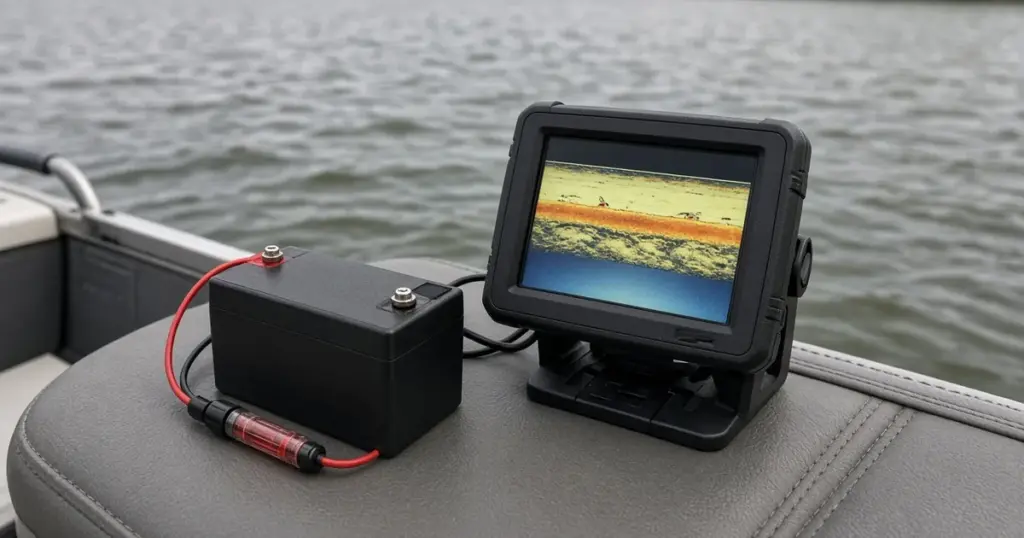
A fish finder is one of the smallest loads on a boat, but it’s also one of the most important: when it shuts off or shows interference, your day of fishing suffers. Choosing and wiring the right battery keeps your electronics running cleanly. This fish finder battery guide explains how much power electronics use, how to size a battery, and how to wire it to avoid interference.
How much power fish finders draw
Power draw depends on screen size, brightness and sonar type:
| Device | Typical draw |
|---|---|
| Small 4–5 inch fish finder | 0.5–1A |
| 7–9 inch combo unit | 1–2.5A |
| 10–12 inch display | 2–4A |
| Forward-facing sonar module | Additional 1.5–3A |
| Multiple large networked displays | 5–15A total |
Check your unit’s manual for its current draw at maximum brightness. Sonar transmit power and backlight settings both affect consumption.
Sizing a fish finder battery
Battery capacity (Ah) = draw (A) × hours of use ÷ usable fraction
Example 1: a kayak fish finder drawing 1A for 8 hours uses 8Ah. A small lithium battery like the Battle Born 10Ah (2.65 lb) handles it with a little margin; a 20Ah battery gives more headroom.
Example 2: a bass boat with two 12-inch displays and forward-facing sonar drawing 8A total for 10 hours uses 80Ah. A dedicated 100Ah lithium battery covers that.
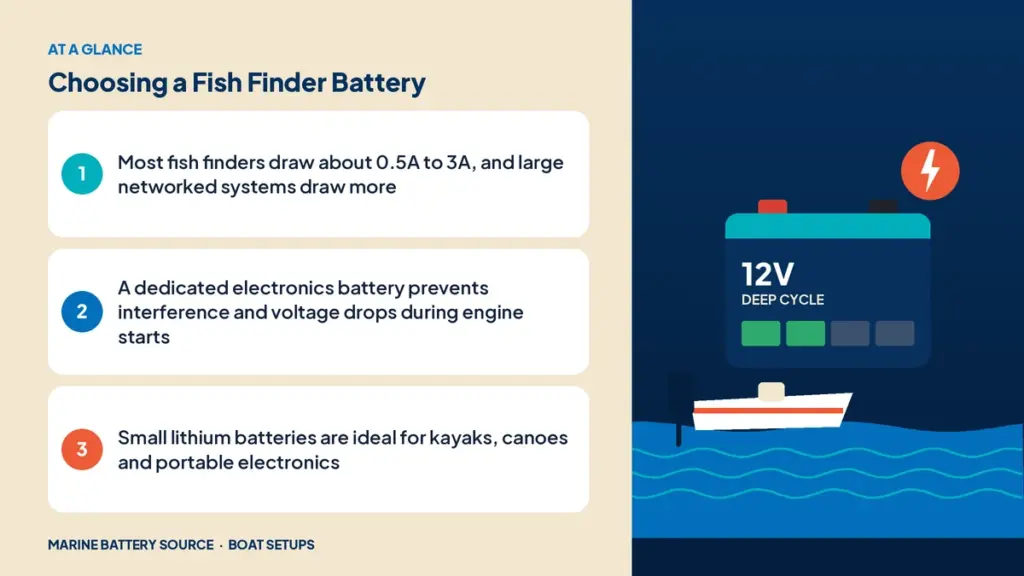
Why a dedicated electronics battery helps
On larger boats, electronics often share the cranking battery. That can cause:
- Voltage drops during engine starts that reboot displays.
- Interference from trolling motor or engine electrical noise.
- Drained cranking batteries after long days of electronics use.
A dedicated electronics battery solves all three. It’s especially valuable with forward-facing sonar, where clean, stable voltage improves performance.
Battery choices
- Small lithium: 10Ah to 30Ah batteries for kayaks, canoes and portable units. The Dakota Lithium 10Ah mini weighs under 2 lb.
- Mid-size lithium: 50Ah batteries such as the EPOCH 12V 50Ah Essential for boats with one or two displays.
- 100Ah lithium for heavy networked systems.
- AGM where budget matters, sized at twice the capacity for the same usable energy.
Lithium’s steady voltage keeps displays bright and stable until nearly empty.
Wiring a fish finder battery
- Mount the battery securely in a box or tray.
- Run positive and negative wires sized for the current and distance. Small electronics often use 16 or 14 AWG, but follow the unit’s manual.
- Fuse the positive close to the battery with the fuse rating the manufacturer specifies.
- Use a switch or a fused distribution block for multiple devices.
- Keep electronics cables away from trolling motor and high-current cables to reduce interference.
- Use sealed connectors and tinned wire.
Reducing interference
- Separate electronics power from trolling motor power.
- Run transducer cables away from power cables.
- Ensure good, clean ground connections.
- Use the electronics maker’s recommended wiring and filters.
Portable and kayak setups
Kayak anglers often use small lithium batteries in a waterproof box with quick-connect terminals. Charge after every trip with a lithium charger. See canoe setups and the small boat guide for more.
Electronics on pontoons and larger boats
On pontoons and larger fishing boats, electronics often join stereos and lights on an accessory battery. Our guide to adding a second battery for accessories explains the wiring.
Charging
- Small lithium batteries charge quickly from a compact lithium charger.
- Onboard multi-bank chargers can include a dedicated electronics battery output.
- A small solar panel with a lithium-compatible controller can maintain an electronics battery.
Cold weather and ice fishing
Electronics batteries for ice fishing face cold temperatures. Lithium discharges well in the cold but generally shouldn’t be charged below freezing unless heated. See the ice fishing battery guide.
Common problems
- Display reboots at engine start: shared cranking battery; add a dedicated battery.
- Sonar noise: wiring close to power cables, poor grounds, or shared trolling motor power.
- Battery dies early: undersized battery or brightness at maximum all day.
- Corroded connections: unprotected terminals.
Saving power on the water
Simple habits stretch a small battery further. Lower the screen brightness when conditions allow, turn off sonar channels you aren’t using, and switch off units while running between spots if you don’t need them for navigation. These changes can cut electronics draw noticeably over a long day.
Choosing your fish finder battery
- Find your electronics’ current draw.
- Multiply by your longest day of fishing.
- Add 20% to 30% margin.
- Choose lithium for light weight, or AGM sized up for budget.
Example setups by boat
Different boats lead to different electronics battery choices. A kayak angler with a single 7-inch unit might use a 12V 10Ah to 20Ah lithium battery in a small waterproof box mounted behind the seat. A jon boat or small aluminum boat with a 9-inch combo unit can run comfortably on a 30Ah to 50Ah lithium battery, or share a trolling battery if interference isn’t a problem. A tournament bass boat with two large displays at the console, one at the bow and forward-facing sonar typically benefits from a dedicated 100Ah lithium electronics battery and a separate charger output.
On a flats skiff, weight matters, so a mid-size lithium battery that powers the GPS and pumps is common. For pumps and livewells added to the same battery, use the livewell and bilge pump guide to update your energy budget.
Monitoring your electronics battery
A battery with Bluetooth monitoring, or a simple voltmeter, helps you learn how much your electronics really use. Track the state of charge at the end of a few trips and you’ll know whether your battery is the right size.
See battery setups by boat type for whole-boat planning, and browse lithium batteries in the store.
Frequently asked questions
How long will a battery run a fish finder?
Divide the battery’s usable capacity by the fish finder’s current draw. A 10Ah lithium battery runs a 1A unit for about 9 to 10 hours.
What size battery do I need for a fish finder on a kayak?
A 10Ah to 20Ah lithium battery covers most kayak fish finders for a full day.
Should my fish finder have its own battery?
On larger boats, yes. A dedicated battery prevents reboots during engine starts and reduces interference.
Can I run my fish finder off the trolling motor battery?
You can, but interference is common. A separate electronics battery usually gives cleaner sonar images.