


Spot-Lock and Anchor Mode: How They Affect Battery Life
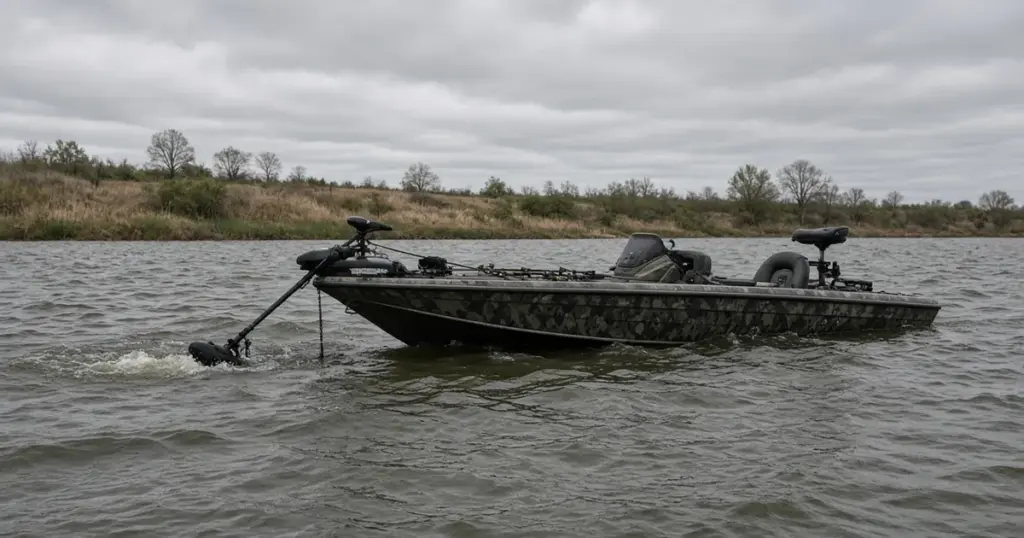
GPS anchoring changed how people fish. Spot-Lock, Anchor Mode and similar features hold a boat on a waypoint without dropping an anchor, so you can work a brush pile or a dock without drifting off. But holding position takes energy, and anglers often notice their batteries run down faster on anchor-heavy days. This guide explains how GPS anchoring affects battery drain and how to plan for it.
How GPS anchoring works
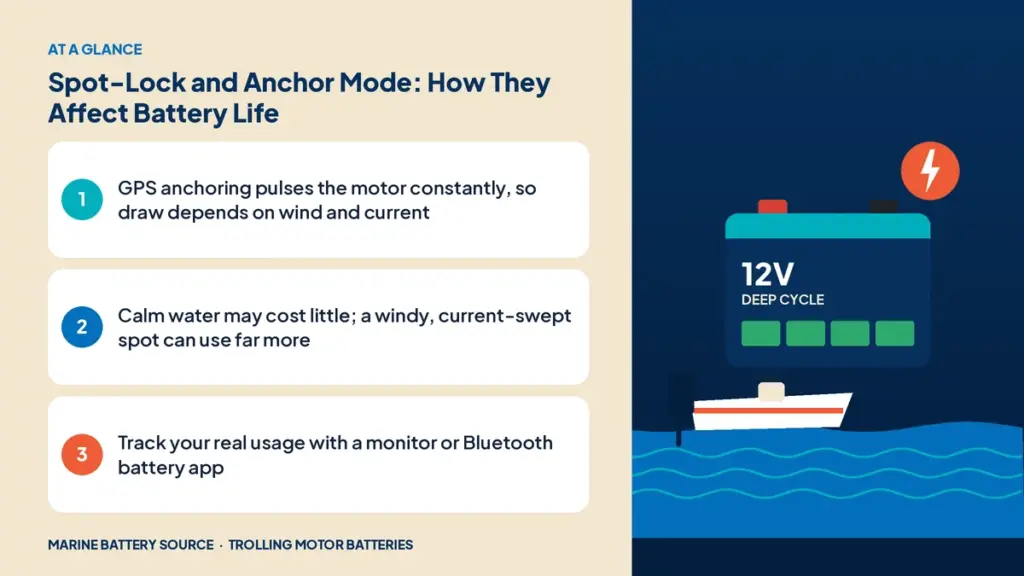
The motor’s controller compares your position to the saved waypoint. When the boat drifts, the motor turns toward the waypoint and applies thrust to correct. It repeats this constantly, sometimes several times a minute, adjusting both heading and power.
That means the energy used depends almost entirely on how hard the boat is being pushed off the spot:
- Calm water, no current: small, occasional corrections and modest average draw.
- Steady wind or current: frequent corrections at higher power.
- Gusty wind, waves or strong current: near-constant thrust, sometimes at high power.
What affects the drain
| Factor | Effect on draw |
|---|---|
| Wind speed and gusts | Biggest single factor on most days |
| Current | Rivers and tidal flats can demand steady thrust |
| Boat size and windage | Tall consoles, T-tops and high sides catch more wind |
| Anchoring precision setting | Tighter holding means more frequent corrections |
| Motor efficiency and voltage | Higher-voltage, brushless motors tend to be more efficient |
| Battery voltage sag | Lead-acid sag lowers thrust as the day goes on |
Estimating anchor-mode usage
You can’t read the draw off a chart, because it depends on conditions. But you can estimate it.
- Watch your battery’s state of charge before and after an hour on anchor in typical conditions. A Bluetooth battery or a shunt-based monitor makes this easy.
- Repeat on a windy day.
- Multiply by the hours you typically spend anchored.
The same run-time math applies as with normal trolling; see our power system guide for the formula and context.
Example: if an hour holding on a windy point drops a 36V 60Ah lithium battery by about 15%, a four-hour session would use about 60%. That leaves less margin for running the motor between spots.
Why lithium helps
- Usable capacity. Lithium can be used more deeply than lead-acid, so more energy is available for anchoring.
- Flat voltage. The motor holds its power late in the day. With lead-acid, falling voltage means less holding power in a gust.
- Monitoring. Many lithium batteries offer Bluetooth state-of-charge readings. Examples include the EPOCH 36V 100Ah and the Lithium Rhino 36V conversion kits, both listed with Bluetooth.
Ways to reduce anchoring drain
- Use a looser holding setting when precision isn’t critical.
- Use shallow-water anchors or a physical anchor in shallow water or very windy conditions.
- Position the boat bow into the wind before engaging.
- Reduce windage by lowering canvas where practical.
- Pick spots with some wind shelter when you plan to sit for long periods.
More ideas are in our list of ways to extend trolling motor run time.
Anchoring and electronics
Anglers who sit on spots also tend to run graphs, livescope-style sonar and lights at the same time. If those run from the trolling bank, they add to the drain and can unbalance a series string. A dedicated electronics battery is usually cleaner, as explained in running electronics off the trolling battery.
Heat and connections
Repeated high-current bursts stress the plug, breaker and terminals. A connection that seems fine during gentle trolling can heat up after hours of hard anchoring in wind. Inspect your plug and receptacle regularly, and see our guide to trolling motor plugs for maintenance.
Sizing a bank for heavy anchoring
If you spend half your day on GPS anchor in wind, size for it:
- Track your real usage for a few trips.
- Add the anchoring hours to your normal trolling hours.
- Allow reserve for the run back to the ramp or for an unexpected windy afternoon.
A 36V lithium bank around 100Ah gives substantial capacity for long anchoring days. The Lithium Rhino 36V 120Ah conversion kit is another larger option. If you’re still deciding on voltage and capacity, start with our pillar on choosing a trolling motor battery.
Charging after an anchor-heavy day
Deep discharges are fine for lithium within the maker’s limits, but lead-acid batteries suffer if you regularly drain them past half. Recharge promptly after the trip. Our guide to charging trolling motor batteries explains chargers and timing.
Weight and placement
Heavy anchoring often goes with bigger banks, and bigger banks add weight. Where you put it affects how the boat sits and how much wind it catches at the bow. Our battery placement guide covers trim and weight distribution.
Keep a simple anchoring log
The best data comes from your own boat. For a few trips, jot down:
- Starting and ending state of charge.
- Hours spent on GPS anchor and hours trolling.
- Rough wind speed and whether you fished current.
- The holding setting you used.
After three or four trips, patterns appear. You may find that calm mornings barely touch the bank while windy afternoons use most of it. That tells you whether you need more capacity, or just a different plan on windy days, such as switching to a mechanical anchor in shallow water or tucking behind a point.
A log also helps you notice a problem early. If similar conditions start using noticeably more of the battery than they used to, check connections, the prop and the battery’s health before assuming you need a bigger bank.
Signs your bank is undersized for anchoring
- The motor struggles to hold position late in the day.
- You routinely finish below 20% state of charge.
- Lead-acid batteries lose capacity within a season or two.
Any of these suggests more capacity, a more efficient chemistry, or changes to how you anchor. Browse trolling motor batteries to compare capacities, and see the marine battery wiring guide for connection best practices.
Frequently asked questions
Does spot-lock drain the battery fast?
It can. In calm water the draw is modest, but in wind or current the motor corrects constantly and can use energy as fast as or faster than steady trolling.
How long can I stay on GPS anchor?
It depends on conditions and battery capacity. Track your battery’s state of charge for an hour in typical conditions, then scale that to your planned anchoring time.
Is lithium better for GPS anchoring?
Lithium offers more usable capacity and steadier voltage, so the motor holds power later in the day. Many anglers who anchor heavily choose lithium for that reason.
Should I use a shallow-water anchor instead?
In shallow water, a mechanical shallow-water anchor or a traditional anchor holds the boat without drawing trolling motor power.