


Memorial Day Boating Checklist: Batteries and Electrical
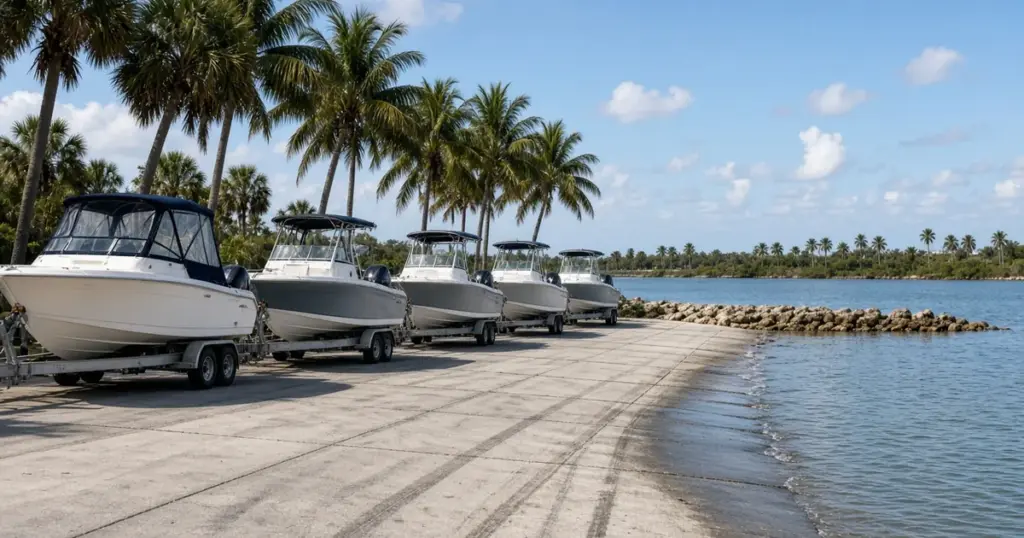
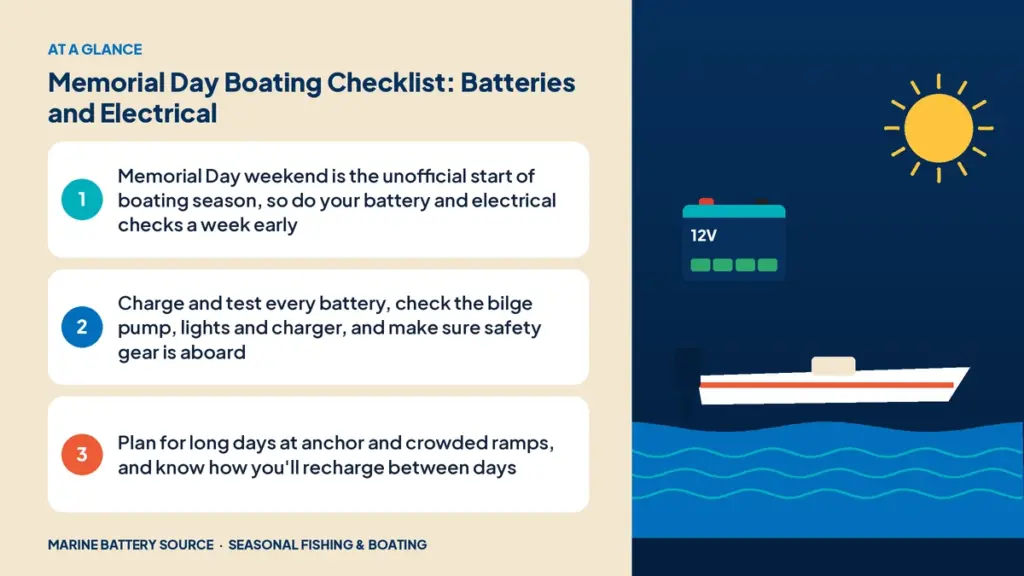
For many boaters, Memorial Day weekend kicks off the season. Ramps are busy, sandbars are crowded and boats that sat all winter head out for their first long day. It’s also one of the busiest weekends for towing services and on-water breakdowns, and dead batteries are near the top of the list. This checklist will help you avoid being one of them.
One week before: battery and electrical check
Don’t wait until Friday night. A week ahead gives you time to replace a weak battery or fix a problem.
Batteries
- ☐ Fully charge every battery with the correct charger profile.
- ☐ Check resting voltage after a few hours off the charger. A healthy 12V flooded battery reads about 12.6–12.7V; AGM about 12.8V; LiFePO4 about 13.3–13.4V.
- ☐ Load test start batteries. A healthy 12V battery stays above about 9.6V at half its CCA rating for 15 seconds.
- ☐ Check flooded battery water levels; top up with distilled water.
- ☐ Inspect cases for cracks or swelling.
- ☐ Clean and tighten terminals; apply protectant.
- ☐ Confirm batteries are secured and terminals covered.
Charging
- ☐ Onboard charger finishes a full cycle without fault lights.
- ☐ Engine charging voltage is normal, typically about 13.8–14.6V at the battery on a 12V system with the engine running.
- ☐ Battery switch works in every position.
Electrical
- ☐ Bilge pump runs, both manually and on its float switch.
- ☐ Navigation and anchor lights work.
- ☐ Horn works.
- ☐ VHF radio powers up and transmits.
- ☐ Electronics boot and get a GPS fix.
- ☐ Fuses and breakers are in good condition; spares aboard.
Why first trips fail
Most early-season battery failures aren’t sudden. A lead-acid battery that sat partly charged all winter sulfates slowly, losing capacity month by month. A small parasitic drain from a radio or stereo memory flattens it further. Corrosion builds on terminals in damp storage. Then, on the first warm weekend, the battery has to crank a cold engine and run electronics, pumps and a stereo all day. A full charge and a proper test a week ahead catch most of these problems while there’s still time to fix them.
Lithium owners
If you’ve switched to lithium, the checks are simpler but still worth doing. Confirm the state of charge in the app or on your monitor, check that terminals are tight, and make sure the charger is set to a LiFePO4 profile. If the battery spent the winter partly charged, top it up fully before the weekend.
Safety gear check
- ☐ Life jackets for everyone aboard, in good condition and the right sizes
- ☐ Throwable flotation device
- ☐ Fire extinguisher, charged and in date
- ☐ Visual distress signals, in date
- ☐ Sound-producing device
- ☐ First aid kit
- ☐ Registration and boating education documents as required
The U.S. Coast Guard Auxiliary and other groups offer free vessel safety checks, often in spring. It’s a good way to confirm your equipment. See the seasonal battery calendar for timing other checks.
Planning for a long day at anchor
Holiday weekends often mean hours at a sandbar or raft-up with the stereo playing, coolers open and lights on into the evening. That can drain a start battery faster than you expect.
- Use a separate house battery for the stereo and accessories, if you have one.
- Estimate your load. A stereo at moderate volume might draw 4–10A; lights, fans and charging devices add more.
- Start the engine periodically if you only have one battery, or better, keep the start battery isolated with the battery switch.
- Turn off what you’re not using.
See Fourth of July boat power for a detailed party-day plan.
The ramp
Busy ramps reward preparation:
- Load the boat and do your checks in the parking lot, not on the ramp.
- Make sure the battery switch is on and the engine starts before you back down.
- Have the trolling motor, if you use one, charged and ready.
Multi-day weekends
If you’re out for several days:
- Plug in every night if you have shore power.
- Plan how much you’ll use each day and how you’ll recharge.
- Keep the start battery separate from heavy accessory use.
See fishing trip power planning.
If you need a new battery
Replace weak batteries a week ahead, not on Friday afternoon. We offer flat-price installation (from $99 per battery) anywhere from Venice to Gainesville, FL; see our local installation page. Elsewhere, order early to allow shipping time.
Plan B
Even with good preparation, things go wrong on busy weekends. Carry a portable jump pack, spare fuses, a basic tool kit and a phone number for a towing service. Make sure everyone aboard knows how to use the VHF radio in an emergency.
After the weekend
- Recharge every battery fully as soon as you’re home.
- Check flooded water levels after heavy use.
- Note any problems while they’re fresh.
Florida notes
In Florida, Memorial Day comes as summer heat builds and hurricane season approaches (it starts June 1). Use this checkpoint to prepare for summer: see summer battery tips. Gulf Coast boaters planning summer scalloping should also check scallop season boat prep.
Looking back and ahead
If your batteries struggled through the winter, read winter fishing in Florida and fall fishing tips for year-round habits that keep them healthy.
Products that help
Frequently asked questions
When should I check my boat before Memorial Day?
About a week ahead, so you have time to fix problems or replace a battery.
How do I test my boat battery?
Fully charge it, check resting voltage after a few hours, and load test start batteries.
Will my stereo drain my boat battery at a sandbar?
It can. Use a separate house battery or keep the start battery isolated.
What safety gear do I need?
Life jackets, a throwable device, fire extinguisher, visual distress signals, a sound device and more, depending on your boat and waters.
What should I do after a holiday weekend on the water?
Recharge every battery fully and check flooded water levels.