


Boat Camping Power: Lights, Phones and Coolers
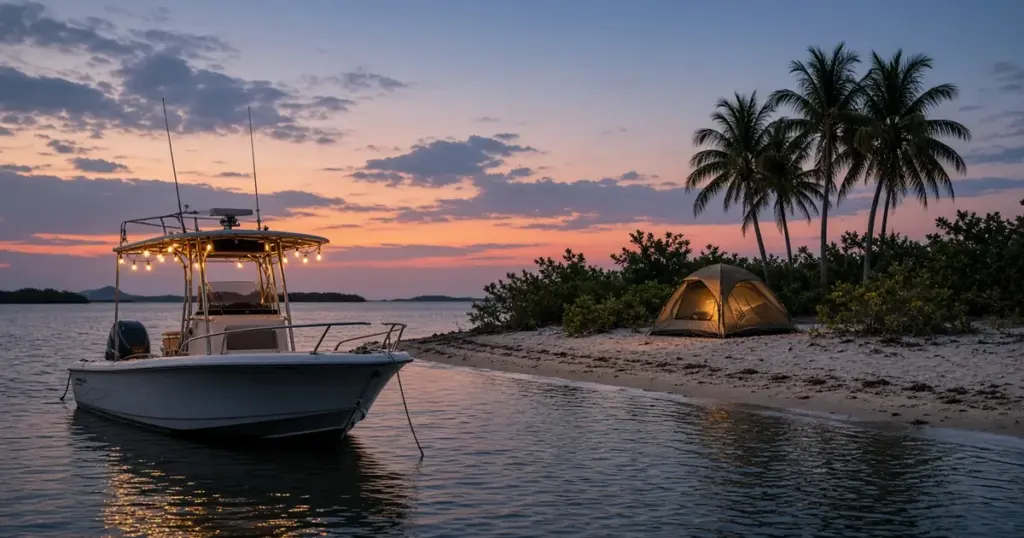
Spending a night on the boat, whether anchored off a sandbar, tied up at a primitive island campsite or beached on a quiet river bank, is one of the best parts of boating. It also changes what your batteries have to do. On a day trip, the batteries power the boat for a few hours and then get recharged at home. On a camping trip, they run lights, fans, phone chargers and perhaps a fridge all night, and they still need to start the engine in the morning.
This guide covers how to plan power for boat camping so you sleep comfortably and leave without a jump.
What uses power overnight
| Load | Typical draw (12V) | Overnight hours | Energy |
|---|---|---|---|
| LED anchor light | 0.2–1A | 10–12 | 2–12Ah |
| 12V fan | 0.5–2A | 6–8 | 3–16Ah |
| LED cabin or cockpit lights | 0.5–2A | 2–4 | 1–8Ah |
| Phone and device charging | 1–3A | 2–4 | 2–12Ah |
| 12V fridge or powered cooler | 3–5A while running | Cycles, about 30–50% duty | 15–40Ah over 24 hours |
| Bilge pump | Short cycles | Varies | Usually small |
| VHF radio (standby) | Under 1A | 10–12 | 3–10Ah |
A modest setup with an anchor light, a fan, some lights and phone charging might use 15–30Ah overnight. Add a fridge and it can easily reach 50Ah or more over 24 hours. Then there’s the next day of fishing or cruising.
Use the method in fishing trip power planning to total your loads.
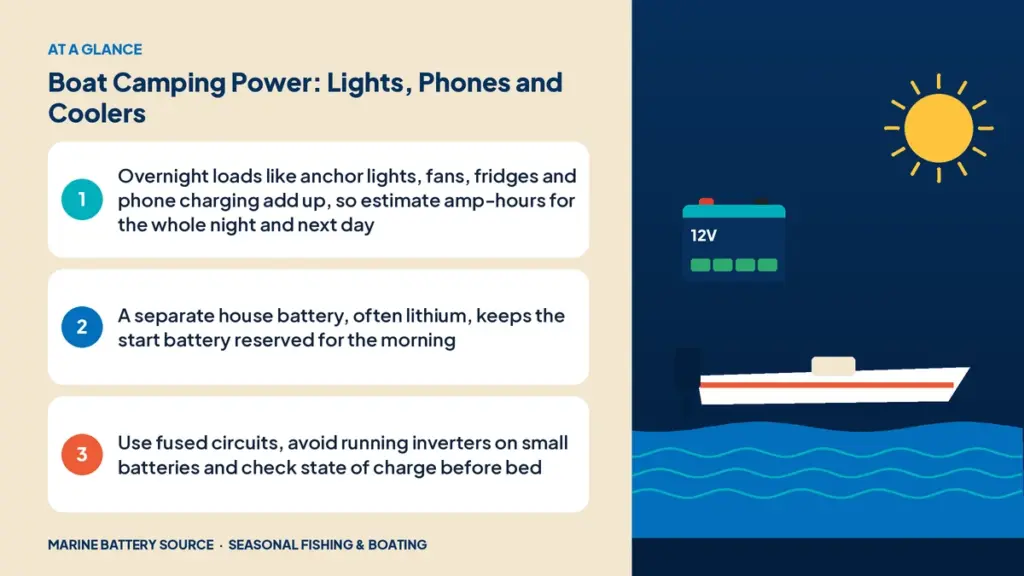
Keep starting power separate
The most important rule for boat camping is to protect the start battery:
- Run overnight loads from a separate house battery.
- Use a battery switch, charging relay or isolator so the house battery can be drained without touching the start battery.
- If your boat has only one battery, add a second one before camping, or at least turn off everything except required lights and check the battery before bed.
- Carry a charged jump pack.
If your boat has a kicker motor, its battery is another backup starting source; see kicker motor batteries.
Choosing a house battery for camping
Lithium is a strong choice for boat camping:
- It gives most of its rated capacity, so a 100Ah lithium battery provides roughly twice the usable energy of a 100Ah lead-acid battery used to 50%.
- It weighs much less, which helps small boats.
- It recharges quickly when the engine runs or when you reach shore power.
- Its voltage stays steady, so fans and fridges run well until it’s nearly empty.
AGM or flooded deep-cycle batteries also work. Size them so overnight use takes them only to about half charge.
For most small boats, a 100Ah lithium house battery covers a night or two of basic loads plus a fridge, with careful use. Larger boats or longer trips may need more.
Inverters and AC appliances
It’s tempting to bring a coffee maker, hair dryer or electric kettle and run it from an inverter. These appliances draw a lot of power: an 800W coffee maker can pull roughly 70–80A from a 12V battery while it runs. That can quickly drain a small battery or overheat undersized wiring. If you use an inverter:
- Size the battery and cables for it, and fuse it close to the battery.
- Use it for short periods only.
- Prefer 12V appliances or non-electric options (a camp stove for coffee) where possible.
Livewells and bait overnight
If you’re fishing in the morning and want bait alive overnight, a small aerator uses far less than a full livewell pump. See livewell pump batteries for draw estimates.
Safety
- Anchor light: required when anchored between sunset and sunrise in most places. Check the rules for your waters.
- Ventilation: if you’re running any engine or generator, follow carbon monoxide safety guidance and never run a generator near sleeping areas. A CO detector is worth carrying.
- Bilge pump: confirm the automatic pump works before you settle in.
- Battery security: make sure batteries are strapped down and terminals covered, especially if gear and sleeping pads are piled nearby.
Recharging on longer trips
If you camp more than one night, think about how you’ll recharge:
- Run the engine long enough during the day to recharge the house battery, through a charging relay or DC-to-DC charger.
- Plug in at a marina or campground with shore power if you pass one.
- Some campers use a portable solar panel from another supplier with a controller set for their battery chemistry.
Tournament anglers who camp near the lake during multi-day events face similar choices; see bass tournament battery planning.
Before you leave the dock
Charge every battery fully, test the anchor light, bilge pump and fans, and pack a jump pack and spare fuses. Run through the pre-trip battery check. Boat camping season varies by region, so use the seasonal battery calendar to plan maintenance before your trips.
A simple overnight routine
- Before sunset, check the house battery’s state of charge.
- Turn on the anchor light and turn off anything you don’t need.
- Make sure the start battery is isolated.
- In the morning, check the start battery before you pull anchor, and start the engine before running heavy loads.
Products that help
- EPOCH 12V 100Ah Eco lithium battery
- Battle Born 100Ah 12V lithium battery
- Battle Born marine-rated 300A battery fuse
- Browse lithium batteries.
Frequently asked questions
What battery do I need for boat camping?
A separate house battery sized for your overnight and next-day loads. A 100Ah lithium battery covers basic loads for a night or two on many small boats.
Can I run a fridge on my boat battery overnight?
Yes, with a properly sized house battery. A 12V fridge may use 15–40Ah over 24 hours.
How do I make sure my boat starts in the morning?
Run overnight loads from a separate house battery, isolate the start battery and carry a jump pack.
Can I use an inverter for a coffee maker?
Only with a battery and wiring sized for the high current, and for short periods. A camp stove is often easier.
Do I need an anchor light when camping on my boat?
Generally yes, when anchored between sunset and sunrise. Check the rules for your waters.