


Storing Spare Batteries Safely at Home
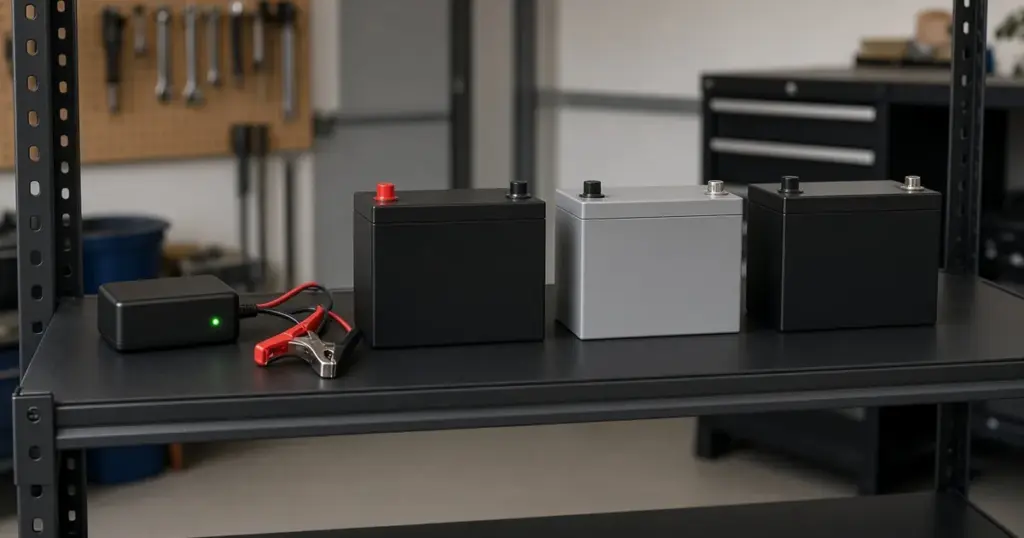
Many boaters keep batteries at home: spares for the trolling motor, batteries pulled for the off-season, or a new battery waiting to be installed. Stored well, batteries keep their health and stay safe. Stored badly, they can discharge and fail, leak acid, or create a fire or explosion risk. This guide covers how to store them properly.
Pick the right spot
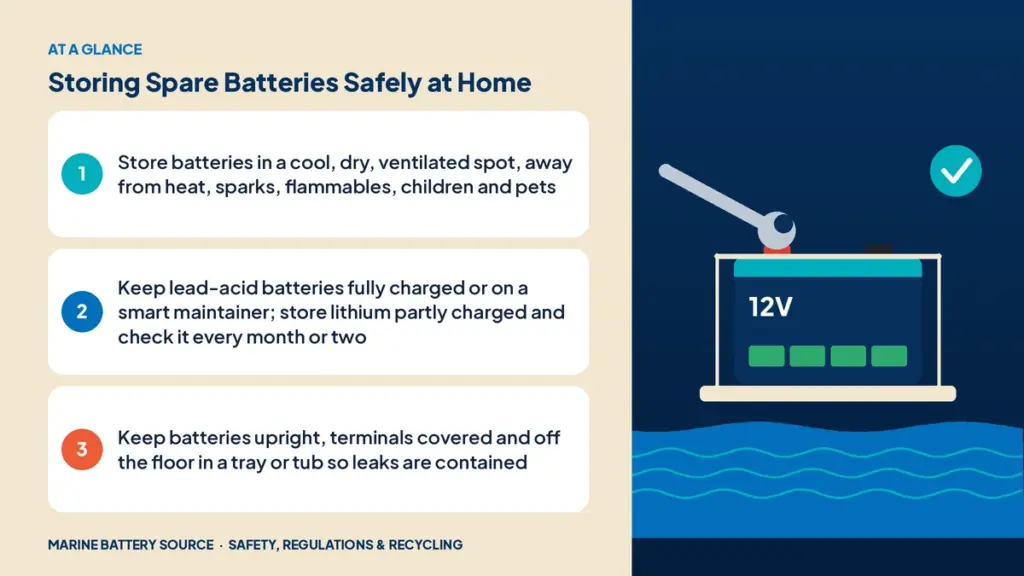
Cool, but not freezing. Heat speeds up self-discharge and aging. A climate-controlled room, an interior garage wall or a shaded storage room is better than an attic or a hot shed. In Florida, a garage can get very hot in summer, so choose the coolest spot available.
Dry. Moisture causes corrosion and leakage currents across dirty battery tops.
Ventilated. Flooded lead-acid batteries can release hydrogen, especially while charging. Store and charge them in a ventilated area. See battery hydrogen gas and ventilation.
Away from heat and sparks. Keep batteries away from water heaters, furnaces, dryers, welders, grinders and anything with an open flame or pilot light.
Away from flammables. Don’t store batteries next to fuel cans, paint, solvents or oily rags.
Out of reach. Keep batteries away from children and pets. Acid, heavy weight and short circuits are all hazards.
Off the floor, in a container
The old rule that concrete “drains” batteries is mostly a myth with modern sealed cases, but storing batteries on a shelf or in a plastic tub is still a good idea. A tub or battery box contains any leaks, keeps the battery clean and protects floors from acid stains. Store batteries upright.
Protect the terminals
Cover terminals with caps or boots, or tape them, so a dropped tool or a loose wire can’t short them. Store batteries so terminals of different batteries can’t touch each other. Don’t stack batteries on top of each other.
Charge level for storage
| Chemistry | Storage charge | Maintenance |
|---|---|---|
| Flooded lead-acid | Fully charged | Smart maintainer, or recharge every month |
| AGM | Fully charged | Smart maintainer, or recharge every 1–2 months |
| LiFePO4 lithium | Partly charged, often around 50–80% (check maker’s guidance) | Check every 1–2 months; top up if low |
Lead-acid batteries sulfate if they sit partly discharged. A fully charged flooded battery reads about 12.6–12.7V at rest. If it drops toward 12.4V, recharge it. A smart maintainer with a float or storage mode is the easiest solution.
Lithium batteries self-discharge slowly and don’t need a float charge. Many makers suggest storing them partly charged. Battle Born, for example, lists self-discharge of 2–3% per month. Don’t let a lithium battery sit empty for long; the BMS may shut down, and the cells can be harmed.
Charging at home
- Charge in a ventilated area, away from sparks and flammables.
- Use the right charger profile for each chemistry.
- Connect the charger before plugging it in, and unplug before disconnecting.
- Don’t charge lithium below freezing unless it has internal heating.
- Don’t leave a cheap, non-automatic charger connected indefinitely.
Check stored batteries regularly
Every month or two:
- Check voltage or state of charge.
- Look for swelling, cracks or leaks.
- Check that terminals are clean and covered.
- For flooded batteries, check electrolyte levels after charging.
Don’t hoard dead batteries
Old, failing batteries are more likely to leak or overheat. If a battery is at end of life, recycle it rather than storing it. See battery end-of-life signs and Florida battery disposal.
Storing damaged batteries
A cracked, leaking or swollen battery shouldn’t be stored indoors. Put a leaking lead-acid battery in a leak-proof container and take it to a recycler promptly. Keep a damaged lithium battery away from anything flammable and contact the maker or a recycler for guidance.
Off-season storage on the boat vs at home
Many boaters leave batteries on the boat with a maintainer connected to shore power, which is fine if the installation is sound. Taking batteries home makes sense if the boat lacks shore power, you want to protect them from extreme temperatures, or you want to service them. Either way, disconnect loads to prevent parasitic drain. See winter storage for marine batteries.
Moving batteries home
Transport batteries upright, secured, with terminals protected. See how to transport a marine battery safely, and for regulations on mailing lithium batteries, see shipping lithium batteries.
Lithium vs lead-acid for long storage
Lithium batteries are easier to store: no watering, slow self-discharge, no sulfation and no hydrogen in normal use. Lead-acid batteries need regular charging or a maintainer. If you often store batteries for months, that’s one more point in lithium’s favor. See lithium vs lead-acid environmental impact for the longer-term picture.
Insurance and rental homes
Some homeowner policies and rental agreements have rules about storing hazardous materials or charging large batteries indoors. If you store several batteries or a large lithium bank at home, a quick check with your insurer or landlord avoids surprises.
Storage checklist
- ☐ Cool, dry, ventilated spot
- ☐ Away from heat, sparks, flammables, kids and pets
- ☐ Upright, in a tub or on a shelf
- ☐ Terminals covered, batteries not touching
- ☐ Lead-acid fully charged or on a maintainer
- ☐ Lithium partly charged per maker guidance
- ☐ Checked every month or two
More reading
The marine battery recycling guide covers disposal, and the marine battery safety guide covers safe handling.
Products that help
- EPOCH 12V 15A lithium charger
- EPOCH 4-bank 12V charger
- Dakota Lithium group 24 battery tray
- Browse chargers.
Frequently asked questions
Is it safe to store boat batteries in the garage?
Yes, in a cool, dry, ventilated spot away from heat, sparks, flammables, kids and pets.
Does storing a battery on concrete drain it?
Not with modern cases, but a shelf or tub keeps it clean and contains leaks.
Should I store a lithium battery fully charged?
Many makers suggest partly charged, often around 50–80%. Check your battery’s guidance.
How often should I charge a stored lead-acid battery?
Keep it on a smart maintainer, or recharge it about monthly.
Can I store batteries inside my house?
A cool interior room is fine for sealed AGM and lithium batteries. Charge flooded batteries in a ventilated area, not living spaces.