


Hot, Swollen or Smelly Battery: What It Means and What to Do
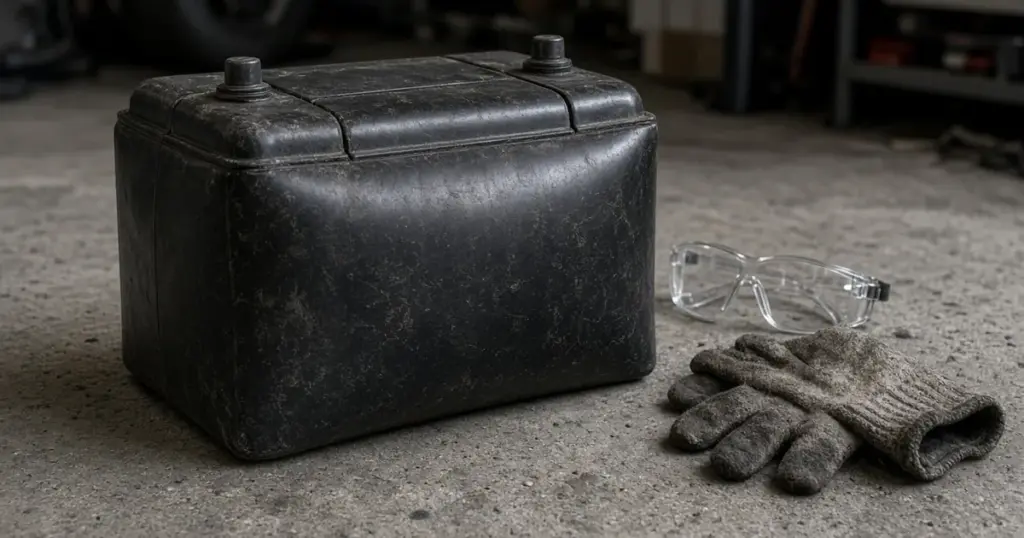
Batteries get warm during heavy use and charging. But a battery that’s hot to the touch, has a bulging case or smells like rotten eggs is telling you something is wrong. These are signs of overcharging, internal failure or excessive current, and they can lead to leaks, damage and, in rare cases, fire. Here’s how to respond safely, figure out the cause and decide what to do next.
Immediate safety steps
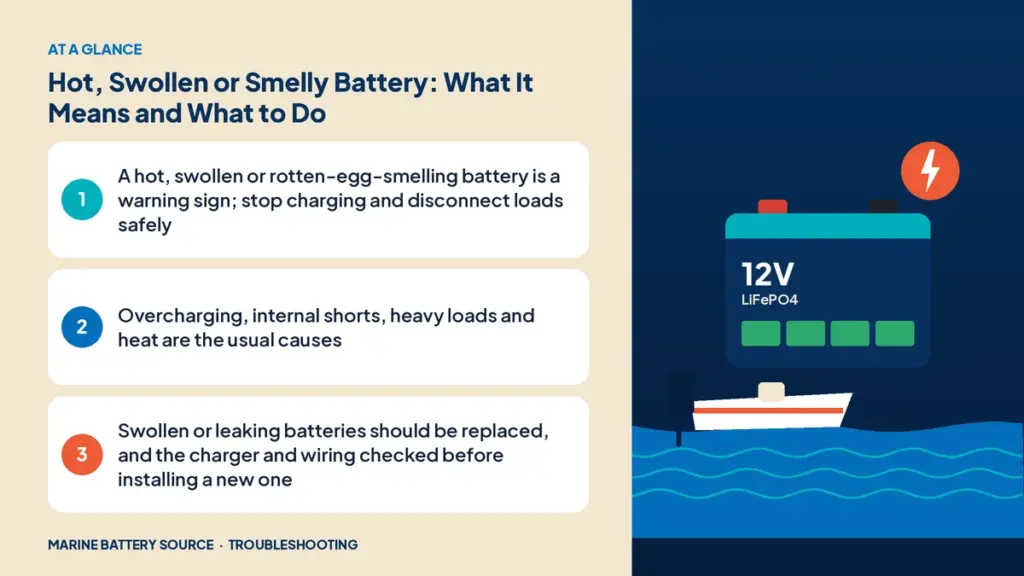
If a battery is very hot, swollen, hissing, leaking or smells strongly:
- Stop charging. Turn off the charger at the AC source or unplug shore power. Don’t pull charger clamps or cables at the battery while current flows; that can spark.
- Turn off loads with the battery switch.
- Ventilate. Open hatches and doors. Hydrogen sulfide (the rotten egg smell) and hydrogen gas from lead-acid batteries are hazardous.
- Keep sparks and flames away. No smoking, no tools that could spark.
- Don’t touch a battery that’s very hot or leaking. Let it cool.
- If you see smoke or fire, get people off the boat or away from it and call for help. Use an appropriate extinguisher only if it’s safe to do so.
Once it has cooled and is stable, you can investigate.
What each symptom means
Hot to the touch
- Normal: slightly warm during charging or heavy discharge.
- Not normal: too hot to keep your hand on, or hot while sitting idle.
- Causes: overcharging, a shorted cell, very high current, loose connections creating heat, high ambient temperature, a charger with the wrong profile.
Swollen or bulging case
- Lead-acid and AGM: swelling usually comes from overcharging or heat, which builds internal pressure, or from freezing in a discharged state.
- Lithium: LiFePO4 cells in a quality battery rarely swell, but damaged or abused cells can. A swollen lithium battery should be taken out of service and the manufacturer contacted.
- What to do: replace it. A swollen case is permanently damaged.
Rotten egg smell
- A sulfur smell comes from hydrogen sulfide released by an overcharged or failing lead-acid battery. It’s a sign the electrolyte is breaking down.
- What to do: stop charging, ventilate and inspect. Replace the battery if it keeps happening.
Hissing or leaking
- Gas escaping through vents or a cracked case.
- Electrolyte leaks are corrosive. Wear gloves and eye protection, neutralize lead-acid spills with baking soda and clean thoroughly.
Common causes
- Charger problems: the wrong profile, a failed regulator or an old unregulated charger pushing too much voltage.
- Alternator overcharging: a failed voltage regulator on the engine.
- Internal short: a failed cell causes the others to be overcharged.
- High current loads: undersized batteries pushed hard.
- Loose or corroded connections: create heat at the terminal, which can spread into the battery.
- Heat in the compartment: reduces the voltage at which batteries start gassing. See battery compartment heat.
- Age: old batteries are more likely to fail this way.
How to check what went wrong
After the battery cools:
- Measure its resting voltage. A 12V lead-acid battery reading far below normal after charging may have a shorted cell. See the marine battery voltage chart.
- Check the charger’s settings and output voltage with a multimeter. Output well above the battery’s recommended absorption voltage is a problem.
- Check the engine charging voltage with the engine running.
- Inspect terminals for heat damage and discoloration.
- Test other batteries in the same bank.
If the battery seems intact, a load test can confirm whether it still works. See battery load test vs voltage test. But don’t load test a swollen or leaking battery.
Thermal runaway
In lead-acid batteries, especially AGM, overcharging in heat can lead to a cycle where heat raises current, which raises heat. The battery can get very hot, swell and vent. Chargers with temperature compensation and the right profile prevent this. Stop charging and let the battery cool if you suspect it.
Lithium batteries
LiFePO4 is one of the most thermally stable lithium chemistries, and its BMS stops charging at high temperatures. A lithium battery that gets hot during normal use, swells or smells unusual should be disconnected and the manufacturer contacted. Don’t try to charge it again until you’ve had guidance.
Replacing the battery
- Replace any battery that’s swollen, cracked, leaking or repeatedly overheats.
- Before installing a new one, fix the cause: check the charger, the alternator regulator, the connections and the compartment temperature.
- Match the charger profile to the new battery.
For replacement, a sealed AGM like the Interstate 31M AGM or a LiFePO4 battery like the EPOCH 12V 105Ah are common choices. Pair it with a charger set for that chemistry, like the EPOCH 12V 15A lithium charger for lithium.
Disposal
Lead-acid batteries are recyclable and shouldn’t go in the trash. Most retailers and recycling centers accept them. Damaged lithium batteries need special handling; check with the manufacturer or your local hazardous waste program.
Prevention
- Use a smart charger with the correct profile and temperature compensation.
- Check charging voltage once a season.
- Keep terminals tight and clean.
- Ventilate battery compartments.
- Replace aging batteries before they fail.
- Inspect batteries monthly for swelling or leaks.
Related problems
If the battery isn’t hot but keeps dying, see how to test a marine battery. For a full step-by-step process, see the marine battery troubleshooting guide. Wiring heat and voltage drop are covered in boat electrical problems troubleshooting.
Shop AGM and lead-acid batteries.
Frequently asked questions
Is it normal for a boat battery to get warm?
Slightly warm during charging or heavy use is normal. Hot to the touch, especially at rest, is not.
What does a rotten egg smell from a battery mean?
It’s hydrogen sulfide from an overcharged or failing lead-acid battery. Stop charging, ventilate and inspect.
Can a swollen battery be used?
No. A swollen case means internal damage. Replace it.
What causes a battery to overheat while charging?
Usually overcharging from the wrong profile or a faulty charger, a shorted cell or high compartment temperature.
Is a hot lithium battery dangerous?
LiFePO4 is stable, but a hot or swollen lithium battery should be disconnected and the manufacturer contacted.