


How Hot Does a Battery Compartment Get? Managing Heat
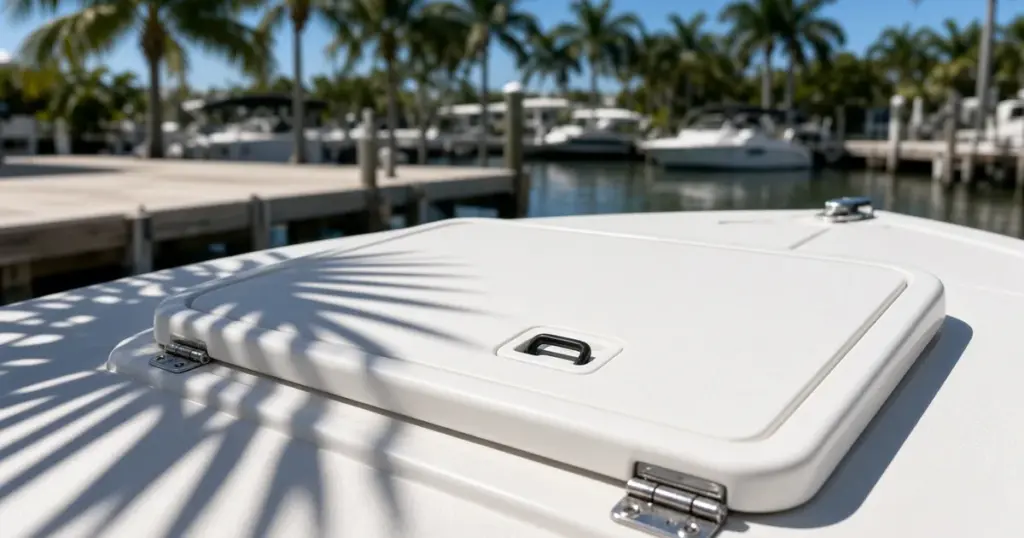
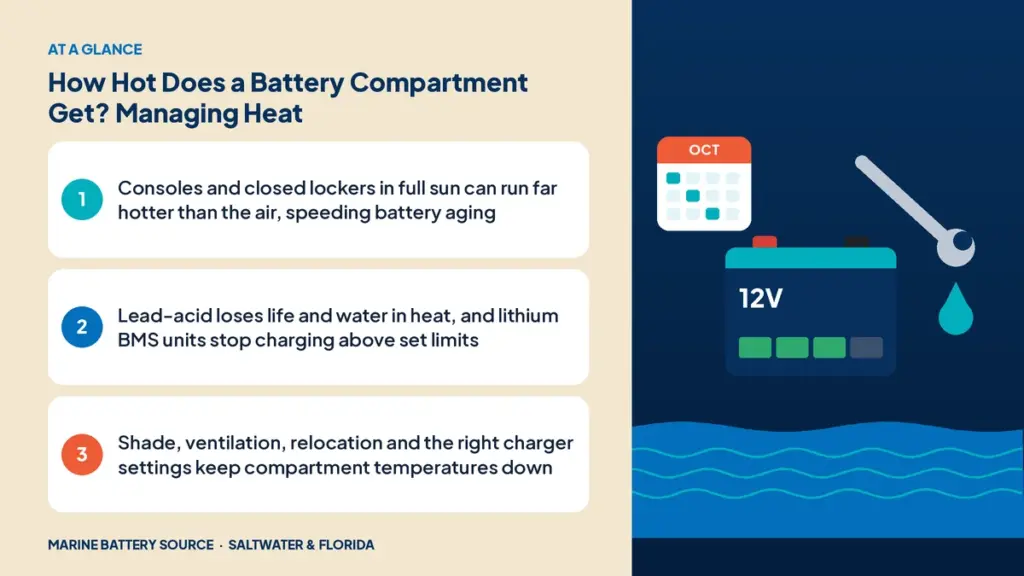
Heat is one of the main reasons boat batteries fail early, and the battery compartment is often the hottest spot on the boat. A console or stern locker that sits in full sun all afternoon can get much hotter than the outside air, especially if it also holds electronics, a charger or a nearby engine. This guide explains how compartment heat affects different battery types, how to measure it and what you can do to bring it down.
Why compartments get so hot
- Solar gain. Gelcoat and dark surfaces absorb sun, and closed compartments trap the heat.
- Poor airflow. Many consoles and lockers have no vents or only a small one.
- Nearby heat sources. Engines, exhaust, chargers and inverters add heat.
- Charging heat. Batteries warm during charging, especially at high currents.
- Humidity. Damp air holds heat and slows evaporative cooling.
In southern climates, a closed console can easily run well above ambient on a summer afternoon. See Florida heat and marine battery life for how that translates into shorter battery life.
How heat affects each battery type
Flooded lead-acid
- Faster plate corrosion and shorter life
- Faster water loss; plates exposed if not topped up
- Higher self-discharge
- Increased gassing
AGM and gel
- Shorter life from accelerated aging
- Risk of drying out if overcharged in heat
- In extreme cases, thermal runaway if charged at high voltage while hot
Lithium (LiFePO4)
- The BMS typically stops charging above a set temperature limit and may disconnect above a higher limit
- Long-term heat exposure shortens cycle life
- Generally more heat tolerant than lead-acid in day-to-day use, but not immune
Check your battery’s datasheet for its charge and discharge temperature limits.
Measuring compartment temperature
- Use an inexpensive digital thermometer with a remote probe placed near the batteries.
- Many lithium batteries report cell temperature through an app or monitor.
- Check on a hot afternoon after the boat has sat in the sun, and again while charging.
If the compartment is regularly very hot to the touch, it’s worth fixing.
Ways to reduce heat
Shade
- Use a boat cover or console cover when the boat sits.
- Park under a covered lift, a boathouse or shade when possible.
- Light-colored covers reflect more heat than dark ones.
Ventilation
- Add or enlarge vents so air can enter low and exit high.
- Use louvered vents that keep spray out while letting air flow.
- A small fan on a thermostat can help in enclosed consoles. Wire it with its own fuse.
- Flooded batteries also need ventilation for hydrogen. See battery compartment ventilation.
Separation
- Keep chargers and inverters out of the same tight space as the batteries if possible, or leave room for airflow.
- Keep batteries away from engine heat and exhaust.
Relocation
Some boats have better spots: under a leaning post, in a ventilated stern locker or under a seat with airflow. Moving batteries requires proper cable sizing, fusing and secure mounting, and it can change the boat’s balance. Moving heavy lead-acid batteries changes trim; lighter lithium makes relocation easier.
Charging adjustments
- Temperature compensation: many lead-acid chargers have a temperature sensor that lowers charging voltage when the battery is hot. Use it.
- Lower charge current in very hot compartments if your charger allows.
- Lithium: let the BMS manage temperature limits; don’t try to bypass them.
Battery choice for hot compartments
Sealed batteries avoid water loss and gassing problems. Lithium’s light weight makes relocation easier, and its BMS protects against charging when too hot. Options:
- EPOCH 12V 105Ah LiFePO4 for house and trolling use
- Trojan 31-AES AGM for those staying with lead-acid
Browse lithium marine batteries.
Signs of heat damage
- Bulging or warped cases
- Rapid water loss in flooded batteries
- A rotten egg smell
- Shorter run time than last season
- Lithium battery stopping charging on hot afternoons
- Batteries that are hot to the touch after sitting, not just after charging
A battery that’s swollen, leaking or very hot should be disconnected and inspected. See hot, swollen or smelly batteries.
Florida flats and bay boats
Flats boats often keep batteries in small, sealed hatches in the deck. They get very hot. Lithium trolling batteries and shade-friendly habits help. See Florida flats fishing power.
Seasonal and storage heat
Boats stored for the summer while owners are away face months of heat. Store batteries at the manufacturer’s recommended state of charge, disconnect them and ventilate the compartment. Read snowbird boat battery storage and the seasonal boat battery calendar.
Storms and heat
Closed hatches during storms trap heat and humidity. After the storm passes, open compartments to air out. If lightning struck nearby, see lightning and boat electrical systems.
Year-round use
Year-round boaters can build heat checks into their routine, especially in July through September. See year-round boating battery care.
Salt and heat together
Heat speeds corrosion, and salt provides the electrolyte. Hot, salty compartments corrode terminals especially fast. See saltwater corrosion prevention.
Heat checklist
- ☐ Measure compartment temperature on a hot afternoon
- ☐ Cover or shade the boat when parked
- ☐ Add or improve vents
- ☐ Separate chargers and batteries
- ☐ Use temperature compensation on lead-acid chargers
- ☐ Check flooded battery water levels monthly in summer
- ☐ Watch for swelling, smell and heat
Mounting trays like the EPOCH battery tray keep batteries secure if you relocate them. Find more in marine battery accessories.
Frequently asked questions
How hot is too hot for a boat battery?
It depends on the battery. Check the manufacturer’s limits. In general, the cooler the compartment, the longer the battery lasts.
Why does my lithium battery stop charging on hot days?
The BMS stops charging when the cells exceed a safe temperature. It resumes once they cool.
Can I add a fan to my battery compartment?
Yes. A small fused fan, ideally on a thermostat, helps move hot air out. Make sure it’s rated for the environment.
Does a boat cover help keep batteries cool?
Yes. Shade reduces solar heating of the console and lockers, especially with light-colored covers.
Should I relocate my batteries to a cooler spot?
If your boat has a ventilated location, it can help. Size cables and fuses correctly and secure the batteries properly.