


Walleye and Multi-Species Boat Battery Setups
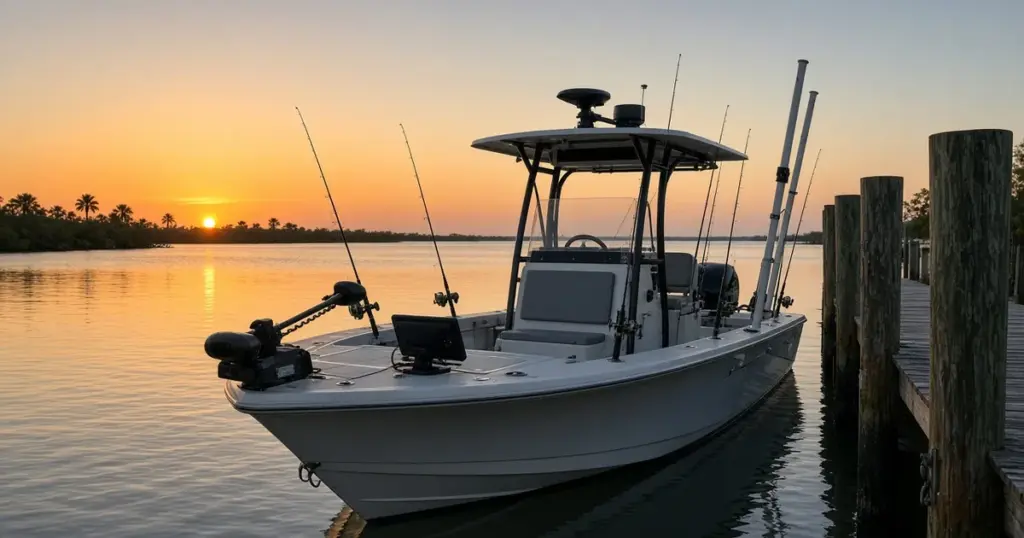
Walleye and multi-species boats are some of the most electrically complex fishing boats on the water. A typical rig has a big outboard, a gas kicker motor for trolling, a bow-mount electric trolling motor, multiple electronics, livewells and sometimes downriggers. They also fish in cold water and cold weather, from ice-out through late fall. This guide explains multi-species boat battery setups and how to plan for cold-weather reliability.
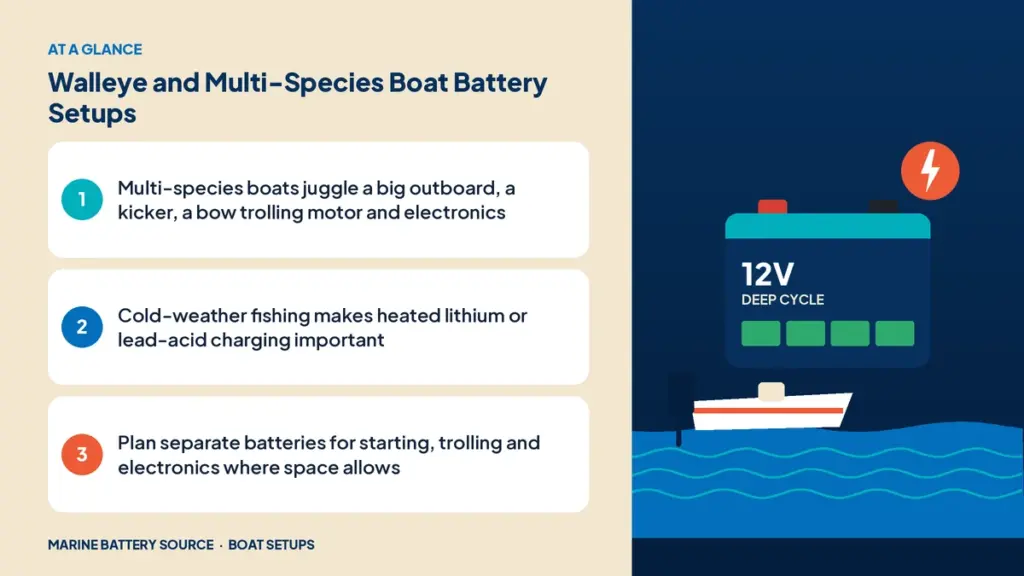
The loads on a multi-species boat
- Main outboard starting and engine electronics.
- Kicker motor, often electric-start, used for trolling.
- Bow-mount trolling motor, commonly 24V or 36V on larger boats.
- Electronics: multiple large displays, sonar, sometimes forward-facing sonar, GPS and autopilot integration.
- Livewells and pumps.
- Electric downriggers on Great Lakes and big-water boats, which draw significant current when retrieving.
A typical battery layout
- Cranking battery for the main outboard, and often the kicker.
- Trolling bank: two or three 12V batteries, or a single 24V or 36V lithium battery.
- Electronics or house battery, increasingly common for heavy electronics loads.
- Multi-bank onboard charger.
Some boats give the kicker its own small starting battery; others start it from the main cranking battery.
Cold weather is the defining challenge
Multi-species anglers fish when other boaters have put their boats away. Cold affects batteries in two ways:
- Lead-acid batteries deliver less cranking power and capacity in the cold, but they can be charged below freezing.
- Lithium batteries generally shouldn’t be charged below about 32°F unless they have built-in heating. Discharge is possible at lower temperatures, with reduced performance.
If you charge in an unheated garage or on the water in freezing weather, choose heated lithium batteries or stick with lead-acid. Heated lithium options include the EPOCH 36V 50Ah Essential and the Dakota Lithium DL 12V 135Ah heated. Many larger EPOCH batteries also list heating.
Starting batteries for the main engine and kicker
Size the cranking battery for the main engine’s spec with margin for cold. A battery that’s adequate in July may struggle on a frosty October morning. Strong cold-cranking examples include the Interstate 27M-XHD at 800 CCA. If the kicker shares the battery, factor in its starts too.
The trolling bank
Multi-species boats are often heavier than bass boats and fish in wind on big water, so 36V motors are common. Sizing follows the same approach as any trolling bank: estimate average draw and hours, then size for chemistry. When the kicker handles most trolling, the electric motor may see less use, and a smaller bank can suffice. Many anglers convert to a single 36V lithium battery to save weight and simplify charging.
The electronics battery
Multiple large displays and forward-facing sonar running all day can draw a lot. A dedicated electronics battery protects the cranking battery and avoids interference from the trolling motor. Lithium keeps weight down; a 50Ah to 100Ah battery covers most setups.
Downriggers
Electric downriggers draw high current briefly when retrieving weights. Wire them per the maker’s instructions, usually to the house or cranking battery with their own fuses or breakers. If you run several, include their use in your energy budget.
Charging
- A multi-bank onboard charger is the standard. Count outputs carefully: cranking, three trolling batteries and an electronics battery means five banks.
- For lithium batteries, each output must have a lithium profile; for a single 36V lithium battery, use a 36V lithium charger or multi-voltage unit.
- A DC-DC charger can top up the trolling bank from the outboard on long runs.
- Kicker motors often have small charging outputs that help maintain the cranking battery while trolling.
Typical configurations
| Setup | Batteries | Notes |
|---|---|---|
| Traditional | Cranking + three 12V lead-acid trolling | Charges in the cold; heavy |
| Lithium trolling | Cranking (lead-acid) + one 36V heated lithium | Saves weight; heated for cold charging |
| Full system | Cranking + 36V lithium + lithium electronics battery | Most capacity and least weight |
A sample cold-weather day
Picture a late-October walleye trip: 38°F at launch, a two-hour kicker troll along a breakline, an hour on the bow motor working a reef, and electronics running for eight hours. The cranking battery must start the main engine cold at dawn and again after hours of electronics use if they share it. The trolling bank sees moderate use because the kicker does most of the work. The electronics draw is steady all day. Back at the ramp, the boat goes into an unheated garage overnight, where a non-heated lithium battery may not accept a charge until it warms up. Planning for that last step is what separates a reliable cold-weather setup from a frustrating one.
Winter storage
After the season, charge every battery fully. Store lead-acid batteries charged and maintained to prevent freezing damage. Follow the maker’s storage guidance for lithium. Disconnect loads with battery switches.
Comparing with other boats
Multi-species rigs share a lot with bay boats and fishing pontoons, but the cold-weather emphasis is unique. Wake boat owners face very different loads; see wake boat setups. Electric propulsion is covered in the electric outboard guide.
Pre-season checklist
- Test every battery, especially the cranking battery, before ice-out.
- Inspect terminals, cables and trolling motor plugs.
- Confirm the onboard charger reaches full on every bank.
- Check that lithium batteries’ heating functions work, if equipped.
- Verify kicker starting and charging.
Common problems
- Slow cranking on cold mornings: cranking battery too small or aging.
- Lithium won’t charge in the cold: non-heated battery below its charge temperature limit.
- Electronics shut off: voltage sag on a shared battery; add an electronics battery.
- Trolling bank out of balance: accessories tapped from one battery.
For the overview, read battery setups by boat type and small boat electrical basics. Browse trolling motor batteries in the store.
Frequently asked questions
What batteries does a walleye boat need?
Typically a cranking battery for the main engine and kicker, a 24V or 36V trolling bank, and often a dedicated electronics battery.
Can I use lithium batteries for cold-weather fishing?
Yes, but most lithium batteries shouldn’t be charged below about 32°F unless heated. Heated models address this.
Should my kicker motor have its own battery?
It’s optional. Many boats start the kicker from the main cranking battery; a separate battery adds redundancy.
How many banks does my onboard charger need?
One for each 12V battery in a lead-acid or series lithium system, plus the cranking and electronics batteries. A single 36V lithium battery needs one 36V output.