


Redfish and Snook Season: Power for Shallow-Water Days
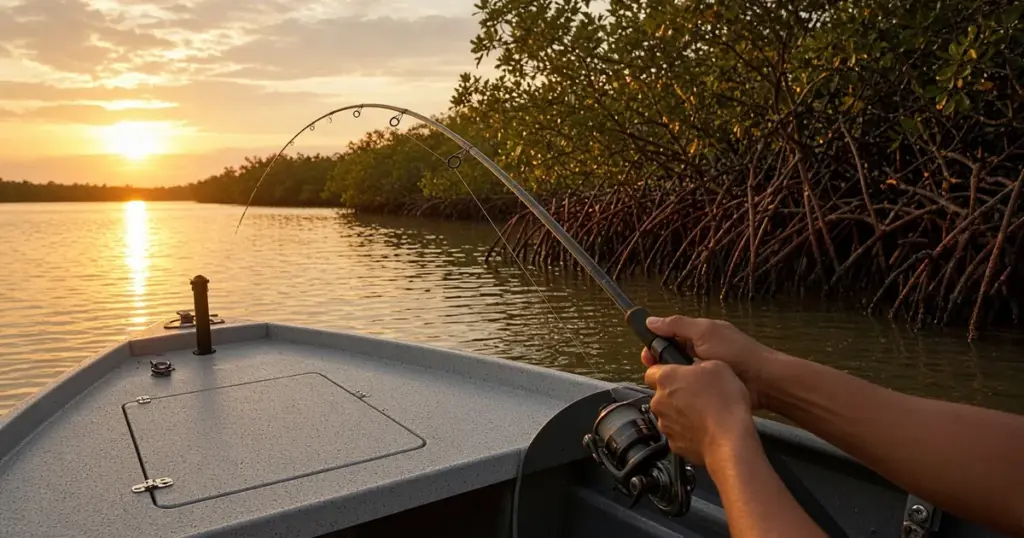
Redfish and snook fishing in Florida is about moving quietly. Anglers work mangrove shorelines, oyster bars, docks and grass flats, often in water barely deep enough to float the boat. The outboard gets you to the area; the trolling motor, shallow-water anchor and push pole do the rest. That makes inshore fishing one of the most demanding uses of a trolling motor battery bank. This guide covers how to plan power for a full day on the flats.
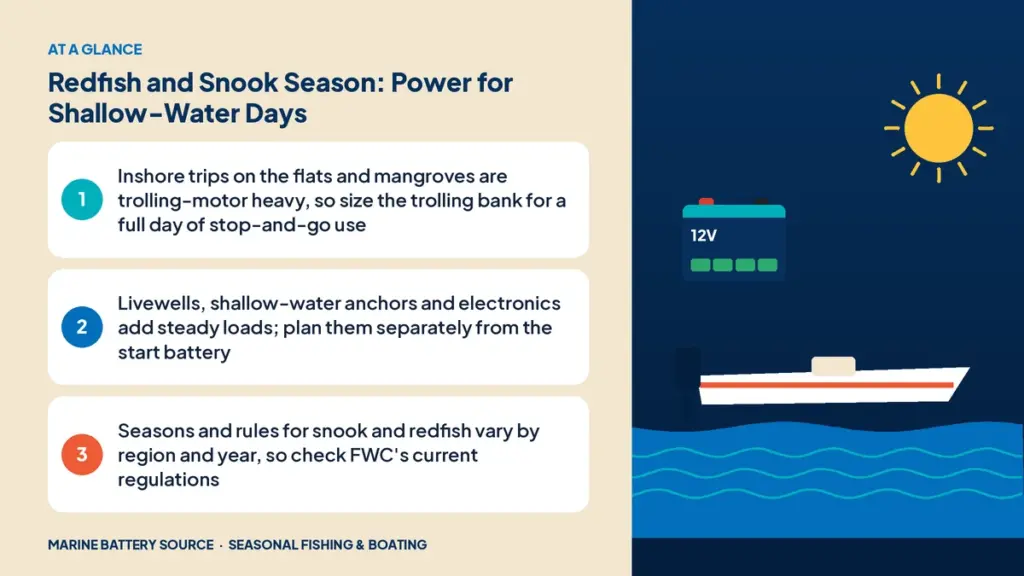
Snook and redfish seasons, slot limits and closures are set by FWC and vary by region and year. Check the current rules before you fish; this guide only covers your boat’s power.
What uses power on an inshore boat
| Load | Typical use | Battery |
|---|---|---|
| Trolling motor | Hours of stop-and-go along shorelines; spot-lock in current | Trolling bank (12V, 24V or 36V) |
| Shallow-water anchor | Short bursts to deploy and retract | Usually start or house battery |
| Livewell pump | Hours, especially with live bait in summer | House or start battery |
| Fishfinder/chartplotter | All day | House or start battery |
| Lights (pre-dawn, night trips) | Short periods | House or start battery |
The trolling motor is by far the biggest load. A motor working against tide and wind along a mangrove edge can pull 20–50A or more, and spot-lock in strong current keeps it running even when you aren’t moving.
24V or 36V?
Bay boats and skiffs commonly run 24V or 36V trolling motors. The voltage is set by the motor, so you can’t change it with the battery alone. The choice affects how many batteries you carry:
- 24V: two 12V lead-acid batteries in series, or one 24V lithium battery.
- 36V: three 12V lead-acid batteries in series, or one 36V lithium battery.
Higher-voltage motors deliver more thrust for the same current, which helps in wind and current. They also need more battery weight if you stay with lead-acid. Three group 31 AGM batteries can weigh well over 150 pounds; a single 36V lithium battery is often a fraction of that. On a shallow-draft skiff, every pound affects how skinny you can go. See tournament season prep if you fish events where battery life decides your day.
Sizing the trolling bank for a full day
Estimate how many hours the motor actually runs and at what power. A rough approach:
- Check the motor’s maximum current draw from the manual.
- Estimate your average setting. Many anglers run at 30–50% most of the day, with bursts at higher speed.
- Multiply average current by hours of use.
For example, a 36V motor averaging 15A for seven hours uses about 105Ah at 36V. A 36V 100Ah lithium battery would cover most of that, but a windy day could push you past it. Lead-acid batteries should only be discharged to about 50% for good life, so a lead-acid bank would need roughly twice the rated capacity to deliver the same usable energy.
Wind, tide and how often you use spot-lock make a big difference. If you often fish strong passes or open flats in wind, size up. For the full method, see fishing trip power planning.
Keeping bait alive
Live pilchards, shrimp and pinfish are central to a lot of snook and redfish fishing. A livewell pump running all day in warm summer water is a steady load, often 2–5A. Over ten hours, that’s 20–50Ah. If it runs from the start battery, it can leave too little for cranking. Options:
- Run the livewell from a separate house battery.
- Use a timer or recirculation setting rather than running the pump continuously, if your bait allows it.
- Make sure the engine’s charging system refills the start battery during runs.
Shallow-water anchors
Electric shallow-water anchors deploy and retract many times a day. Each cycle draws a high current for a few seconds. They’re usually wired to the start or house battery with their own fuse. Check the maker’s wiring and fuse size, keep connections clean, and make sure the battery feeding them is healthy.
Charging between trips
Inshore anglers often fish several days in a row. Plan charging:
- Onboard charger. A multi-bank onboard charger plugged in at home or the dock is the easiest way to refill every battery overnight. Make sure each bank uses the right chemistry profile.
- Charging on the run. Long runs to the fishing grounds can top up batteries through a DC-to-DC charger fed by the engine. This is especially useful for lithium trolling banks.
- Check the next morning. Confirm the trolling bank is full before you launch. Lithium batteries with Bluetooth make this easy; with lead-acid, check resting voltage.
Saltwater care
Inshore boats see a lot of spray and salt. Inspect trolling motor plugs and receptacles for corrosion, use dielectric grease on connections where the maker allows it, and rinse the boat after each trip. A corroded plug adds resistance, which wastes power and can heat the connection.
Fall: the busy season
In much of Florida, fall brings cooler water, schooling redfish and active snook. It’s also when many anglers fish the most days. Use late summer to check battery health: run a capacity check if you can, clean connections and replace weak batteries. See the seasonal battery calendar for a month-by-month plan. If summer included lots of family trips, see scallop season prep and Fourth of July boating for what to check afterward. Shopping for an inshore angler? See gifts for boaters.
Products that help
- EPOCH 36V 100Ah lithium battery
- EPOCH 24V 60Ah Pro lithium battery
- EPOCH 12V-to-36V DC-to-DC charger
- Browse trolling motor batteries.
Frequently asked questions
What battery do I need for a redfish trolling motor?
Match the motor’s voltage (12V, 24V or 36V) and size the bank for your hours of use. Many inshore anglers choose lithium for its weight savings.
How long will my trolling motor battery last on the flats?
It depends on current draw, wind, tide and spot-lock use. Multiply average amps by hours and compare to usable battery capacity.
Should my livewell run off the trolling battery?
Usually not. Livewells normally run on the 12V start or house system, not a 24V or 36V trolling bank.
Is lithium worth it for a flats skiff?
For many anglers, yes. It saves weight, which helps shallow draft, and delivers more usable capacity than lead-acid of the same rating.
When is snook season in Florida?
Seasons and closures vary by region and year. Check FWC’s current regulations before you fish.