


Winter Storage for Marine Batteries: Lithium, AGM and Flooded
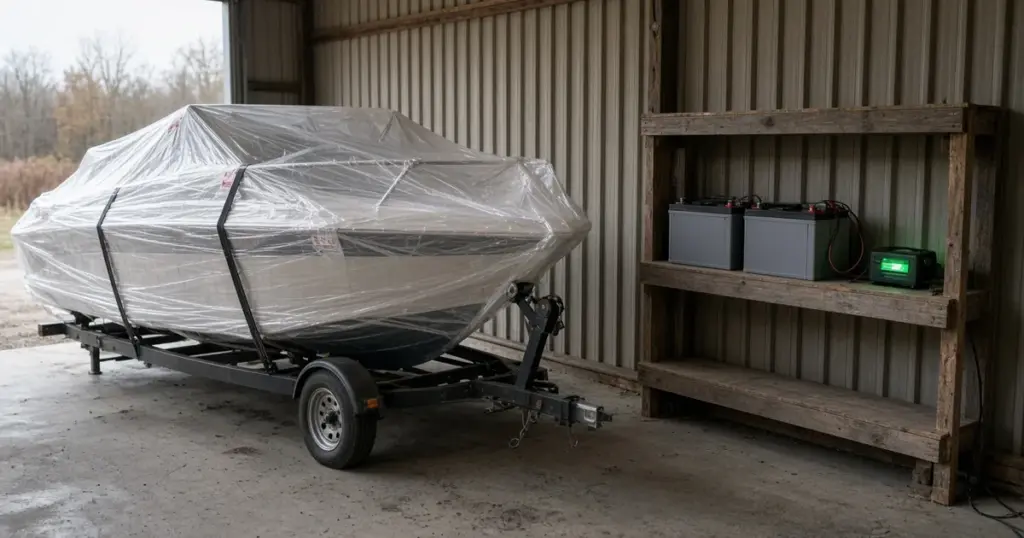
A lot of marine batteries don’t die on the water. They die in storage. A battery left connected and partly discharged all winter can slowly self-discharge and sulfate, or be drained by a small parasitic load, until it won’t take a charge in the spring. Good marine battery winter storage takes an hour or two in the fall, and it can add seasons to your batteries’ lives.
The details depend on chemistry, so this guide covers lithium (LiFePO4), AGM and flooded lead-acid separately. As always, your battery manufacturer’s storage instructions come first.
Before you start: safety and tools
- Wear eye protection and gloves, especially around flooded batteries.
- Have the right wrenches, a terminal brush, baking soda and water for cleaning lead-acid terminals, a corrosion-inhibiting spray, and a multimeter.
- For flooded batteries, have distilled water on hand.
- Lift carefully. Lead-acid batteries are heavy; use a carrier strap.
Step 1: Decide whether to remove the batteries
Removing batteries lets you store them somewhere cool, dry and protected from freezing, and lets you connect a maintainer easily. If you leave them aboard, for example because the boat is in a heated building or the batteries are hard to remove, you can still store them well. Make sure every load is disconnected, and that you can check and maintain them.
Wherever they go, store batteries away from heat sources, sparks and flames, and out of reach of children and pets. Don’t store them directly on bare concrete unless the manufacturer says it’s fine. A wooden shelf or a plastic battery box keeps them clean and makes them easy to handle.
Step 2: Charge fully, then clean
Fully charge every battery with a charger set to the correct profile. Then clean the case and terminals. Dirt and moisture on top of a battery can create a small conductive path that drains it. Clean lead-acid terminals with a baking soda solution, rinse carefully without letting water get into vent caps, and dry them. Coat terminals with a protectant. See saltwater corrosion prevention for more.
Step 3: Disconnect every load
Stereos with memory, bilge pump float switches, CO detectors, battery monitors and electronics can all draw a small current, even when “off”. Over months, that adds up. Turn the battery switch off, and disconnect the negative cable for extra certainty. If a bilge pump needs to stay live for a boat stored in the water, plan for regular charging. A flat battery can’t run the pump.
Storing lithium (LiFePO4) batteries
Lithium is the easiest chemistry to store, but it has its own rules.
- State of charge: many manufacturers recommend storing LiFePO4 at a partial state of charge rather than 100%. Check yours for the exact guidance.
- Self-discharge is low, so a lithium battery with nothing connected holds its charge well through a winter. Parasitic loads are still the main risk, so disconnect them.
- Don’t leave it on a lead-acid maintainer. Float and desulfation modes aren’t suitable for lithium. If you want to maintain it, use a charger with a lithium storage mode.
- Cold is OK for storage, not for charging. LiFePO4 generally tolerates cold storage, but don’t charge it below freezing unless it has internal heating. Bring it into a warmer space and let it warm up before charging in spring. Check the manufacturer’s storage temperature range.
- Turn off Bluetooth or sleep features if the battery offers a storage or shipping mode.
- Check it occasionally: look at voltage or the app every month or two, and top up if the manufacturer recommends it.
Batteries with internal heating, such as the Dakota Lithium 12V 100Ah heated and the ECO Battery 12V 120Ah heated, can charge in colder conditions. But storage rules still apply. When it’s time to charge in spring, use a lithium charger, such as the EPOCH 12V 15A lithium charger, or an onboard charger with a lithium profile.
Storing AGM batteries
- Store fully charged. Lead-acid batteries sulfate when left partly discharged.
- Use a smart maintainer with an AGM profile, or recharge periodically. AGM self-discharges more slowly than flooded, but it still self-discharges.
- A charged battery resists freezing far better than a discharged one. A discharged lead-acid battery can freeze and crack in cold weather.
- Avoid over-charging. AGM is sensitive to excess voltage, so use the correct profile and don’t equalize unless the manufacturer specifically allows it.
Storing flooded lead-acid batteries
- Check electrolyte before charging. If the plates are exposed, add just enough distilled water to cover them, then charge, then top up to the correct level. Overfilling before charging can cause overflow.
- Charge fully with a flooded profile.
- Maintain through the winter. Flooded batteries self-discharge fastest, so use a smart maintainer or recharge regularly.
- Ventilate. Flooded batteries vent gas while charging, so store and charge them in a ventilated space.
- Check water again partway through the winter if they’re on a maintainer.
Our guide to AGM vs flooded maintenance covers more of the routine.
Trolling motor banks
For 24V and 36V series banks, charge each battery fully before storage. If you leave them connected to a multi-bank onboard charger, make sure every bank has the correct profile and that the manufacturer recommends maintaining it. For lithium banks, many owners simply charge to the recommended storage level, disconnect, and check in occasionally. Read wiring a 24V or 36V setup for how series banks are charged.
Storing boats in Florida and the South
In Florida, “winter storage” often means a boat sitting unused on a lift or in a rack during a busy season. Freezing isn’t the concern; heat and parasitic drain are. The same steps apply: charge, disconnect loads, keep batteries cool and shaded where possible, and maintain or check them regularly. See Florida heat and battery life.
Spring recommissioning
- Inspect each battery for cracks, bulges, leaks or damaged terminals. Replace any that are damaged.
- Check flooded electrolyte levels, and top up with distilled water after charging.
- Let cold lithium batteries warm up, then charge everything fully with the correct profiles.
- Clean and protect terminals, then reinstall and secure the batteries. Torque connections to the manufacturer’s spec.
- Reconnect loads, and test the engine start, bilge pump, electronics and trolling motor at the dock before you head out.
If a lead-acid battery won’t hold a charge after storage, it may be time to replace it. Our cranking vs dual purpose vs deep cycle guide will help you choose the right replacement.
Winter storage checklist
- Charge fully with the right profile, or to the recommended storage level for lithium.
- Clean and protect terminals.
- Disconnect all loads.
- Store cool, dry, ventilated and protected from freezing (lead-acid).
- Maintain lead-acid with a smart maintainer, or recharge regularly.
- Check lithium occasionally, and don’t charge it while it’s below freezing.
- Recommission and test in spring.
Need a replacement in the spring? Browse AGM & lead-acid, lithium and chargers and maintainers. We also offer local installation anywhere from Venice to Gainesville, FL.