


How to Dispose of a Lead-Acid Boat Battery
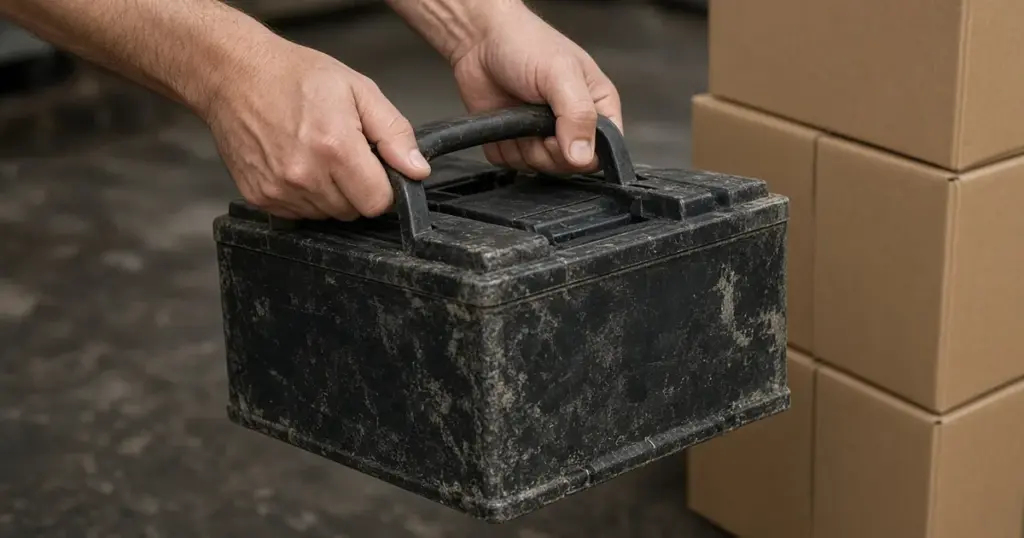
Replacing a boat battery is straightforward. Getting rid of the old one should be too, but many owners aren’t sure where to take it or how to handle it safely. This guide gives step-by-step instructions for each battery type.
Step 1: Confirm it’s really done
Before disposing of a battery, make sure it’s at end of life. A battery that seems dead may just be deeply discharged or have a bad connection. Fully charge it and test it, or have it load-tested. Signs it’s truly finished include failing to hold a charge overnight, a failed load test, swelling, cracks or leaks. See battery end-of-life signs.
Step 2: Remove it safely
- Turn off the battery switch, chargers and all loads.
- Put on safety glasses and gloves.
- Disconnect the negative cable first, then the positive.
- Remove hold-down straps or brackets.
- Lift the battery out by its handles or with a carrier strap, keeping it upright. Get help with heavy batteries.
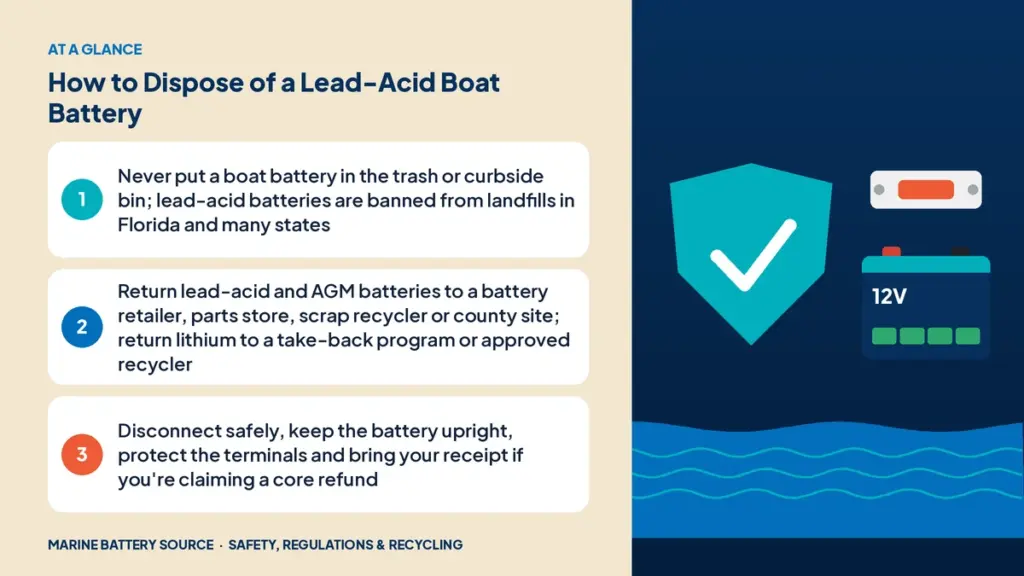
Step 3: Prepare it for transport
- Keep lead-acid batteries upright so acid can’t spill.
- Protect the terminals with caps, tape or the old terminal boots to prevent shorts.
- Use a leak-proof container, like a plastic tub or battery box, especially if the case is cracked.
- Secure it in your vehicle so it can’t tip or slide.
- For damaged lithium batteries, keep them away from flammables and in a non-combustible container if possible, and transport them as soon as practical.
See how to transport a marine battery safely.
Step 4: Take it to the right place
Flooded and AGM lead-acid
- Battery retailers: in Florida, anyone who sells lead-acid batteries at retail must accept used ones as trade-ins for new ones. Many retailers accept them even without a purchase.
- Auto parts stores: many accept used lead-acid batteries.
- Scrap metal recyclers: often accept lead-acid batteries.
- County recycling or household hazardous waste centers.
- Your marina or boatyard, which may collect used batteries.
Lithium (LiFePO4)
- The maker or seller’s take-back program, if offered.
- Battery recyclers that accept large lithium batteries.
- County household hazardous waste facilities; call ahead, as some only take small batteries.
See lithium battery recycling for more.
Step 5: Claim your core refund
If you paid a core charge when buying your new battery, bring the old battery and your receipt to the seller to get it refunded. When you book our installation, we take your old battery away and waive the $18 core charge. See battery core charges explained.
What not to do
- Don’t put batteries in the trash or recycling bin. It’s illegal for lead-acid in Florida, and lithium batteries can start fires in garbage trucks.
- Don’t dump batteries on land or in the water.
- Don’t drain the acid yourself.
- Don’t break open a battery to salvage lead.
- Don’t store old batteries indefinitely. They can leak, corrode and stain floors, and they’re a hazard around children and pets.
Leaking or damaged batteries
If a lead-acid battery is cracked and leaking, neutralize spilled acid with baking soda, put the battery in a leak-proof container, and take it straight to a recycler. See battery acid spill cleanup. For a swollen, hot or damaged lithium battery, keep people away, let it cool, and contact the maker or a recycler for guidance.
Disposing of several batteries at once
If you’re replacing a whole bank, such as three trolling batteries, call the recycling site first to make sure they’ll accept several. Some sites limit how many batteries they take from one person per visit, and some scrap yards pay by weight, so it’s worth asking. Transport them in a sturdy container, upright and separated so terminals can’t touch each other.
Off-season and long-term storage
If you’re not sure whether an old battery is still useful, don’t store it all winter “just in case.” Old batteries discharge and sulfate in storage. For batteries you’re keeping, follow winter storage for marine batteries.
Why it matters
Lead-acid batteries are among the most recycled products in the U.S., and the lead and plastic go into new batteries. Lithium recycling recovers valuable materials too. Proper disposal keeps toxic materials out of landfills and waterways. See lithium vs lead-acid environmental impact.
Selling or giving away a used battery
A battery that’s still healthy but no longer fits your needs can be sold or given away. Be honest about its age and condition, and include its test results if you have them. Never sell a battery you know to be failing; it’s a safety risk for the next owner. If in doubt, recycle it.
Battery disposal in Florida
Florida bans lead-acid batteries from landfills and waste-to-energy facilities and requires retailers that sell lead-acid batteries to accept used ones as trade-ins. Many Florida counties run household hazardous waste programs for other battery types. See Florida battery disposal for details.
Quick checklist
- ☐ Battery confirmed dead (charged and tested)
- ☐ Disconnected safely, negative first
- ☐ Kept upright, terminals protected
- ☐ In a leak-proof container
- ☐ Secured for transport
- ☐ Taken to a retailer, recycler or county site
- ☐ Core refund claimed
More reading
The marine battery recycling guide covers how each chemistry is recycled, and the marine battery safety guide covers safe handling.
Replacing your battery
Browse trolling motor, starting and dual-purpose batteries, or book installation with old-battery pickup through our local installation page.
Frequently asked questions
Where can I dispose of a boat battery?
At battery retailers, auto parts stores, scrap recyclers, county recycling centers and many marinas.
Is it illegal to throw away a lead-acid battery in Florida?
Yes. Florida law bans lead-acid batteries from landfills and waste-to-energy facilities.
How do I dispose of a lithium boat battery?
Return it to a take-back program, a battery recycler or a county hazardous waste site that accepts large lithium batteries.
Will I get money for my old battery?
You may get a core charge refund, and some scrap recyclers pay for lead-acid batteries.
How should I transport an old battery?
Upright, terminals protected, in a leak-proof container, secured in your vehicle.