


LiFePO4 vs Other Lithium-Ion Chemistries for Boats
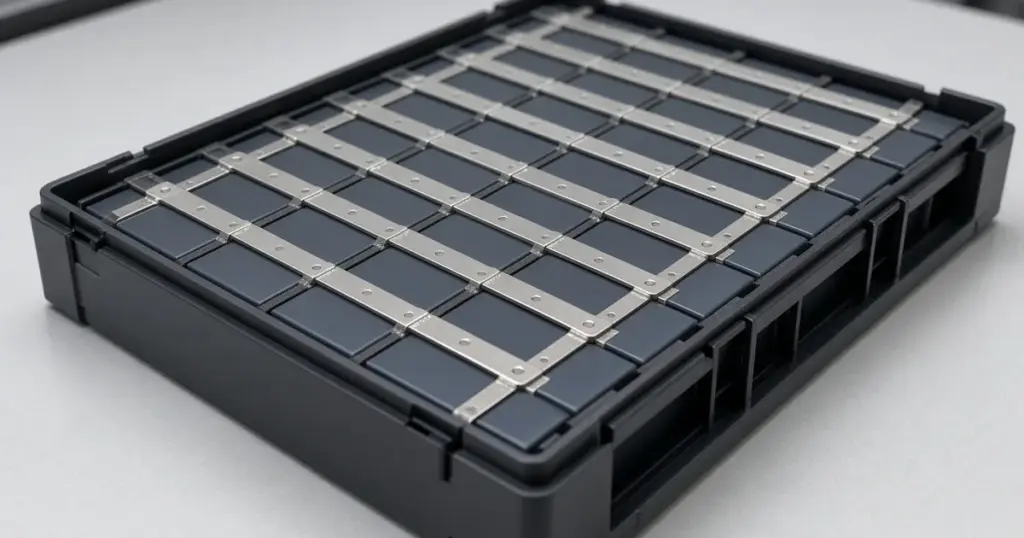
“Lithium” on a marine battery label usually means one specific chemistry: lithium iron phosphate, written LiFePO4 or LFP. But phones, laptops, power tools and many electric cars use other lithium-ion chemistries, and that causes confusion. Is a lithium boat battery the same thing as the battery in your phone? Should you worry about the fires you’ve seen in the news? This guide compares LiFePO4 vs other lithium-ion chemistries for boats and explains why iron phosphate has become the standard for marine deep-cycle and trolling motor batteries.
Lithium-ion is a family, not one chemistry
All lithium-ion batteries move lithium ions between a cathode and an anode. What changes from one chemistry to another is mainly the cathode material. Common types include:
- LFP (lithium iron phosphate, LiFePO4): the standard for marine, RV and many stationary storage batteries.
- NMC (nickel manganese cobalt): common in electric vehicles and power tools.
- NCA (nickel cobalt aluminum): used in some electric vehicles.
- LCO (lithium cobalt oxide): common in phones and laptops.
- LTO (lithium titanate): very long life and fast charging, but low energy density and high cost.
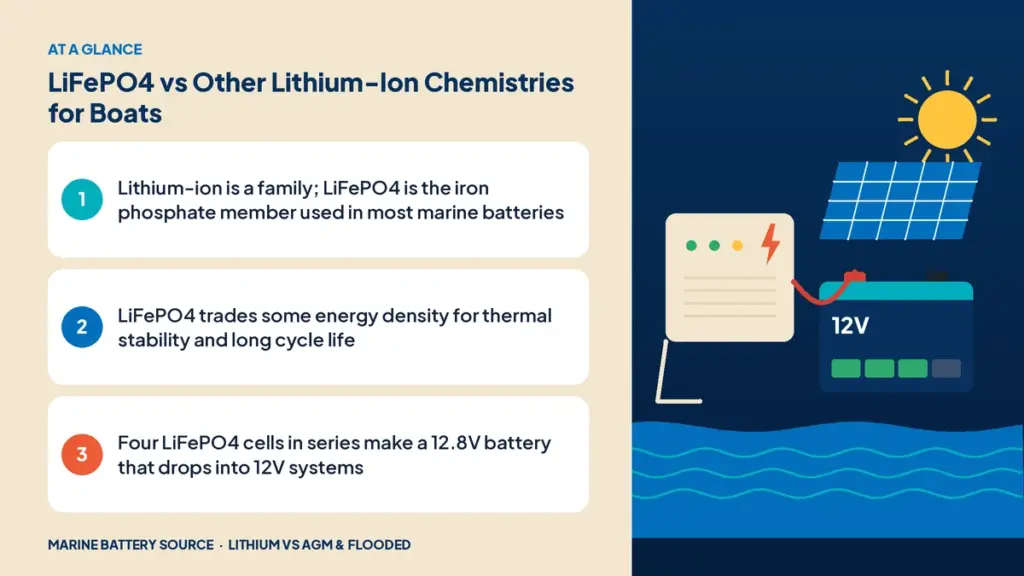
So “lithium-ion vs LiFePO4” isn’t quite the right framing. LiFePO4 is a lithium-ion chemistry. The real comparison is LiFePO4 vs the nickel- and cobalt-based chemistries.
Why LiFePO4 suits boats
Thermal stability
The iron phosphate cathode holds its oxygen tightly, so LFP cells are much more resistant to thermal runaway than nickel- and cobalt-based cells. That doesn’t make them impossible to damage. Any battery can be destroyed by abuse, a bad short or a failed management system. But the safety margin is meaningfully higher, and that matters in an enclosed hull far from help.
Cycle life
LiFePO4 cells are commonly rated for thousands of cycles. The store’s listings reflect that: EPOCH lists 4,000+ cycles for its Essential series, and Dakota Lithium lists up to 80% capacity after 5,000 cycles in recommended conditions for many models. For a trolling motor or house bank that gets cycled constantly, that longevity is the whole point.
A voltage that fits 12V systems
A LiFePO4 cell has a nominal voltage of about 3.2V. Four in series make 12.8V nominal, which sits neatly in the range that 12V boat equipment expects. That’s why a LiFePO4 battery can drop into a 12V system where a lead-acid battery used to be. Other lithium-ion chemistries have higher cell voltages that don’t line up as cleanly with 12V systems.
Tolerant of deep cycling
LFP batteries handle deep, repeated discharge well. That’s ideal for trolling motors, which may run a battery down hard every trip.
Where other chemistries have the edge
Nickel-based chemistries pack more energy into less weight and space. That’s why electric cars and cordless tools use them: every ounce and cubic inch matters. For most boats, LiFePO4 is already so much lighter than lead-acid that the extra density of NMC isn’t worth the trade in stability and cycle life. You’ll find NMC mainly in some integrated electric outboard and electric boat systems where the manufacturer designs the pack, cooling and management as one unit.
Comparison at a glance
| Trait | LiFePO4 (LFP) | NMC / NCA | Lead-acid (for reference) |
|---|---|---|---|
| Energy density | Good | Higher | Low |
| Thermal stability | High | Lower | High |
| Typical cycle life | Thousands | Hundreds to low thousands | Hundreds |
| Nominal cell voltage | About 3.2V | About 3.6–3.7V | About 2.0V |
| Drop-in 12V replacement | Yes, four cells | Not a natural fit | Yes, six cells |
The BMS does the safety work
Every LiFePO4 marine battery has a battery management system. It monitors cell voltages, current and temperature and disconnects the battery to prevent overcharge, over-discharge, short circuit and charging in unsafe temperatures. Quality varies between brands, so check the maximum continuous discharge and pulse ratings against your load. The store’s Dakota Lithium listings, for example, give figures like “100A max continuous, 200A max pulse 10 second pulse” for the Dakota Lithium 12V 100Ah heated. Our guide to buying a lithium marine battery explains which BMS specs matter.
Charging LiFePO4
LiFePO4 needs a charger set to a lithium or LiFePO4 profile at the voltages the maker specifies. Standard LiFePO4 must not be charged below freezing; heated models like the EPOCH 12V 105Ah Essential warm themselves before accepting charge. Equalization modes meant for flooded batteries should never be used on lithium.
Reading a lithium battery label
Marine lithium listings don’t always spell out the chemistry in the product name, so check the specification table. Look for “LiFePO4,” “LFP” or “lithium iron phosphate” under chemistry, a nominal voltage of 12.8V for a 12V battery (25.6V for 24V and 38.4V for 36V), and a stated cycle-life rating with the test conditions. A label that says only “lithium” with a nominal voltage like 11.1V or 14.8V points to a different chemistry, which is uncommon in marine drop-in batteries. Every battery in the store’s lithium range is LiFePO4.
Safety basics still apply
- Fuse the positive cable close to the battery with a fuse rated for the current lithium can deliver.
- Secure the battery so it can’t move.
- Keep terminals covered and connections tight.
- Don’t open the case or modify the BMS.
- Buy from brands that publish real specifications and stand behind a warranty.
How LiFePO4 compares with lead-acid
If you’re still deciding between lithium and lead-acid in the first place, start with our lithium vs AGM vs flooded chemistry guide. LiFePO4’s weight advantage is covered in how much weight lithium saves, and the value question is tackled in is lithium worth it? For trolling-motor buyers, choosing a trolling motor battery puts the chemistry choice in context. Browse the store’s LiFePO4 lithium batteries to compare models.
Frequently asked questions
Is LiFePO4 the same as lithium-ion?
LiFePO4 is one type of lithium-ion battery. It uses an iron phosphate cathode, which gives it high thermal stability and long cycle life compared with the nickel- and cobalt-based chemistries in phones and many electric cars.
Are LiFePO4 boat batteries safe?
They’re among the most stable lithium chemistries, and quality batteries include a BMS that guards against overcharge, over-discharge and shorts. Install them with proper fusing and secure mounting like any battery.
Why don’t boat batteries use the same lithium as electric cars?
Many car chemistries prioritize energy density. On a boat, LiFePO4 is already far lighter than lead-acid, so its stability, long cycle life and 12V-friendly voltage are the better trade.
Can I charge LiFePO4 with my lead-acid charger?
Only if it has a lithium or LiFePO4 mode, or if the battery maker approves its settings. Equalization and some float settings aren’t appropriate for LiFePO4.