Interstate
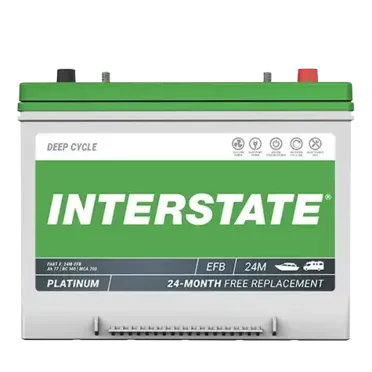
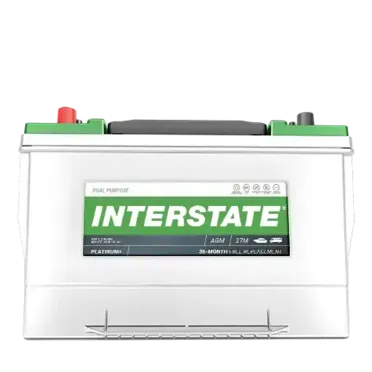
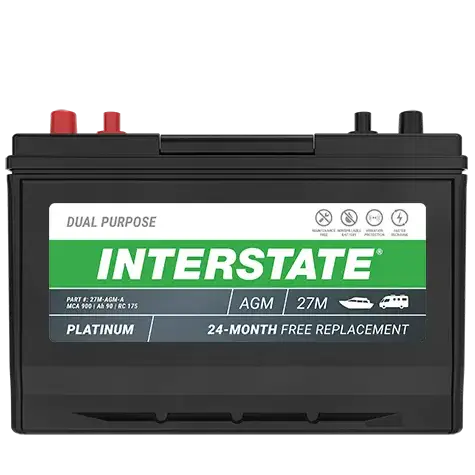
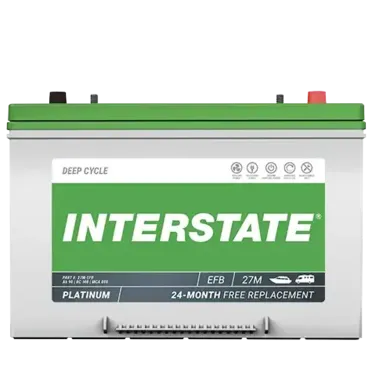
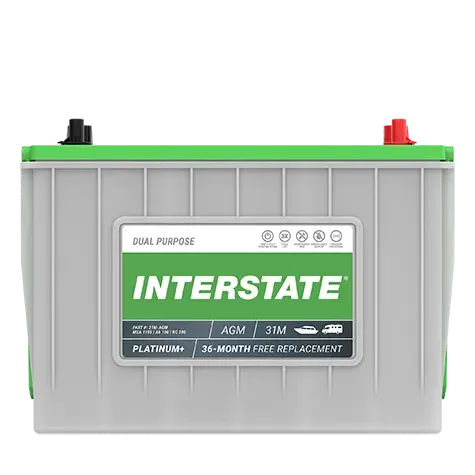
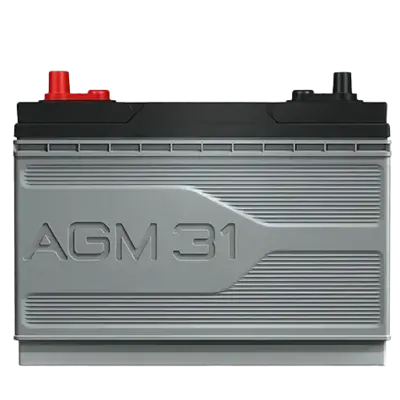
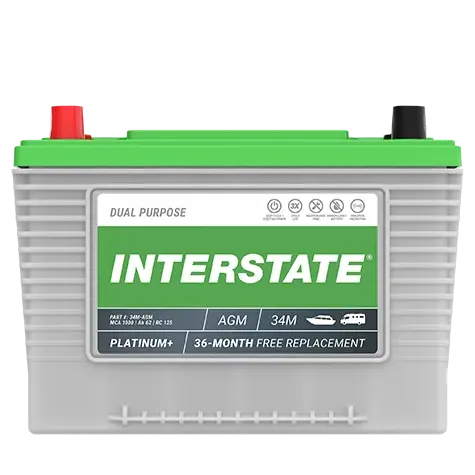
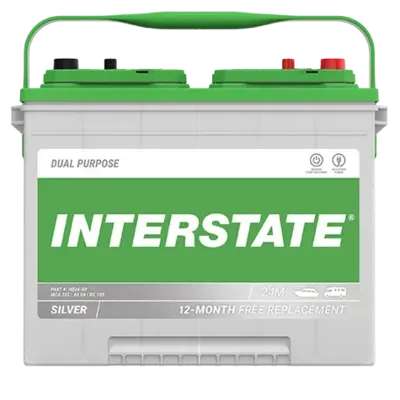
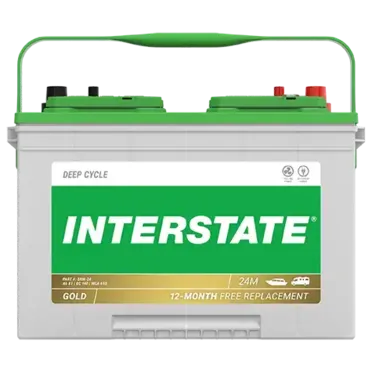
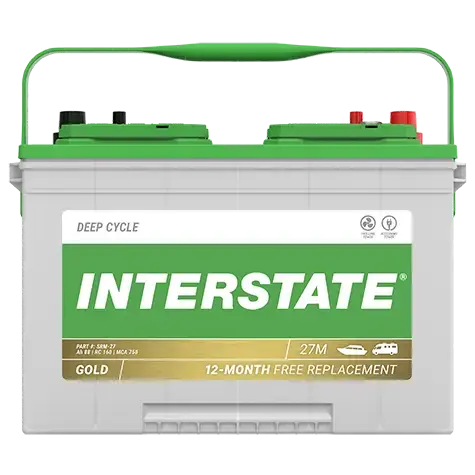
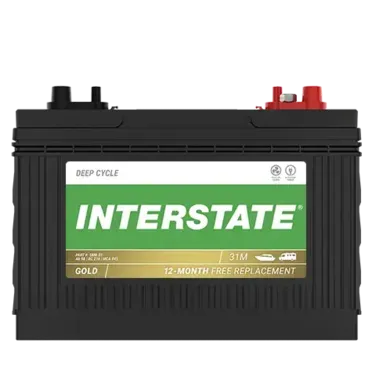
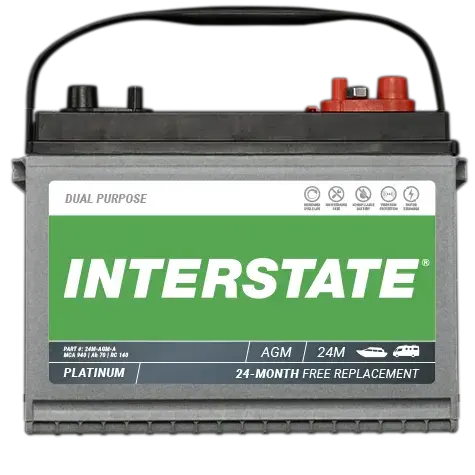
Interstate 24M-AGM-A 12V Group 24M AGM Dual Purpose Marine Battery – 750 CCA
$259.95
or 4 interest-free payments of $64.99
Ships nationwide · Flat-price installs from Venice to Gainesville, FL


Plenty of boats have room for one battery, maybe two, and that battery has to do everything. It cranks the outboard, then runs the fish finder, livewell pump, lights and stereo while you’re anchored or drifting. Dual purpose marine batteries are built for that split role. It combines enough cranking power to start the engine with enough deep-cycle toughness to handle repeated discharge.
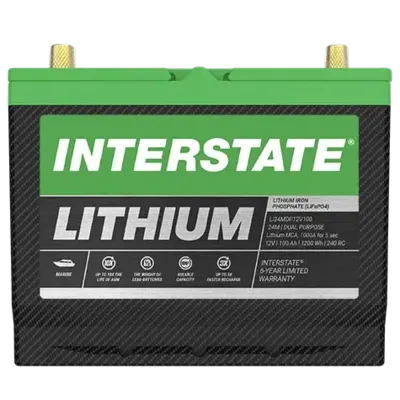
This collection includes AGM and flooded dual-purpose batteries from Interstate and Trojan in popular Group 24, 27, 31, 34 and 4D/8D sizes. It also has lithium dual-purpose batteries from Dakota Lithium, EPOCH and Lithium Rhino, which combine high cranking ratings with deep usable capacity at a fraction of the weight. Some lithium dual-purpose models also come as 24V and 36V sets for trolling motors.
Compare cranking ratings (CCA or MCA), capacity (Ah or reserve capacity), group size and terminal type on each product page. We ship nationwide and install anywhere from Venice to Gainesville, FL.
or 4 interest-free payments of $64.99
or 4 interest-free payments of $53.74
or 4 interest-free payments of $103.74
or 4 interest-free payments of $69.99
or 4 interest-free payments of $54.99
or 4 interest-free payments of $114.99
or 4 interest-free payments of $72.49
or 4 interest-free payments of $96.24
or 4 interest-free payments of $33.74
or 4 interest-free payments of $301.24
or 4 interest-free payments of $39.99
or 4 interest-free payments of $33.74
or 4 interest-free payments of $39.99
or 4 interest-free payments of $42.49
or 4 interest-free payments of $48.74
or 4 interest-free payments of $89.99
A dual-purpose battery makes the most sense when:
If you run a large trolling motor or a heavy house load, a dedicated deep-cycle trolling motor bank or house bank paired with a starting battery will usually serve you better. Our guide to cranking vs dual purpose vs deep cycle compares the options.
Check your engine manual for its minimum CCA or MCA requirement and choose a battery that meets it. MCA is measured at 32°F and CCA at 0°F, so make sure you compare the same rating.
Lead-acid dual-purpose batteries often list reserve capacity in minutes; lithium batteries list amp-hours. Either way, more capacity means longer accessory runtime with the engine off. Lithium’s usable depth of discharge is greater than lead-acid’s, so a lithium battery’s rated capacity goes further in practice.
For upkeep on lead-acid types, read AGM vs flooded maintenance.
Match the BCI group size to your tray, and check that terminal type and position suit your cables. See BCI group sizes explained.
The risk with a single dual-purpose battery is running it down with accessories and then being unable to start. A battery monitor helps, and on two-battery boats a battery switch or automatic charging relay lets you keep one battery in reserve. Isolators, connection kits and fuses are in Accessories.
For heavy daily cycling, a dedicated deep-cycle battery is built to last longer. Dual-purpose batteries trade some cycling durability for cranking power.
Yes. It’s a common setup: one battery for starting, one for accessories, and the option to combine them in an emergency.
Many will, but check the battery manufacturer’s guidance and your engine’s charging output. A DC-DC charger is sometimes recommended.
Yes, anywhere from Venice to Gainesville, FL. See local installation.
Prices, stock and shipping options are confirmed in your cart and at checkout.
New arrivals, sale alerts and marine battery how-tos.