


Saltwater Corrosion Prevention for Marine Batteries and Connections
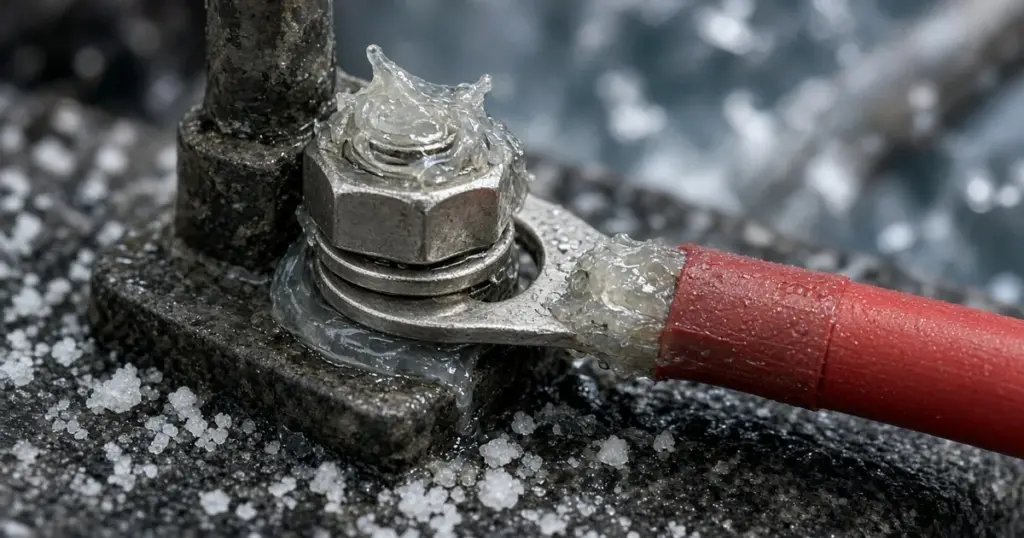
Salt air and spray are relentless. On a saltwater boat, battery terminal corrosion is one of the most common causes of hard starts, dim electronics, trolling motors that fade early and connections that run hot. The good news is that it’s mostly preventable. Here’s why corrosion happens, how to clean it up safely, and how to build connections that resist it in the first place.
Why corrosion happens on boats
- Salt and moisture form an electrolyte on metal surfaces. Where two different metals meet, or where current flows, corrosion speeds up.
- Battery gases: flooded lead-acid batteries vent gas while charging, which leaves acidic residue around terminals.
- Heat from loose connections accelerates oxidation, and oxidation increases resistance, which creates more heat. It’s a vicious cycle.
- Wicking: untinned copper wire can wick moisture under the insulation, so corrosion can creep well beyond the visible terminal.
Signs to look for
- White, blue-green or crusty deposits on terminals, lugs or studs.
- Green or black discoloration on exposed copper strands.
- Cable insulation that’s swollen or stiff near the lug.
- Slow cranking, flickering electronics, or a voltage drop under load.
- A connection that feels warm after running a trolling motor or starting the engine.
How to clean corroded battery terminals
Safety: wear eye protection and gloves. Turn off battery switches and chargers. Remove jewelry, and use insulated tools.
- Disconnect the negative cable first, then the positive. When you reconnect, do positive first, then negative.
- Neutralize acid residue on lead-acid batteries with a baking soda and water solution. Keep it out of flooded battery vent caps.
- Scrub the terminals and cable ends with a terminal brush or a stiff brush until you see bright metal.
- Rinse carefully with a small amount of fresh water, and dry everything thoroughly.
- Inspect the cable. If corrosion has crept under the insulation, or strands are blackened, cut back to clean copper and install a new lug, or replace the cable.
- Reconnect and torque to the battery manufacturer’s specification. Overtightening can damage terminals; undertightening causes heat.
- Protect with a terminal protectant or corrosion-inhibiting spray.
Lithium batteries don’t vent acid, but their terminals and cable lugs still corrode in salt air. Clean them the same way, without the baking soda step, unless there’s lead-acid residue nearby. Follow the lithium battery manufacturer’s torque spec. Many use threaded inserts that can strip if overtightened.
Build connections that resist corrosion
Use tinned marine wire
Tinned copper strands resist corrosion and wicking far better than bare copper. Marine-grade battery cable is tinned and has insulation designed for the marine environment.
Use quality lugs and crimp them properly
Use tinned copper lugs sized for the cable and the terminal stud. Crimp with the correct tool for a solid, gas-tight connection, then seal it with adhesive-lined heat-shrink. That keeps moisture out of the joint.
Choose the right hardware
Use the terminal hardware supplied with the battery, or marine-grade stainless or tinned hardware where appropriate. Stack lugs so the highest-current connection sits directly against the terminal, and don’t stack more lugs than the stud allows.
Reduce the number of connections at the battery
Every lug on a battery post is another place for corrosion to start. Use a power distribution block or bus bar to consolidate connections, and keep the battery posts for the main cables. Fuse right at the battery with a marine-rated terminal fuse, like the Battle Born MRBF fuse on a fuse block.
Use connection kits
Pre-made kits use correctly sized, sealed cables and connectors, and they take a lot of corrosion-prone guesswork out of trolling motor and electronics wiring. Examples include the Dakota Lithium 12V connection kit, the 36V connection kit and the Multi-4 fused connector kit. More are in Accessories.
Protect the battery compartment
- Keep batteries in boxes or covered trays to shield terminals from spray and dropped tools.
- Secure every battery so it can’t move and stress the cables. See the Dakota Lithium marine battery tray and model-specific EPOCH trays.
- Ventilate flooded batteries to clear charging gases, which reduces acidic residue.
- Keep bilge water away. Mount batteries high and dry. Even IP-rated lithium batteries should not sit in water.
- Route cables so water runs away from terminals rather than down the cable into them.
Consider sealed or lithium batteries
AGM batteries don’t vent acid under normal use, so their tops stay cleaner than flooded batteries’. Lithium batteries don’t vent either, and many have water- and dust-resistant cases, such as the IP67-rated Lithium Rhino line and many EPOCH models. Terminals still need care, but there’s less to fight. Compare in AGM vs flooded maintenance and Lithium.
A simple saltwater maintenance routine
- After salty trips: look over battery compartments, wipe away salt, and make sure lids and covers are closed.
- Monthly in season: check terminal tightness and look for early corrosion. Re-apply protectant as needed.
- Each season: disconnect, clean, inspect cables and lugs, and replace anything suspect.
- Anytime: if a connection feels warm, find out why. Heat is an early warning.
Tools and supplies to keep aboard
- A terminal brush and a small wire brush.
- Baking soda (for lead-acid residue) and a rag.
- Terminal protectant or corrosion-inhibiting spray.
- The right wrench or socket for your battery’s terminals, and a small torque wrench if you can.
- Spare tinned lugs, adhesive-lined heat-shrink and a heat gun, if you’re comfortable making repairs.
- A multimeter, to check voltage at the battery and at the load. A big difference under load points to a bad connection.
Don’t forget the rest of the circuit
Corrosion at a battery switch, fuse block, bus bar or trolling motor plug causes the same symptoms as corroded battery terminals. Include them in your routine. Our battery switch basics guide shows where the main connections are.
Local help on the Gulf Coast
Salt and sun are a fact of life around Tampa Bay and Sarasota. If you’d like a professional inspection, a cable refresh or a new battery install, see our local installation service. For Florida-specific battery care, read Florida heat and battery life.