


Transporting Marine Batteries Safely
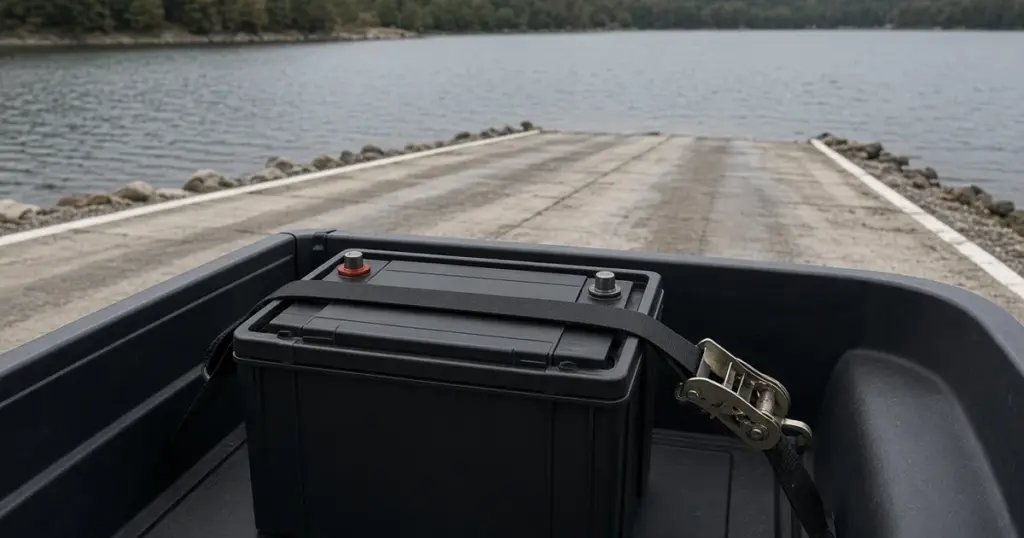
Boat batteries travel more than you might think: from the store to the boat, from the boat to the garage for winter, and eventually to a recycler. Moving a heavy battery full of acid, or a lithium battery that can deliver huge current into a short, deserves a little care. This guide covers how to transport batteries safely.
Before you move it
- Turn off the battery switch and disconnect chargers.
- Wear eye protection and gloves.
- Disconnect cables, negative first, then positive.
- Inspect the battery for cracks, leaks or swelling. A damaged battery needs extra care; see below.
Protect the terminals
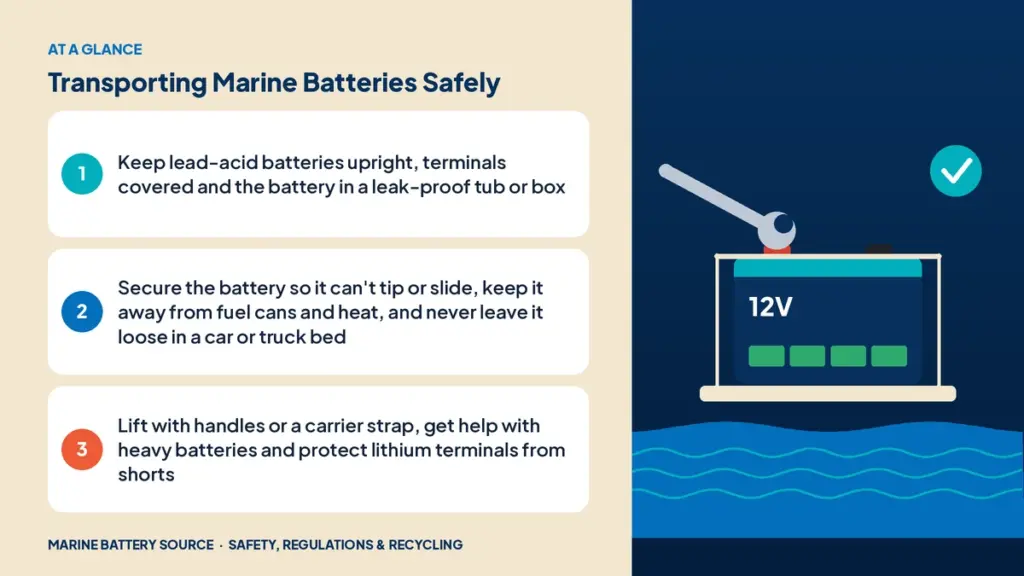
A short circuit across battery terminals can produce sparks, intense heat and burns, and with lithium batteries, very high current. Cover terminals with caps, the original plastic covers, terminal boots or electrical tape. Make sure nothing metal, like tools, jumper cables or keys, can touch the terminals in transit.
Use a container
Put lead-acid batteries in a leak-proof plastic tub, battery box or heavy-duty bin. If acid leaks, the container catches it before it reaches your car’s carpet or truck bed. A container also gives you something to grip.
Keep it upright
Flooded lead-acid batteries can spill acid from their vents if tipped. AGM and lithium batteries won’t spill, but keeping all batteries upright is a good habit.
Secure it
- In a car: place the battery in the trunk or rear footwell, in its container, wedged so it can’t slide or tip. Don’t put it on a seat.
- In a truck bed: strap the container down with tie-downs or a cargo bar. A loose battery can tip, slide and crack.
- On a boat trailer or in the boat: strap it into the battery box or tray.
Keep it away from fuel and heat
Don’t transport batteries next to fuel cans, propane tanks or other flammables. Don’t leave batteries in a hot car for long periods, especially in a Florida summer.
Lifting safely
Lead-acid marine batteries weigh 45 to 70 pounds or more, and 8D batteries can exceed 160 pounds.
- Use the battery’s handles or a carrier strap. Never lift by the terminals or cables.
- Bend at the knees, keep your back straight and hold the battery close.
- Get help with heavy batteries, especially when lifting into or out of a boat.
- Clear a path before you lift.
Transporting lithium batteries
LiFePO4 batteries are much lighter and don’t contain liquid acid, but:
- Terminal protection is critical. Lithium batteries can deliver very high short-circuit current.
- Keep them away from heat and direct sun.
- Transport partly charged if you’re moving them for storage or recycling.
- Damaged batteries should be kept isolated from flammables, in a non-combustible container if possible, and taken to a recycler or the maker promptly.
Shipping lithium batteries by carrier is regulated as hazmat. Driving your own battery for personal use is different, but the same safety principles apply. See lithium battery recycling.
Transporting damaged batteries
Cracked or leaking lead-acid: neutralize any spilled acid with baking soda, put the battery in a leak-proof container and take it straight to a recycler. Wear gloves and eye protection.
Swollen or hot lithium: don’t transport it in your vehicle’s cabin. Contact the maker or a recycler for guidance.
Taking old batteries to a recycler
Load old batteries the same way: upright, terminals covered, in a container and secured. Bring your receipt if you’re claiming a core refund. See how to dispose of a boat battery.
Moving batteries on the dock and boat
The riskiest part of the trip is often the last few feet: carrying a heavy battery down a ramp, across a floating dock or over a gunwale. Use a dock cart where you can, hand the battery across to a helper standing in the boat rather than stepping aboard with it, and set it down in the battery box before connecting anything. Wet docks and ramps are slippery, so take your time.
Common mistakes
- Loose batteries rolling around a truck bed
- Batteries on car seats or carpet without a container
- Uncovered terminals near tools or jumper cables
- Carrying batteries by their cables
- Transporting a leaking battery without a container
When to let someone else move it
For large or heavy banks, batteries in hard-to-reach compartments or lithium conversions, professional installation saves your back and your boat. We offer flat-price installation (from $99 per battery) anywhere from Venice to Gainesville, FL, and we take your old battery with us. See our local installation page.
Transport checklist
- ☐ Switch off, chargers disconnected
- ☐ Eye protection and gloves
- ☐ Negative cable off first
- ☐ Terminals covered
- ☐ Battery upright, in a leak-proof container
- ☐ Container secured in the vehicle
- ☐ Away from fuel, propane and heat
- ☐ Lift with handles or a strap; get help if heavy
Why it matters
Proper transport prevents injuries, vehicle damage and environmental spills. Fewer damaged batteries also means fewer early replacements; see lithium vs lead-acid environmental impact and battery end-of-life signs.
Off-season moves
If you take batteries home for the winter, follow these steps both ways and store them properly; see winter storage for marine batteries.
More reading
The marine battery recycling guide and marine battery safety guide cover disposal and handling.
Products that help
- Dakota Lithium group 24 battery tray
- Dakota Lithium 12V 10Ah mini (1.98 lb)
- Battle Born 30Ah (8.6 lb)
- Browse battery accessories.
Frequently asked questions
Can I transport a car or boat battery on its side?
Keep flooded batteries upright to avoid acid spills. AGM and lithium won’t spill, but upright is still best.
How do I protect battery terminals during transport?
Use terminal caps, boots or electrical tape, and keep metal objects away.
Is it safe to carry a battery inside a car?
Yes, in a leak-proof container, upright and secured, away from fuel and heat.
How should I lift a heavy marine battery?
Use the handles or a carrier strap, lift with your legs and get help with heavy batteries.
Can I transport a damaged lithium battery?
Contact the maker or a recycler first. Keep it away from flammables and out of the vehicle cabin.