Trojan
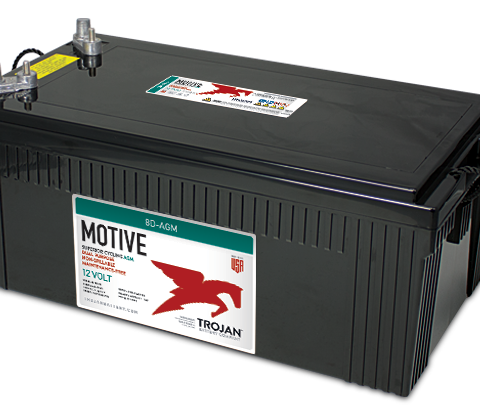
Trojan 8D-AGM 12V AGM Dual Purpose Battery, Group 8D
$1,167.65
or 4 interest-free payments of $291.91
Ships nationwide · Flat-price installs from Venice to Gainesville, FL


When you turn the key at the ramp or at the end of a long day offshore, the starting battery has to deliver a hard burst of current to spin the engine over. That’s the job of marine cranking batteries. Marine starting batteries are built with many thin plates for fast, high-current output, and they’re constructed to handle the vibration and pounding that come with running in a chop.
This collection includes marine starting batteries and dual-purpose batteries with strong cranking ratings. Choose flooded and AGM models from Interstate in common Group 24M, 27M, 31M and 34M sizes, or the 8D AGM dual-purpose battery from Trojan. Or step up to lithium cranking and dual-purpose batteries from Dakota Lithium, EPOCH and Lithium Rhino, which can save significant weight at the transom.
Before you choose, check your engine manufacturer’s minimum cranking requirement and your battery tray’s size. Each product page lists the manufacturer’s CCA or MCA rating, dimensions and terminal details. We ship nationwide, with flat-price installs anywhere from Venice to Gainesville, FL.
or 4 interest-free payments of $291.91
Your outboard or inboard owner’s manual lists a minimum battery rating, usually in cold cranking amps (CCA), marine cranking amps (MCA) or both. CCA is measured at 0°F; MCA is measured at 32°F, so the MCA figure for the same battery is higher. Compare like with like, and meet or exceed what the engine maker specifies. Extra cranking capacity can help with hard starts and big engines, but there’s no benefit in going far past the requirement if it costs you space or weight.
Reserve capacity (RC) tells you how many minutes a battery can supply a steady load before it’s depleted. It’s a useful number if your starting battery also runs a bilge pump, radio or electronics while the engine is off.
Marine batteries are usually labeled with a BCI group size, such as 24M, 27M or 31M, that describes the case footprint. Match the group size to your tray or box, and check the terminal type. Many marine batteries offer both threaded studs and automotive-style posts. Our BCI group size guide explains the codes.
If your boat has room for only one battery and it has to start the engine and run accessories, a dual-purpose battery is usually the right call. If you have separate house or trolling motor banks, a dedicated starting battery keeps your engine start isolated from the loads that drain batteries. A battery switch or automatic charging relay ties the system together. For more on the differences, read cranking vs dual purpose vs deep cycle.
Keep terminals clean and tight, coat them with a corrosion inhibitor, and secure the battery with a hold-down so it can’t move. Recharge after any deep drain, because a starting battery left discharged won’t last. In the off-season, follow our winter storage guide.
Both measure starting current for 30 seconds while holding a minimum voltage. CCA is tested at 0°F and MCA at 32°F, so MCA numbers read higher for the same battery.
Marine batteries are built to handle vibration and pounding, and they often offer marine terminal options. A marine-rated battery is the better choice.
Yes, if the battery is rated for cranking. Check the listed CCA or MCA and the manufacturer’s notes on alternator charging.
Yes, anywhere from Venice to Gainesville, FL. See local installation.
Prices, stock and shipping options are confirmed in your cart and at checkout.
New arrivals, sale alerts and marine battery how-tos.