EPOCH
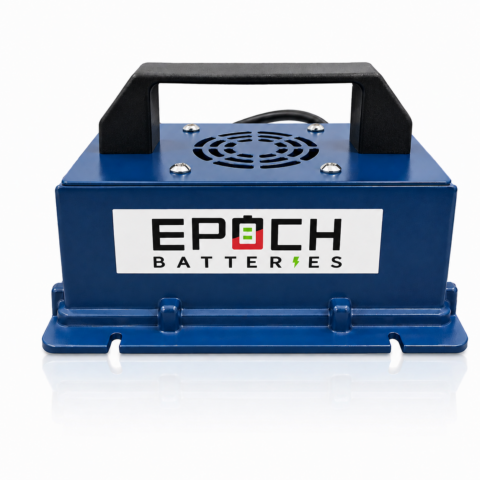
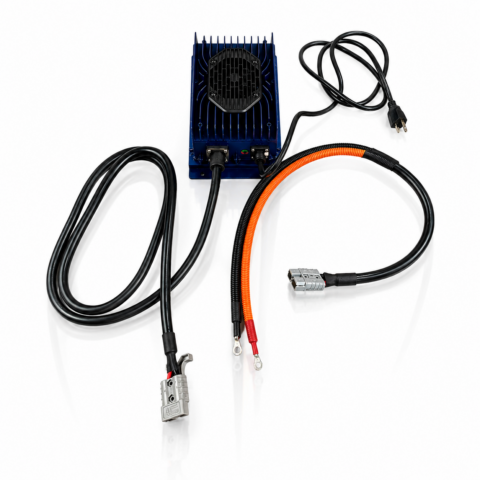
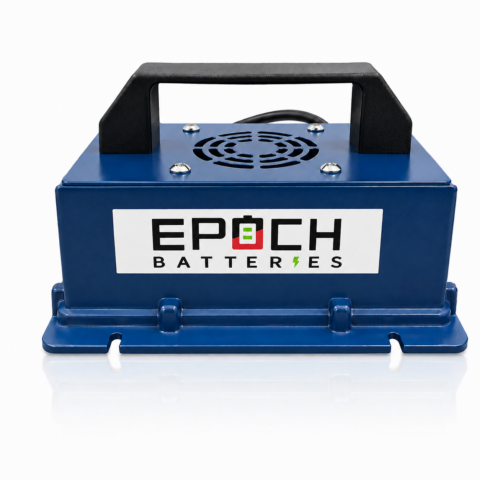
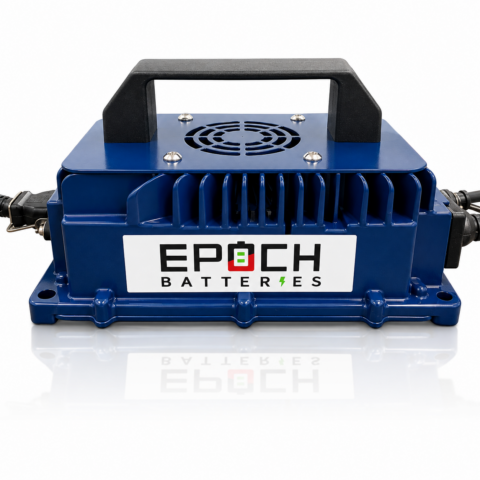
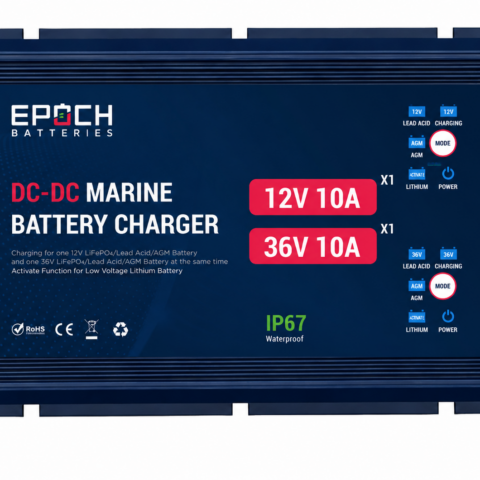
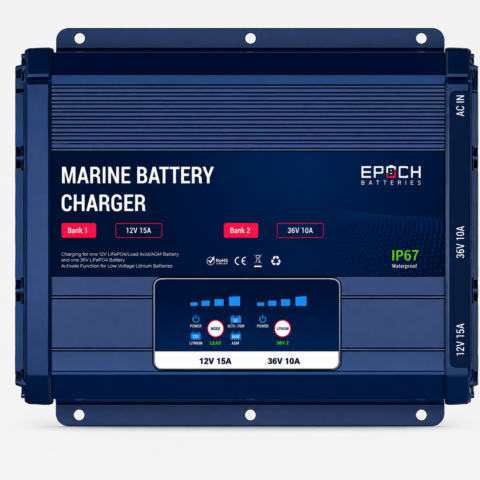
EPOCH 12V & 36V Onboard Marine Lithium Battery Charger
$349.00
or 4 interest-free payments of $87.25
Ships nationwide · Flat-price installs from Venice to Gainesville, FL


The best battery on the market won’t last if it isn’t charged correctly. A good marine charger brings your batteries back to full after every trip, uses the right profile for the battery’s chemistry, and holds up to the damp, salty environment of a boat. For lithium batteries especially, choosing among marine battery chargers matters. LiFePO4 needs a charge profile designed for it, and the wrong charger can leave a lithium battery undercharged or trigger its protection circuits.
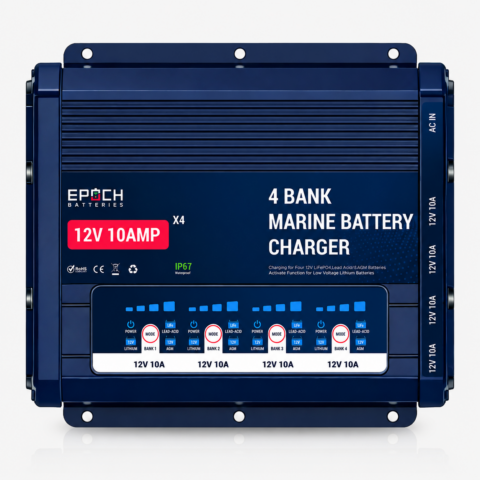
This collection includes onboard and portable chargers from EPOCH, Dakota Lithium and Allied Lithium. There are single-voltage lithium chargers for 12V, 24V, 36V and 48V batteries, multi-bank marine chargers, and combination 12V/36V units for boats with a starting battery and a trolling motor bank. You’ll also find marine DC-DC chargers that charge lithium from your engine’s alternator while you run.
Check the output voltage, current and supported chemistries on each product page, and match them to your batteries. We ship nationwide and install charging systems anywhere from Venice to Gainesville, FL.
or 4 interest-free payments of $87.25
or 4 interest-free payments of $49.75
or 4 interest-free payments of $99.75
or 4 interest-free payments of $62.25
A charger must match the voltage of what it’s charging. A native 36V lithium battery needs a 36V charger, while a 36V bank made of three 12V batteries is often charged with a three-bank 12V charger that charges each battery separately. Multi-bank chargers are also handy for charging a starting battery and a house battery independently. Count your batteries and decide how they’re wired before you pick a charger. See wiring a 24V or 36V setup.
Lithium (LiFePO4), AGM and flooded batteries each have their own charge profile. Lithium chargers are designed for LiFePO4’s voltage and charging behavior, and many lead-acid-only chargers include modes that aren’t suitable for lithium. Some chargers support multiple chemistries; check the listing. Our guide to charging lithium on a boat explains why.
Charge current, in amps, sets how fast the charger refills the battery. A higher-amp charger refills a large battery faster, but stay within the battery manufacturer’s maximum charge current. Rough recharge time is capacity divided by charge current, plus some extra for the final stage.
Onboard chargers are mounted permanently and wired to each battery, so you plug in a shore cord and walk away. Look for a sealed, waterproof housing for marine use. Portable chargers are useful for smaller boats, kayaks and occasional top-ups.
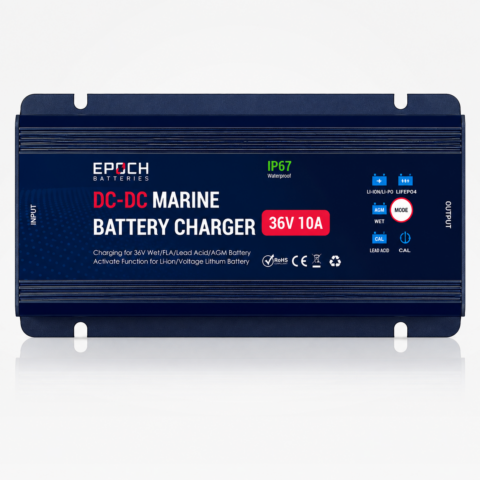
Engine alternators are designed around lead-acid batteries. Lithium batteries can accept current quickly, which can push an alternator hard, and an alternator’s output may not match lithium’s charging needs. A DC-DC charger sits between the starting battery and the lithium bank. It regulates the current, applies a proper charge profile and protects the alternator. Some can also step up voltage, charging a 36V trolling bank from a 12V system. Browse DC-DC options in this collection, and find converters and connection kits in Accessories.
Only if it has a lithium or LiFePO4 mode. Otherwise, use a lithium-specific charger.
Many smart chargers are designed to maintain batteries after charging. Follow both the charger and battery manufacturers’ guidance, especially for long-term storage.
Either a multi-bank 12V charger, with one bank per battery, or a single 24V or 36V charger for a native high-voltage battery. Check each battery maker’s recommendations.
Yes, anywhere from Venice to Gainesville, FL. See local installation.
Prices, stock and shipping options are confirmed in your cart and at checkout.
New arrivals, sale alerts and marine battery how-tos.