


Head-to-Head Marine Battery Comparisons
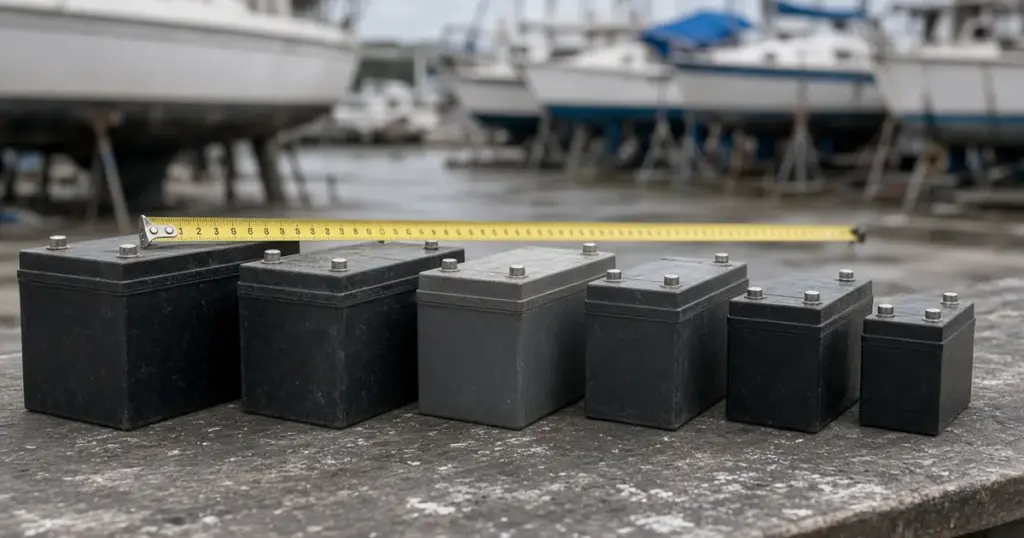
Once you know what job a battery needs to do, it’s usually down to a few candidates. That’s where head-to-head comparisons help. This hub gathers our marine battery comparisons, explains how we compare batteries and gives quick pointers on which matchup to read for your boat.
How we compare batteries
- Job first: starting, deep-cycle, dual-purpose, trolling or house.
- Usable capacity: lithium delivers most of its rating; lead-acid about half for good life.
- Fit: group size, dimensions, terminals and weight.
- Features: Bluetooth, heating, waterproof ratings, cranking ratings.
- Charging: profile, maximum charge current and alternator compatibility.
- Warranty: length and type, from our listings.
- Cost over time: upfront price versus cycle life.
All specs come from our product listings, based on manufacturer information. Check product pages for current details and availability.
Brand matchups
EPOCH vs Dakota Lithium
EPOCH’s broad lineup with Bluetooth and heating versus Dakota’s dual-purpose DL batteries. Read EPOCH vs Dakota Lithium.
Battle Born vs EPOCH
Two deep-cycle lithium lineups compared on case sizes, features and value. Read Battle Born vs EPOCH.
Trojan vs Interstate
Lead-acid veterans: Trojan’s deep-cycle specialty versus Interstate’s full marine lineup. Read Trojan vs Interstate.
Lithium Rhino vs EPOCH 36V
Single-case 36V trolling batteries compared. Read Lithium Rhino vs EPOCH 36V.
Line and model matchups
Interstate lithium vs AGM
Same brand, different chemistry: when Interstate lithium is worth the price over AGM. Read Interstate lithium vs AGM.
EPOCH Eco vs Essential vs Elite
How EPOCH’s three main lines differ in features, warranty and price. Read EPOCH Eco vs Essential vs Elite.
Dakota Lithium DL dual-purpose
A close look at the DL line and whether one battery can do it all. Read Dakota Lithium DL dual-purpose.
Trojan T-105 vs T-125 vs T-145
Choosing a 6V golf-cart battery for a house bank. Read Trojan T-105 vs T-125 vs T-145.
Battle Born GC2 vs group 27/31
Same capacity, different case: which fits your boat. Read Battle Born GC2 vs group 27/31.
Which comparison should you read?
| Your situation | Start with |
|---|---|
| Upgrading a 36V trolling bank to one battery | Lithium Rhino vs EPOCH 36V |
| One battery for starting and accessories | Dakota Lithium DL dual-purpose; EPOCH vs Dakota |
| House bank in golf-cart trays | Trojan 6V comparison; Battle Born GC2 vs 27/31 |
| Staying with lead-acid | Trojan vs Interstate |
| Budget lithium | EPOCH Eco vs Essential vs Elite; Battle Born vs EPOCH |
| Deciding lithium or AGM | Interstate lithium vs AGM |
Brand overviews
If you’re still choosing a brand, start with marine battery brands compared, which links to individual brand guides.
Common mistakes in comparisons
- Comparing rated capacity across chemistries. 100Ah lithium delivers more usable energy than 100Ah lead-acid.
- Ignoring weight. It matters on small boats and bow-mounted setups.
- Skipping the charger. A great battery on the wrong charger underperforms.
- Assuming all variations are the same. Some models come with or without Bluetooth or heating.
- Forgetting the tray. Group size and terminal type need to match.
What changes between chemistries
Comparing a lithium battery with an AGM battery is not a like-for-like comparison of rated amp-hours. A 100Ah AGM battery used for long life should only be discharged to about half, giving roughly 50Ah of daily energy. A 100Ah LiFePO4 battery can deliver most of its rating, so it gives nearly twice the usable energy for the same rating, at a fraction of the weight. Lithium also holds voltage steadily as it discharges, which keeps trolling motors and electronics performing consistently. In return, it costs more upfront, needs a LiFePO4 charging profile and, without heating, can’t be charged below freezing.
What changes between brands
Within the same chemistry, differences between brands come down to case sizes, features and warranty. One brand may offer a group 31 battery with Bluetooth and heating; another may offer only group 24 and 27 sizes. One may list an 11-year warranty; another may list 5 years or none in our store. Those differences often matter more than small spec differences in capacity or weight. Our brand comparisons focus on the practical questions: will it fit, what does it do, how do you charge it and how is it covered.
When availability decides
Sometimes the best battery on paper isn’t in stock. Several of our comparisons note models that are currently listed as out of stock and suggest in-stock alternatives with similar specs. If a specific model matters to you, check its product page or contact us before planning an install around it.
Popular batteries in our comparisons
Browse lithium marine batteries.
A simple scoring method
If you’re torn between two batteries, score each from 1 to 5 on the factors that matter for your boat: fit, usable capacity, weight, features, charging compatibility, warranty and cost over time. Weight the scores by importance. A tournament angler might weight capacity and weight heavily; a cruiser might weight capacity and warranty. The higher total usually points to the right choice, and the exercise makes trade-offs clear.
Cost over time
Upfront price is easy to compare, but cost per usable cycle tells more. A lithium battery that costs more upfront but lasts thousands of cycles can cost less per trip than a lead-acid battery replaced every few seasons. On the other hand, a boat used a dozen times a year may never reach lithium’s cycle life, so lead-acid’s lower price can win. Be honest about how much you use the boat.
Frequently asked questions
What’s the best way to compare marine batteries?
Start with the job, then compare usable capacity, fit, weight, features, charging and warranty.
Is lithium always better than AGM?
No. Lithium is lighter and lasts more cycles; AGM costs less and is a proven starter. It depends on use and budget.
Where do your specs come from?
Our product listings, based on manufacturer information. Check product pages for current details.
Which comparison should I read first?
Pick the one that matches your job: 36V trolling, single-battery boat, house bank or lead-acid upgrade.
Do you compare chargers?
Our brand guides cover chargers, and our charger guides compare lithium charging options.