


Battery Core Charges Explained
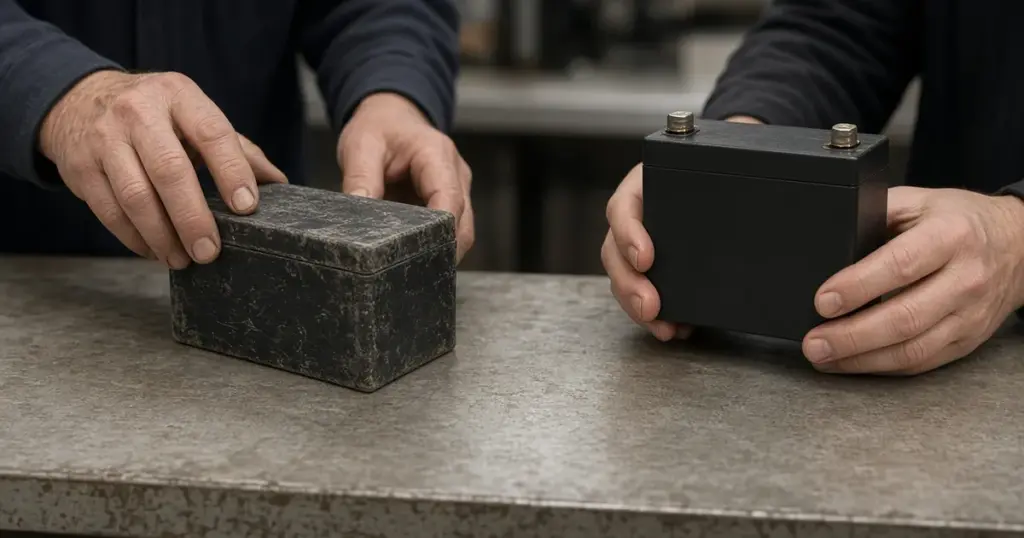
If you’ve bought a car or boat battery, you’ve probably seen a “core charge” on the receipt. It’s not a fee you lose; it’s a deposit you can usually get back. This guide explains what core charges are, why they exist and how to make sure you get yours refunded.
What a core charge is
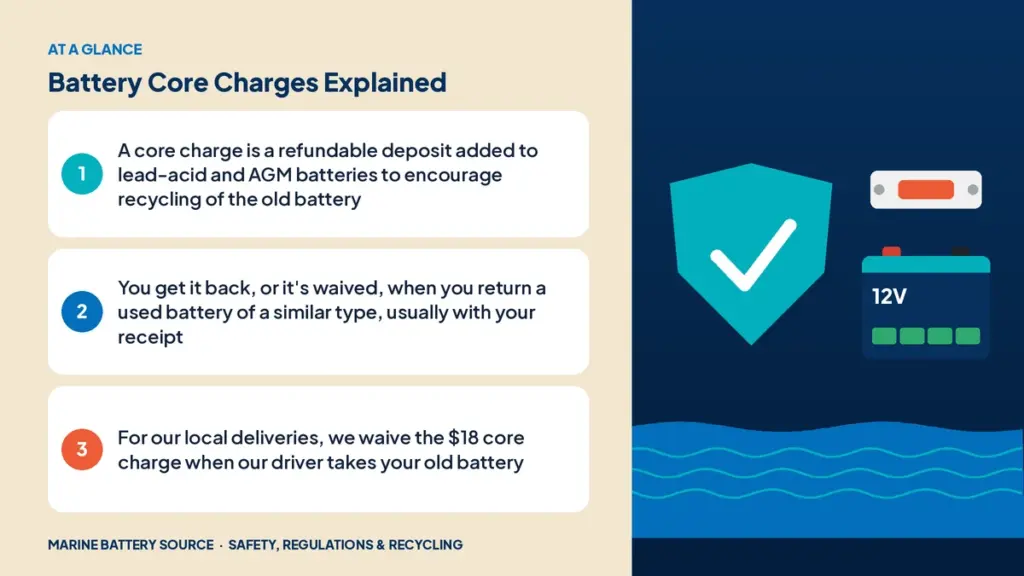
A core charge is an extra amount added to the price of a lead-acid battery, including flooded and AGM types. The “core” is the old battery. When you bring back a used battery, the seller refunds the charge or waives it at purchase. Core charges are common on automotive, marine and other lead-acid batteries.
Why core charges exist
- Recycling: lead-acid batteries are highly recyclable, and the core charge gives buyers a reason to return the old one rather than dump it.
- Law and policy: many states encourage or require retailers to take back used lead-acid batteries. Florida, for example, requires anyone selling lead-acid batteries at retail to accept used ones as trade-ins for new ones.
- Materials: returned cores feed recycling that recovers lead and plastic for new batteries.
How to get a core charge back
- Keep your receipt. It shows that you paid the charge.
- Bring the old battery to the seller within its return window, if it has one.
- Match the type. Most sellers accept a similar used lead-acid battery as the core.
- Get the refund in cash, as a store credit or back to your card, depending on the seller.
Or skip the refund step: bring the old battery with you when you buy, and the core charge is usually waived at checkout.
Core charges with online orders
When you buy a lead-acid battery online, returning the core can be harder, since you can’t hand it over at a counter. Options vary by seller:
- Some sellers don’t charge a core online and leave recycling to you.
- Some charge a core and refund it when you return the old battery to a store or partner location.
- Some, like us when we install, collect the old battery when they fit the new one.
Our core charge
For lead-acid and AGM batteries, we add an $18 core charge. When you book our installation, we take your old battery away and waive the $18 core charge. See our local installation page for the area we serve. For shipped orders, check our shipping page and FAQ for current details.
Do lithium batteries have core charges?
Usually not. Core charges are designed around the established lead-acid recycling system. Lithium batteries should still be recycled properly, through take-back programs, battery recyclers or county hazardous waste sites. See lithium battery recycling.
What if I’m switching from lead-acid to lithium?
If you’re replacing a lead-acid battery with a lithium battery, there’s typically no core charge on the new battery. But your old lead-acid battery still needs recycling. Take it to a battery retailer, parts store, scrap recycler or county site. In Florida, retailers that sell lead-acid batteries must accept used ones as trade-ins when you buy a new lead-acid battery; many accept them without a purchase too.
What counts as a valid core?
Policies vary, but generally:
- A used lead-acid battery of a similar type and size.
- Intact enough to handle safely; a badly cracked or leaking battery may need special handling.
- Not drained of acid or broken open.
Getting paid for old batteries
Some scrap metal recyclers pay for used lead-acid batteries by weight. That’s separate from a retailer’s core charge. If you have several old batteries and no core charges to recover, a scrap yard may be worth a call.
Core charge vs disposal fee
A core charge is refundable. A disposal or environmental fee, where applied, typically isn’t. Florida, for example, imposes a $1.50 fee on retail sales of new or remanufactured lead-acid batteries, paid by the retailer to fund environmental programs. Read your receipt to see which is which.
Handling old batteries for return
- Keep them upright.
- Protect the terminals.
- Use a leak-proof container.
- Secure them in your vehicle.
See how to dispose of a boat battery and Florida battery disposal.
Example: replacing a trolling bank
A bass angler replaces three group 27 lead-acid trolling batteries with three new lead-acid batteries. Each new battery carries a core charge. By bringing the three old batteries back, or having them collected at installation, all three core charges are refunded or waived. If the same angler switched to one 36V lithium battery instead, there’d be no core charge on the lithium battery, but the three old lead-acid batteries would still need recycling.
Tips
- Don’t throw away the receipt until you’ve returned the core.
- Ask about the core return window when you buy.
- If you’re replacing several batteries, ask whether the seller will take all of them.
- Add our flat-price installation (from $99 per battery) when you order, and we take the old battery away.
Shipping cores
Shipping a used lead-acid battery yourself is usually impractical because of weight and hazmat rules. Return cores in person instead. For lithium batteries, see shipping lithium batteries.
More reading
The marine battery recycling guide explains how batteries are recycled, and the marine battery safety guide covers safe handling. If you’re storing batteries for the off-season rather than replacing them, see winter storage for marine batteries.
Shop batteries
Browse AGM and lead-acid batteries, starting batteries and lithium batteries.
Frequently asked questions
What is a battery core charge?
A refundable deposit added to lead-acid batteries, returned or waived when you bring back a used battery.
How much is your core charge?
$18 on lead-acid and AGM batteries. We waive it when you book our installation and we take your old battery.
Do I need my receipt to get a core refund?
Usually yes. Keep it until you’ve returned the old battery.
Do lithium batteries have a core charge?
Usually not, but they should still be recycled properly.
Can I return any old battery as a core?
Generally a similar used lead-acid battery. Check the seller’s policy.